

Blog
How to Clean Your Lederhosen: The Complete Guide


To clean lederhosen, brush off loose dirt with a soft-bristle or suede brush, spot-treat stains with a leather-safe cleaner or white vinegar solution (never machine wash), condition genuine leather every 3–6 months, and air-dry away from direct heat or sunlight. Store in a breathable garment bag, never in sealed plastic.
Lederhosen aren’t just another pair of pants — they’re a piece of Bavarian heritage, often handed down across generations or bought as a lifetime investment for Oktoberfest and Trachten events. Whether you picked up a rugged pair of deerskin lederhosen or a classic suede style, knowing how to clean and maintain them properly is what separates a pair that lasts 20+ years from one that cracks, stiffens, or smells after a single season.
This guide has been fully refreshed with updated cleaning methods, product recommendations, and answers to the most common questions people are now searching for about lederhosen care. Whether you’re preparing for your first Oktoberfest or maintaining a pair that’s been in the family for decades, the goal of proper lederhosen care is always the same: protect the natural hide, avoid harsh chemicals or machine processes, and let time and gentle wear build the character these garments are known for. For more Trachten care tips and Bavarian style guides, browse our full Alpen Lederhosen blog.
Quick Facts: Lederhosen Cleaning at a Glance
- Never machine wash or tumble dry genuine leather or suede lederhosen — it destroys the hide’s natural fibers
- Spot clean first, full clean only when necessary
- Leather needs conditioning every 3–6 months; suede does not
- Air dry only, away from radiators, heaters, or direct sun
- Professional leather cleaning is recommended once a year for heavily worn pairs
- Odor ≠ dirty — lederhosen can smell without needing a full wash; airing out is often enough
Understanding Your Lederhosen Material Before You Clean
The single biggest mistake people make is treating all lederhosen the same way. Before you clean anything, identify what you’re actually working with, because the wrong method can permanently damage the hide.
Leather lederhosen — typically deerskin, cowhide, or goat leather — are smooth, durable, and become softer and darker with age, a process leather enthusiasts call “patina.” This is normal and desirable; it’s part of why quality lederhosen actually look better after years of wear. If you’re deciding between hide types before your next purchase, our guide on goat vs. deer lederhosen breaks down how each material behaves differently over time, which also affects how it should be cleaned. Suede lederhosen, on the other hand, have a napped, velvety texture because the hide is cut from the inner (flesh) side of the skin. Suede is more porous and delicate than smooth leather, so it stains more easily but also responds well to brushing.
If you’re unsure which material you own, run your hand across the surface. Leather feels smooth and slightly cool to the touch, while suede feels soft, fuzzy, and slightly warmer. When in doubt, check the care label or the product description from your retailer before applying any cleaning product, since the wrong method can flatten suede’s nap or strip leather’s natural oils.
Before doing any cleaning, gather the essentials: a soft-bristle brush (a horsehair brush works best for leather, a dedicated suede brush for suede), a clean lint-free microfiber cloth, lukewarm water, a pH-neutral leather cleaner or mild soap, leather conditioner for leather pairs only, and a suede eraser or crepe block if you’re working with suede. Once you have everything ready, always do a spot test on an inside seam first — this single step prevents the vast majority of accidental discoloration or water-staining mistakes.
How to Clean Suede Lederhosen
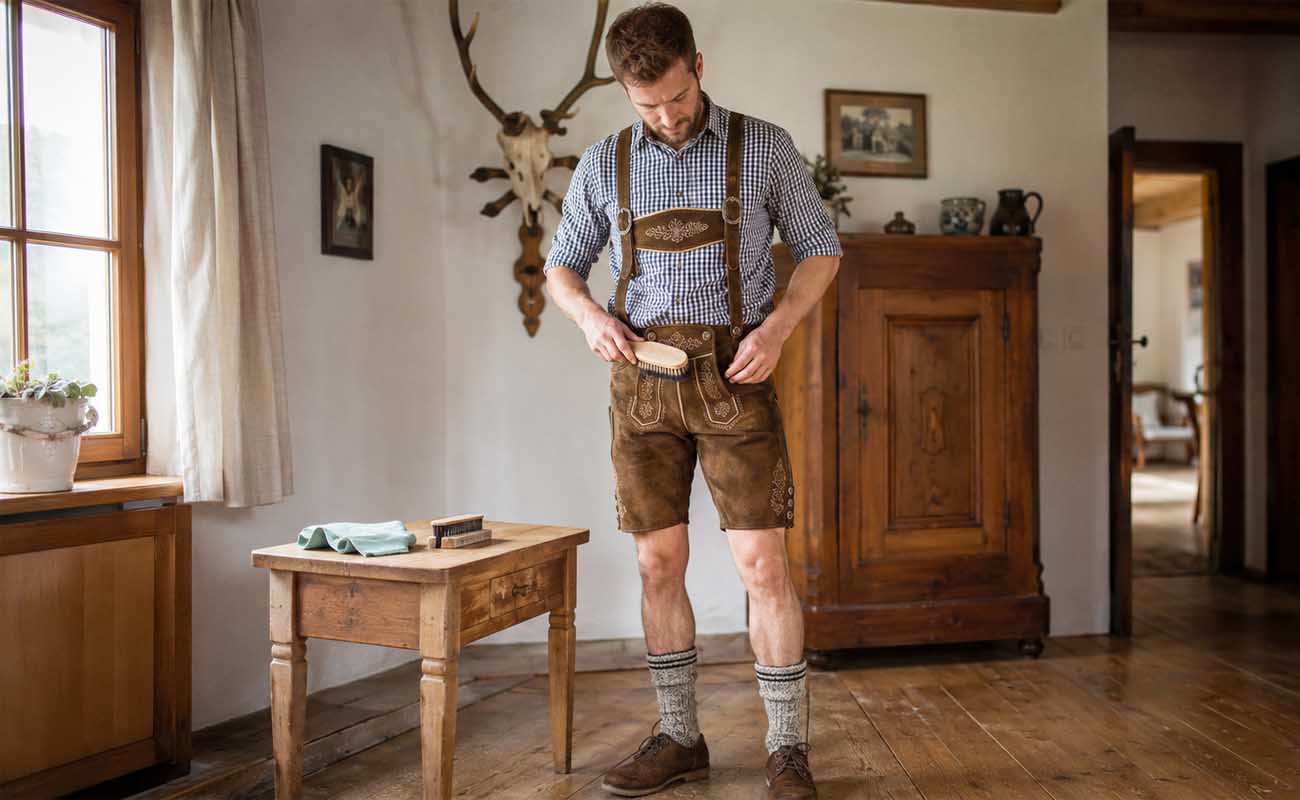
Suede requires a dry-first approach, where water and liquid cleaners are always a last resort rather than a first move. Start by brushing off dry dirt with a dedicated suede brush, working in one direction along the nap of the material to lift most surface dust and light dirt without any liquid at all. For stubborn marks — beer spills, food stains, or scuffs from an Oktoberfest night — a suede eraser or clean pencil eraser rubbed gently in small circles usually lifts the mark without damaging the texture.
If a stain persists after brushing and erasing, mix one part white vinegar with one part water, dab a cloth in the solution, and gently blot rather than rub the stained area, since suede fibers crush and flatten under too much pressure. Once the treated spot is fully dry, brush it again to restore the natural nap. Let the garment air dry flat or on a padded hanger, away from sunlight, heaters, or vents, since direct heat causes suede to stiffen and shrink. A little moisture from spot-cleaning is fine, but suede should never be soaked or fully submerged, as this is one of the most common causes of permanent, irreversible damage.
How to Clean Leather Lederhosen
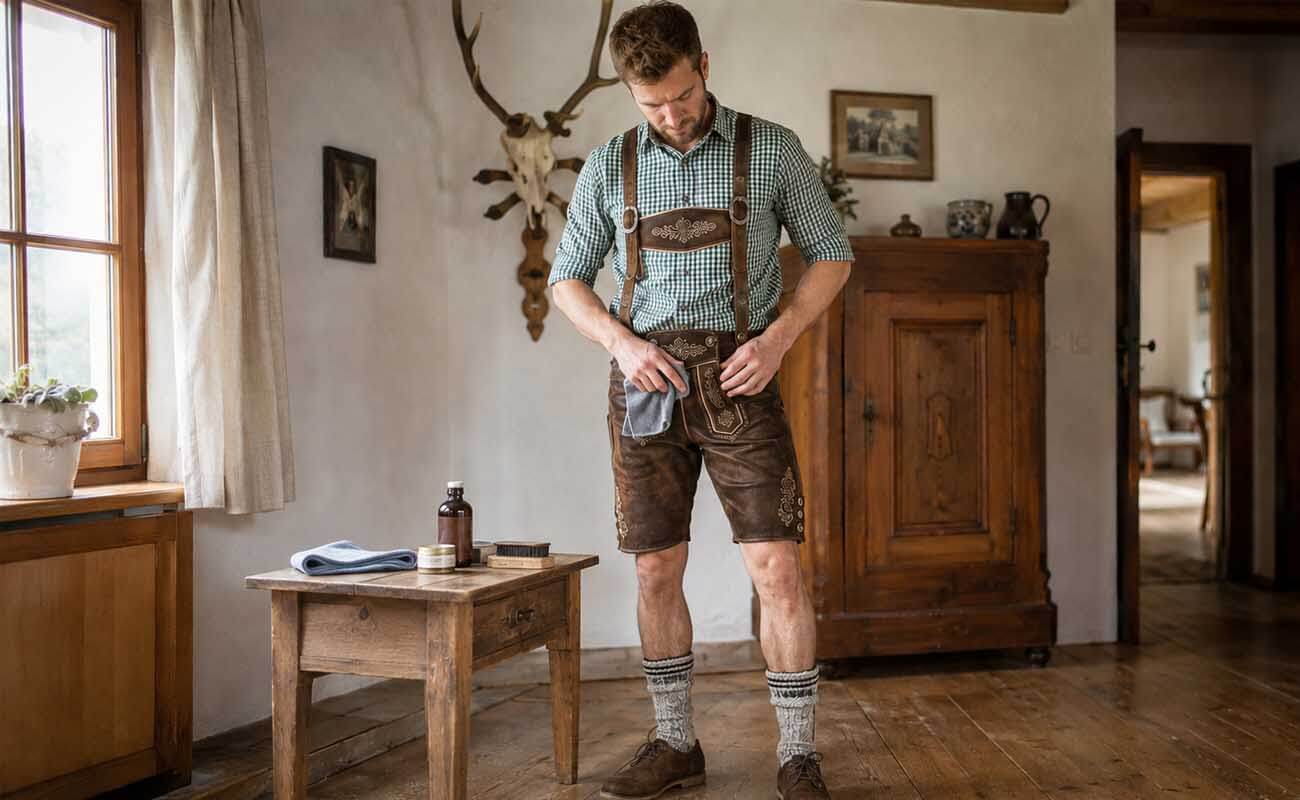
Leather lederhosen are more forgiving than suede but still call for the right sequence: clean, condition, then dry slowly. Begin by wiping the garment down with a damp cloth using lukewarm water only, which removes everyday dust and surface grime without soaking the hide. For stubborn stains, mix a small amount of mild, pH-neutral soap into lukewarm water, dip a soft cloth, wring it out well, and work the stain gently in circular motions, paying extra attention to high-contact areas like the seat, knees, and waistband.
Once the stain lifts, wipe the area again with a second clean, damp cloth without soap to rinse away any leftover residue, since dried soap can leave the leather feeling stiff. After cleaning, apply a leather conditioner in thin, even layers with a soft cloth to replenish the natural oils lost during washing and prevent future cracking, letting it absorb for the time stated on the product label. For drying, hang the lederhosen upside down on a padded hanger — this unusual-sounding trick prevents the waistband and leg openings from stretching out of shape as the leather dries. Avoid all direct heat sources, including hair dryers, radiators, and direct sunlight; leather dries best slowly, at room temperature, typically over 24 to 48 hours. Most leather care specialists recommend conditioning every three to six months for regularly worn lederhosen, and at least once a year for pairs worn only seasonally, such as for Oktoberfest.
Choosing Lederhosen That Are Easier to Maintain
If you’re shopping for a new pair rather than caring for an existing one, it’s worth knowing that some styles are simply easier to keep clean than others. Smooth, full-grain leather in darker tones hides everyday scuffs far better than light suede, which is why many first-time buyers lean toward classic men’s leather lederhosen rather than suede if they plan to wear them frequently at outdoor events. Women shopping for women’s lederhosen will find similar considerations apply, with smoother hides generally requiring less frequent conditioning than napped suede styles.
Budget also plays a role in long-term maintenance, since higher-quality hides typically respond better to conditioning and resist cracking longer than lower-grade leather. If you’re unsure how much to invest upfront, our breakdown of how much you should spend on lederhosen explains how price relates to hide quality, stitching, and durability. It’s also worth pairing your lederhosen with accessories that are just as easy to care for — matching lederhosen suspenders, a leather lederhosen belt, and traditional lederhosen shoes all benefit from the same gentle, hand-cleaning approach outlined in this guide, and buying a complete matching set often means consistent materials that are simpler to maintain together.
Removing Odors Without Washing
You don’t need to fully clean lederhosen every time they smell, and in fact, over-washing dries out the leather faster than normal wear does. Hanging lederhosen outdoors in the shade for a few hours is often enough, since fresh airflow neutralizes most beer, smoke, and sweat odors naturally. For deeper odors, sprinkling a light layer of baking soda inside the garment and letting it sit overnight before brushing or shaking it out works as a gentle, natural deodorizer. If you prefer a spray, choose a leather-specific deodorizing product rather than a generic fabric spray, and avoid alcohol-based sprays like standard fabric fresheners directly on leather, since repeated use can dry out and crack the surface over time.
Caring for Embellishments, Embroidery, and Metal Fittings
Traditional lederhosen often feature hand-stitched embroidery, bone or antler buttons, and metal buckles, all of which need separate attention from the leather itself. Clean metal buttons and buckles with a dry cloth only, since wet cleaners can cause tarnishing over time. Check embroidery threads periodically for signs of loosening and have them re-stitched by a tailor before they fully detach, and never machine wash or dry-clean any piece with metal or bone embellishments, as the chemicals and tumbling motion damage both the hardware and the surrounding leather. If a button or clasp comes loose, secure it promptly rather than waiting, since loose hardware often leads to tearing around the stitch holes if left unaddressed.
Suspenders deserve a special mention here, since they’re one of the most frequently damaged accessories through improper care. If you’ve ever wondered why traditional suspenders shouldn’t be paired with a belt, our article on why you can’t wear a belt with suspenders explains the practical reasoning, which also affects how the leather clasps and straps wear over time.
Storing Lederhosen Properly Between Wears
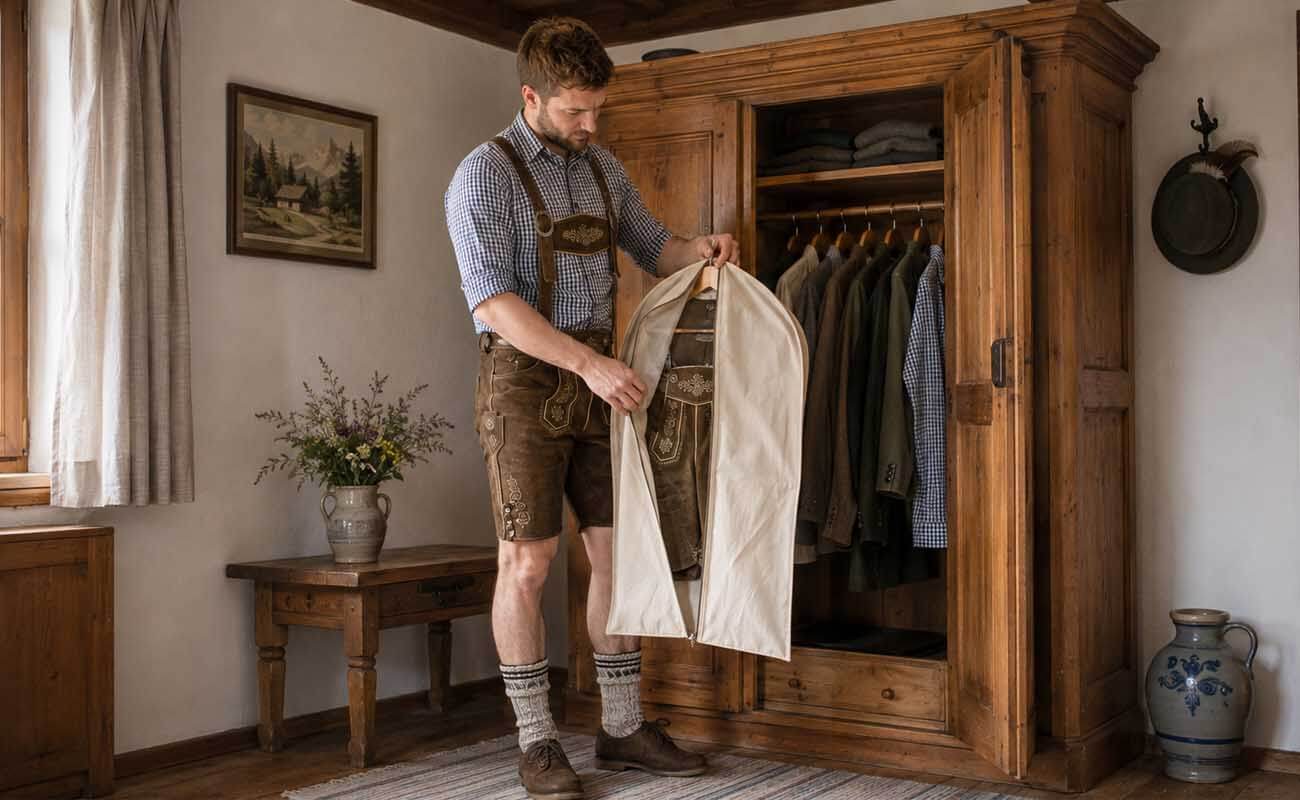
How lederhosen are stored matters just as much as how they’re cleaned, and poor storage is one of the leading causes of premature wear. Always use a breathable canvas or cotton garment bag rather than sealed plastic, which traps moisture against the hide and encourages mold growth. Keep them in a cool, dry space away from direct sunlight and humidity, and avoid attics or basements where temperature and humidity swings are hardest on leather. If hanging space is limited, folding along natural crease lines helps avoid unnecessary creasing elsewhere in the garment. For long-term storage, lightly stuffing the legs with acid-free tissue paper helps the garment hold its shape until its next wear.
Fit also plays a bigger role in wear and tear than most owners realize — lederhosen that are too tight stretch and crack faster at the seams, while pairs that are too loose develop unnecessary creasing from constant shifting. If you’re unsure whether your pair fits correctly, our guide on how tight lederhosen should fit can help you check before storing them away for the season.
Seasonal Lederhosen Care
Lederhosen go through distinct seasons of use — active wear during Oktoberfest and Trachten events, followed by months of storage — and treating care as an ongoing seasonal routine rather than a one-time task keeps them in far better condition year over year. Before Oktoberfest season begins, inspect the garment for any cracking, loose stitching, or missing buttons that may have gone unnoticed during storage, condition leather pairs if it’s been more than six months since the last treatment, and brush suede pairs to restore the nap after months folded or hung away.
After heavy wear, such as following an Oktoberfest event, air the lederhosen out immediately rather than sealing them into a bag while they still smell of smoke or beer, spot-clean any visible stains within a few days before they have a chance to set, and let leather fully air dry for 24 to 48 hours before returning it to storage. During long-term off-season storage, avoid vacuum-sealed bags that trap moisture against the hide, check on stored lederhosen every couple of months rather than leaving them untouched for a full year, and lightly re-condition leather before long-term storage if it feels at all dry to the touch.
If you’re gearing up for the festival season and want more than just care tips, our roundup of creative ways to decorate for Oktoberfest and our deep dive into Oktoberfest’s history and present day are worth a read while your lederhosen air out between wears.
When to Take Lederhosen to a Professional Cleaner
Not every stain or repair is a DIY job. Professional leather cleaning is worth considering when stains are old, set-in, or oil-based, such as grease, makeup, or ink; when the leather shows visible cracking or dryness that home conditioning hasn’t resolved; when you own an antique or heirloom pair with sentimental or monetary value; or when embroidery and leatherwork need restoration rather than simple cleaning. Look specifically for cleaners experienced with garment leather or suede, since general dry cleaners don’t always have the right equipment or expertise for traditional Trachten clothing.
Common Mistakes That Damage Lederhosen
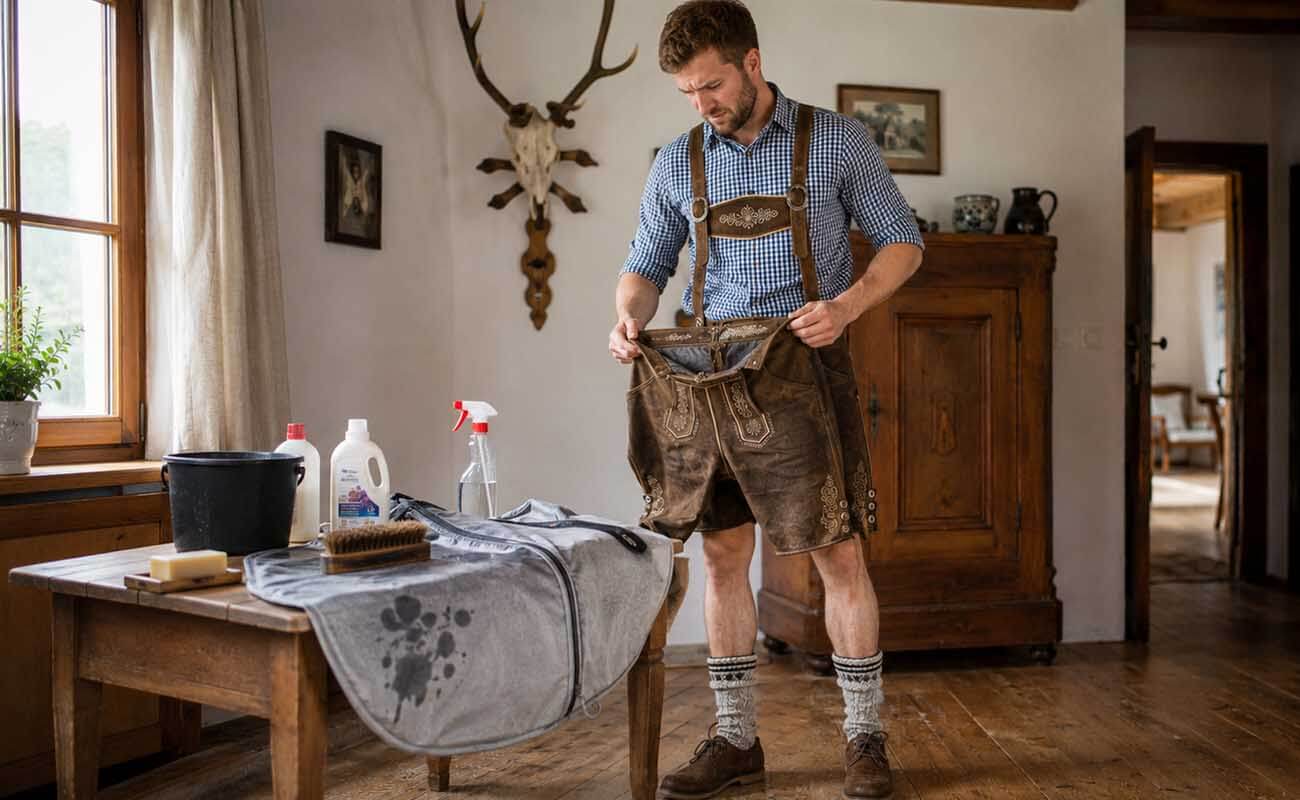
Even careful owners fall into a few avoidable habits that shorten the life of their lederhosen:
- Using generic leather cleaners on suede, which flattens the nap and leaves shiny patches
- Storing damp lederhosen, which encourages mold and a musty smell that’s difficult to remove later
- Ironing leather or suede directly, which can scorch or permanently glaze the surface
- Skipping the spot test, especially with new cleaning products or vinegar solutions
- Letting stains sit for weeks, since fresh stains lift far more easily than set-in ones
- Over-conditioning leather, which can leave it feeling greasy and attract more dust than it repels
Frequently Asked Questions
No. Machine washing and tumble drying will warp, shrink, and permanently damage both leather and suede lederhosen. Always clean by hand.
Blot, don’t rub, the stain immediately with a dry cloth to absorb excess liquid. Once dry, treat leather with a damp cloth and mild soap, or suede with a suede eraser and a light vinegar solution.
No. Spot-clean and air out after each wear, but only do a full clean when there’s visible dirt, stains, or persistent odor, since over-cleaning dries out the leather faster than normal use.
With correct cleaning, conditioning, and storage, quality leather lederhosen can last 20 to 30 or more years, and many families pass them down across generations.
Yes. This natural darkening and softening, known as patina, is a sign of quality leather aging well and is considered desirable rather than a flaw.
Deerskin is softer and more porous, so it’s more prone to water spotting and needs a gentler touch, while cowhide is thicker and slightly more forgiving during hand-washing. Both still require conditioning and air drying.
Final Thoughts
Cleaning and maintaining lederhosen isn’t complicated once you understand the material you’re working with. The core rules stay simple: identify leather versus suede, avoid machines and direct heat, clean gently by hand, condition leather regularly, and store everything in breathable fabric rather than plastic. Follow this routine and your lederhosen will hold up for decades of Oktoberfests, weddings, and Trachten celebrations — getting better with age instead of wearing out. A well-cared-for pair isn’t just easier to wear year after year; it also becomes a piece worth passing down, carrying its own story in every crease, patina mark, and stitch.
Ready to shop the collection or complete your outfit? Browse our full range of Lederhosen Outfit Sets, or explore more Bavarian style and care guides on the Alpen Lederhosen Journal.


