

Blog
What is an Oktoberfest Waiter Called in German?


Oktoberfest is more than just a beer festival; it is a cornerstone of Bavarian culture with a rich history that dates back to 1810. It began as a celebration of the marriage between Crown Prince Ludwig (later King Ludwig I) and Princess Therese of Saxe-Hildburghausen. The citizens of Munich were invited to join the festivities, and what started as a royal wedding has grown into the world’s largest Volksfest (folk festival). Each year, millions of visitors gather in Munich for traditional music, parades, hearty food and, of course, an abundant supply of beer.
The festival is a vibrant showcase of Bavarian heritage, from folk dances and brass bands to the traditional costumes worn by locals and visitors alike. The sense of community and the lively atmosphere make Oktoberfest a cultural experience that resonates far beyond the borders of Germany. Many guests even arrive early to pick out their traditional German clothing before the festival begins.
At the heart of it all are the beer tents, where beer is served in large one-liter steins and people gather to sing, dance and celebrate. Central to this experience are the waiters and waitresses who keep the beer flowing. Understanding what they are called in German gives you a deeper insight into the festival. For more Oktoberfest guides and Bavarian fashion tips, visit the Alpen Lederhosen blog.
The Role of a Waiter at Oktoberfest
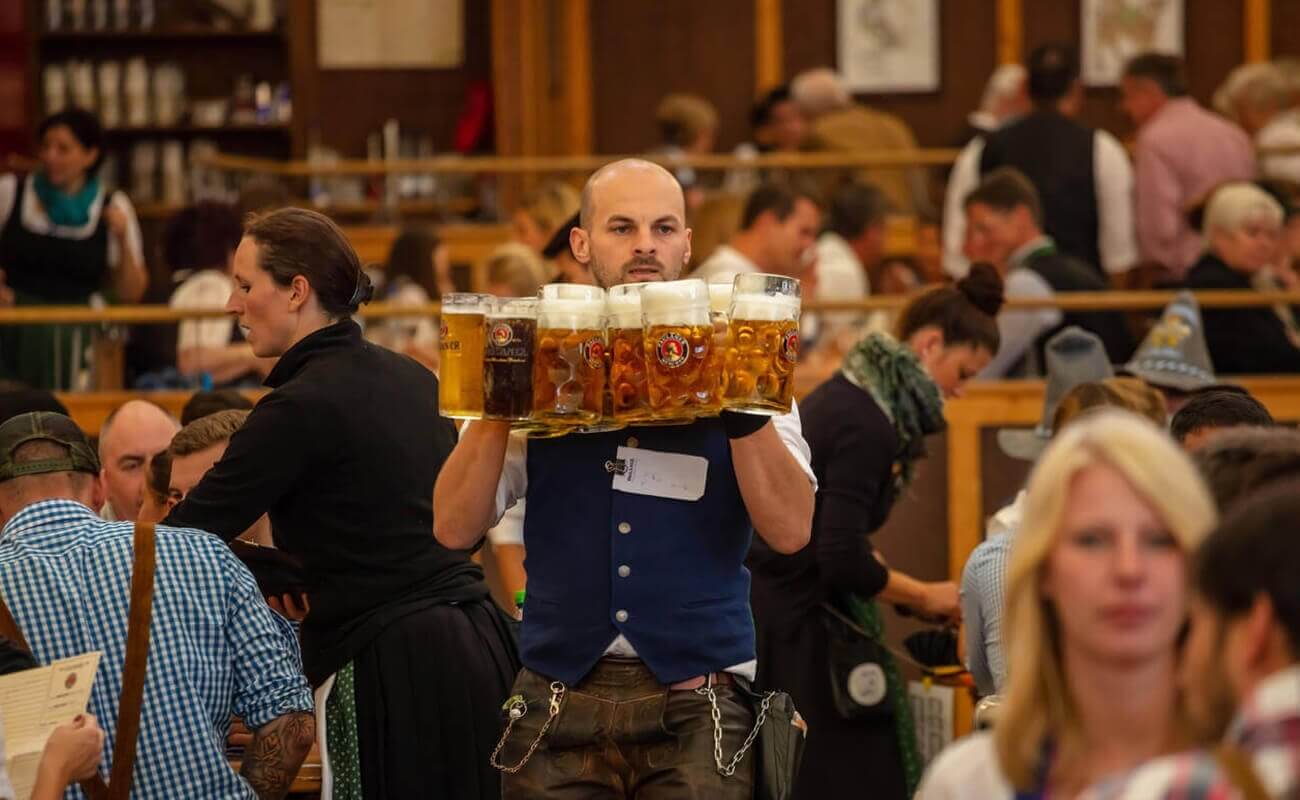
The role of a waiter at Oktoberfest is crucial to the success of the festival. Waiters work in huge beer tents that can hold thousands of guests, surrounded by loud music, singing and the constant clinking of steins. Despite the chaos, they stay professional and efficient, making sure every guest is served quickly and with a smile.
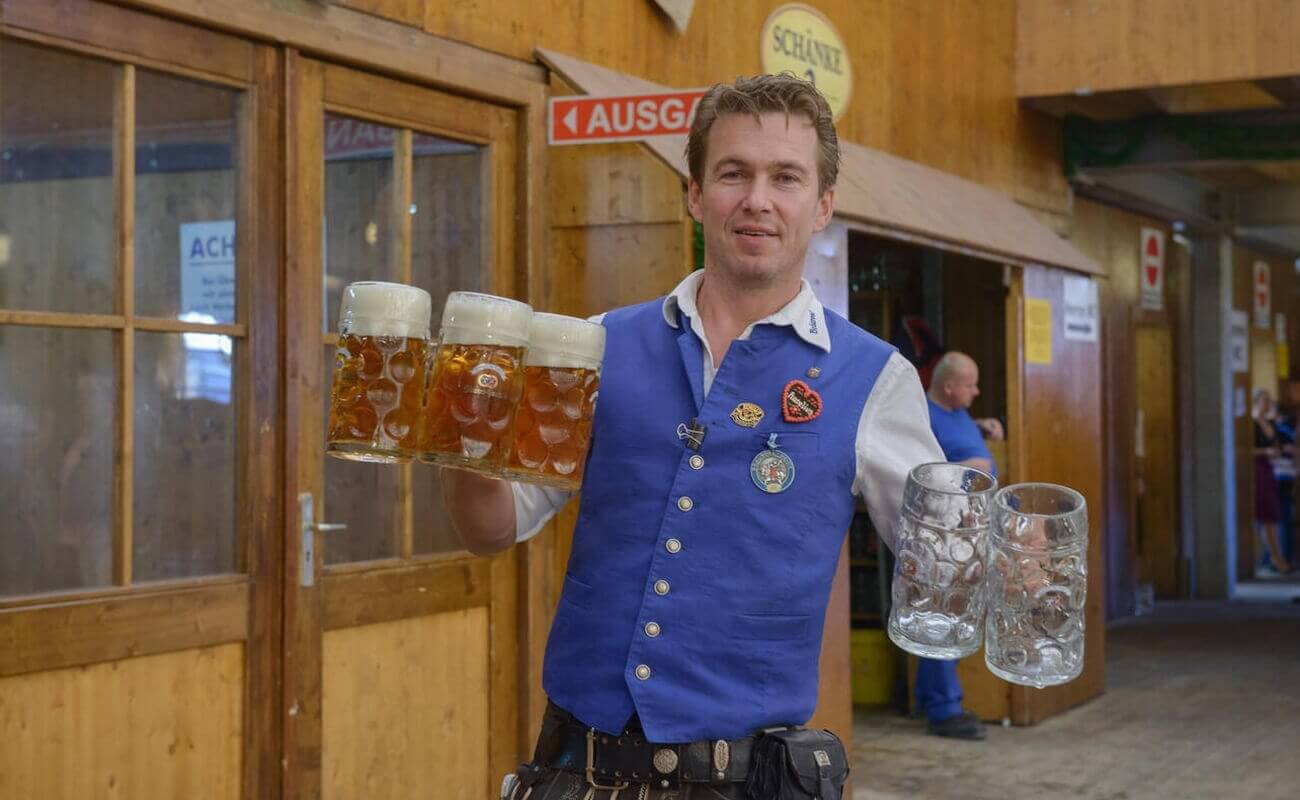
Waiters do much more than deliver beer. They take orders, handle payments and make sure guests are happy, often managing several tables at once. The work is physically demanding, because they carry heavy steins and trays of food through crowded tents, all while navigating thousands of revelers. Even small outfit details matter on a long shift, which is why many people ask what lederhosen pockets are for: they keep the essentials close at hand.
Waiters also shape the atmosphere. They are the face of the festival, welcoming guests from all over the world, many of whom are visiting for the first time. Their ability to engage with visitors, offer a warm welcome and keep a festive spirit is essential to the overall experience, and it embodies the hospitality Bavaria is known for.
What is an Oktoberfest Waiter Called in German?
In German, a waiter is called “Kellner” (male) or “Kellnerin” (female). At Oktoberfest, however, you will often hear the term “Bedienung,” which translates to “service” or “server.” The word conveys the sense of responsibility and care that these waiters bring to looking after their guests, and it fits the large and often boisterous crowds they manage every day of the festival.
Language varies across the German-speaking world, and Bavarian dialect influences the terms you hear in Munich. “Kellner” and “Kellnerin” are standard across Germany, while “Bedienung” adds a local flavor tied to Bavarian identity. In Austria, “Servierer” and “Serviererin” are also used, and in Switzerland the terms vary by canton. These regional differences show how diverse the German language is, and at Oktoberfest the use of “Bedienung” roots the festival firmly in its Bavarian context. Curious about other festival vocabulary? Read our article on what a German beer girl is called.
A practical note for visitors: although the job title is “Bedienung,” most locals do not shout the word across the tent to get attention. A polite “Entschuldigung” (excuse me) or a friendly “Hallo, bitte” with eye contact is considered much nicer, and your server will usually respond faster. You can also simply say “Eine Maß, bitte” when you are ready to order a liter of beer. A little German goes a long way, and a smile and a thank you (“Danke”) are always appreciated.
Training and Skills Required
The job is not one that can be done without training. A full one-liter stein weighs around 2 kilograms (about 4.4 pounds), and experienced waiters can carry up to ten at a time while weaving through crowded tents without spilling a drop. That takes strength, balance and coordination, and it is built up through practice and years of experience.
Customer service skills are just as important. Waiters must handle many orders quickly while staying friendly in a noisy, high-pressure environment where the volume of guests is overwhelming. They also need good memory and organization, because they keep track of tables, orders and payments without the help of long printed lists.
Cultural knowledge and language skills round out the role. Many visitors speak English, but understanding German and Bavarian customs allows waiters to act as informal ambassadors, explaining traditions and making recommendations that improve the guest’s experience. The mix of physical, interpersonal and cultural skills makes the role both demanding and highly rewarding.
The Traditional Uniform of an Oktoberfest Waiter
One of the most recognizable parts of Oktoberfest is the traditional clothing. Male waiters typically wear authentic lederhosen for men, the knee-length leather trousers that have become synonymous with Bavarian culture. They are paired with a checkered or plain Bavarian shirt, long traditional socks and Haferlschuhe, the classic lederhosen shoes. Female waitresses wear a Dirndl dress, made of a bodice, Dirndl blouse, full skirt and apron.
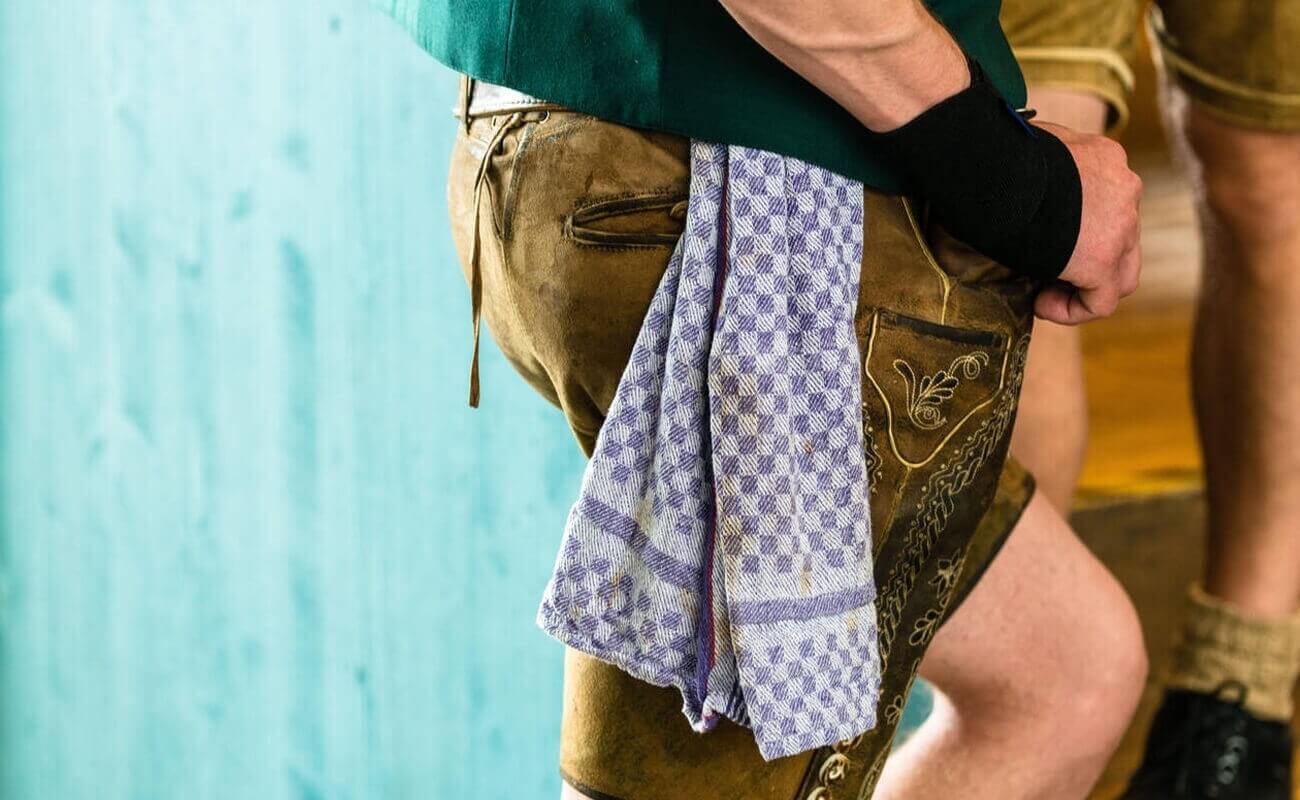
These uniforms are more than costumes. Lederhosen and Dirndls were worn in Bavaria for centuries, first as everyday workwear and later as symbols of regional pride. Today, wearing them at Oktoberfest is a way for locals and visitors alike to connect with the region’s traditions and to feel part of the community. Some tents even have their own color schemes and designs, adding individuality to each Oktoberfest experience.
Dirndls come with a well-known tradition as well. According to custom, the position of the apron bow can hint at the wearer’s relationship status: a bow on the left is said to mean single, while a bow on the right means taken. Whether or not everyone follows it today, it is a charming detail that visitors love to learn about.
If you are choosing your own outfit, read the difference between lederhosen and bundhosen and goat vs. deer lederhosen. You can also see what German girls wear to Oktoberfest and learn the name of the vest at Oktoberfest.
A Day in the Life of an Oktoberfest Waiter
A waiter’s day starts early with preparations: receiving assignments, setting up tables, organizing supplies and making sure everything is ready for the guests. Once the tent opens to the public, the pace rises quickly, and waiters are thrust into the heart of the action.
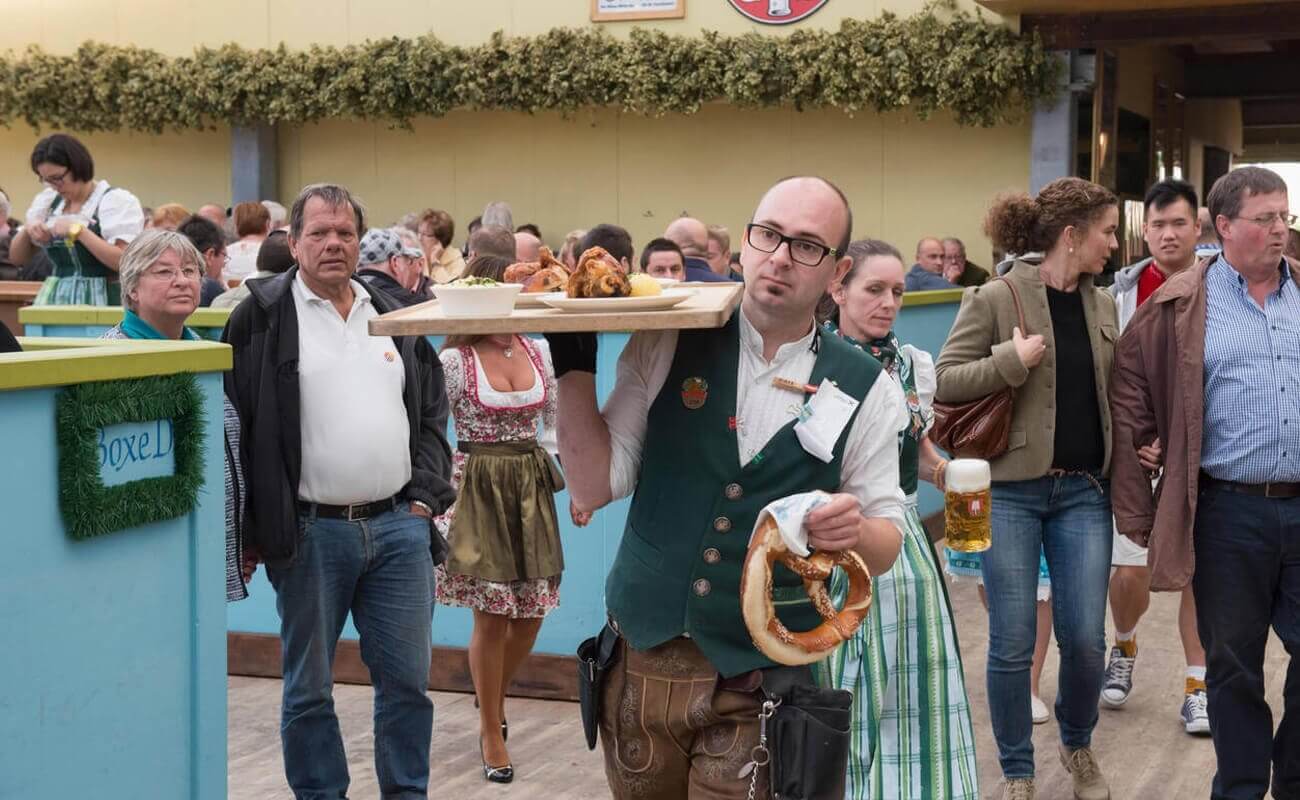
Throughout the day, waiters are constantly on the move, serving hundreds of guests, carrying heavy trays and keeping track of many orders at once. The work is exhausting, but the energy of the festival and the camaraderie among staff keep spirits high. Food plays a big part in the experience too, including for families, as you can see in our guide on what kids eat at Oktoberfest.
The end of the day is often as hectic as the beginning. After the final rush of orders, there is still cleaning and restocking to do before the next day. Despite the long hours, many waiters return year after year, drawn by the unique atmosphere and by the stories they collect along the way, from funny encounters with guests to the challenge of managing huge crowds.
How to Become an Oktoberfest Waiter
Becoming an Oktoberfest waiter is a sought-after opportunity, and it is not easy to get. Applications usually begin several months before the festival, when beer tent operators start recruiting. Applicants need hospitality experience, ideally in busy restaurants, bars or large events, along with the stamina to carry heavy steins for long hours.
Physical fitness is a key requirement, and applicants may be asked to show that they can carry steins and trays safely and efficiently. Personal qualities matter too: resilience, a positive attitude and the ability to stay calm under pressure. Waiters must be willing to work long hours in a fast-paced environment, often on their feet from morning until night.
Selected waiters receive training that covers serving large crowds and Bavarian culture. The process is competitive and not everyone who applies is successful, but those who do succeed usually find the experience rewarding both financially and personally. Being part of such a globally recognized event is a unique and fulfilling opportunity.
The Economic Impact of Oktoberfest Waiters
Oktoberfest is a major economic driver for Munich and the surrounding region. Waiters are often well paid through a combination of wages and tips, and with so many guests, tips can equal or even exceed the hourly wage, which makes the festival a lucrative opportunity.
Their work also supports the wider economy. Visitors spend money on accommodation, transport, food and clothing, and many buy their outfits locally; if you are wondering about prices, see how much authentic lederhosen costs in Munich. By making sure visitors have a positive experience, waiters encourage repeat visits and help protect the festival’s reputation.
The festival also creates thousands of temporary jobs for waiters, cooks, cleaners, security staff and many others. For some people it is a seasonal job that complements other work, and for others it is a significant source of income. These benefits strengthen the region’s prosperity and reinforce Oktoberfest’s importance to Munich’s identity.
Oktoberfest Waiters in Popular Culture
Oktoberfest waiters are iconic figures in movies, television and advertising, where they symbolize the jovial spirit of the festival. Portrayals can be humorous or exaggerated, often highlighting the strength needed to carry many steins, but they capture the essential role waiters play. Some even become local celebrities for their skill and larger-than-life personalities, and their stories become part of Oktoberfest lore.
The stereotype of the strong, cheerful waiter who can handle any situation is both a reflection of the job and a tribute to the people who do it. Quirky traditions add to the fun too, like the ones we explain in why people wear chicken hats at Oktoberfest. These cultural images help keep Oktoberfest a beloved global event.
Beyond the screen, the waiter has also become a symbol of Bavarian pride that appears on souvenirs, postcards and festival posters around the world. Many visitors say their strongest memory of Oktoberfest is not the beer itself but the cheerful server who found them a spot at the table, balanced a tray above the crowd and wished them a good evening. That human touch is a big reason the festival feels so welcoming, and it explains why waiters are celebrated almost as much as the music and the food.
How to Dress Like an Oktoberfest Waiter (Bedienung Style)
You do not need to carry ten steins to look the part. The classic Bedienung look is practical, durable and unmistakably Bavarian. Here is a simple checklist with shop categories to start from, so you can build a complete set of Oktoberfest outfits yourself.
For men
- Lederhosen: browse men’s lederhosen, or choose a lighter alternative from the bundhosen collection.
- Suspenders and belt: lederhosen suspenders and a lederhosen belt finish the look. Unsure about sizing? Read how tight lederhosen should fit.
- Shirt and vest: pair a Bavarian shirt with a waistcoat and add a Trachten jacket for cool evenings.
For women
- Dirndl and blouse: start with a Dirndl dress and a matching Dirndl blouse.
- Alternatives: try women’s lederhosen or a Bavarian skirt.
- Accessories: add a Dirndl handbag.
Short on time? A ready-made lederhosen outfit set gives you everything at once, and you can check new arrivals and the Oktoberfest sale for seasonal offers.
Comfort matters as much as style. Choose breathable shirts and well-fitting shoes, because a day in the tent means a lot of standing, dancing and walking. Pick quality materials that will last for many festivals, and try everything on together before the event so you know the whole outfit works as one.
Oktoberfest words every visitor should know
- Wiesn: the local nickname for Oktoberfest, taken from the Theresienwiese grounds where it is held.
- Maß: the traditional one-liter beer mug.
- Bedienung: the server at your table.
- Trinkgeld: a tip, which waiters truly appreciate.
- Prost: the classic cheer when glasses meet.
Tips for Visitors: Ordering and Tipping at Oktoberfest
Knowing a few simple habits will make your visit smoother and make your waiter’s job easier. First, plan ahead. Popular tents fill up quickly, especially on weekends and evenings, and tables are often reserved for groups, so check the reservation rules of the tent you want to visit and arrive early if you are hoping for a seat.
Second, remember that service is table-based. In most tents you order from the Bedienung once you are seated rather than at a bar, and your server will bring your drinks and food to the table. Standing around without a seat can make it hard to get served, so find a spot on a bench first.
Third, be prepared to pay at the table. Many tents work with cash, and card acceptance can vary, so bring enough cash to cover your round. Waiters often carry a lot of change and settle accounts quickly, so keep your money ready when the server arrives.
Finally, tip generously. Tipping (Trinkgeld) is customary, and rounding up the bill or adding around ten percent is a common way to say thank you for hard work. Given how much effort goes into each serving, it is one of the nicest gestures you can make.
Frequently Asked Questions
The standard words are “Kellner” (male) and “Kellnerin” (female). At Oktoberfest you will most often hear “Bedienung,” meaning “service” or “server.”
Experienced waiters often carry up to ten full one-liter steins at once, each weighing about 2 kilograms.
They wear a traditional Dirndl with a bodice, blouse, full skirt and apron. Explore similar styles in our Dirndl collection.
They wear lederhosen with a Bavarian shirt, long socks and sturdy shoes. See our lederhosen collection for authentic options.
Yes. Tipping (Trinkgeld) is customary and is an important part of a waiter’s earnings during the festival.
Conclusion
The role of an Oktoberfest waiter is much more than serving food and drinks; it is a vital part of the festival’s cultural and economic fabric. The words “Kellner” and “Kellnerin,” and more specifically “Bedienung,” capture the essence of this role within Oktoberfest. These waiters keep millions of visitors well served while upholding the traditions of Bavarian hospitality.
The physical demands, service skills and cultural knowledge make the job challenging but rewarding. Their traditional attire, the lederhosen and Dirndl, adds to the visual identity of the festival, and their work supports the local economy. Ready to join the celebration in style? Shop the men’s collection and women’s collection, discover more Bavarian clothing, or keep reading our Oktoberfest guides and Bavarian fashion tips.


