

Blog
What is the National Costume of Bavaria Ladies?


The national costume of Bavarian ladies is called Tracht, and its most recognizable form is the Dirndl — a fitted-bodice dress worn with a blouse and apron. Many modern Bavarian women now also wear tailored women’s Lederhosen as a bolder alternative. Both outfits represent centuries of Alpine heritage and remain the standard attire for Oktoberfest, weddings, and Bavarian folk festivals today.
If you searched “what is the national costume of Bavaria ladies,” that one-line answer is really all you need to walk into a shop or festival with confidence. But the full story — how the Dirndl evolved, what the apron bow actually means, why women’s Lederhosen are trending, and how to pick an authentic outfit this year — is where it gets interesting. Here’s the complete, updated breakdown.
What Is Tracht? The Umbrella Term for Bavarian Costume
Tracht is the German word for the traditional folk dress of Bavaria and the wider Alpine region. It isn’t one single outfit — it’s a category that includes the Dirndl, women’s Lederhosen, Trachten skirts, Spencer jackets, and regional variations that differ from village to village.
- Tracht = the overall traditional-dress system worn by Bavarian men and women
- Dirndl = the specific women’s dress within Tracht (bodice + skirt + apron)
- Lederhosen = originally menswear, now also tailored for women
- Regional Tracht styles vary by color, embroidery, and fabric depending on the district (Gau) in Bavaria
Understanding this hierarchy matters because most people use “Dirndl” and “Tracht” interchangeably, but the Dirndl is technically just one expression of the broader Tracht tradition.
Tracht has a working-class origin story. It grew out of the practical clothing worn by farmers, herders, and domestic laborers across the Bavarian Alps, where garments had to survive long hours outdoors, harsh winters, and physical work. Fabrics were chosen for durability rather than decoration, and regional differences emerged simply because villages were isolated from one another and rarely shared tailoring styles. It wasn’t until the 19th century, when Bavarian and Austrian nobility began wearing rural dress as a romantic countryside fashion, that Tracht shifted from purely functional clothing into a recognized cultural costume. That shift is part of why Tracht today carries both a working heritage and a festive, celebratory identity at the same time.
The Dirndl: Bavaria’s Signature Women’s Dress
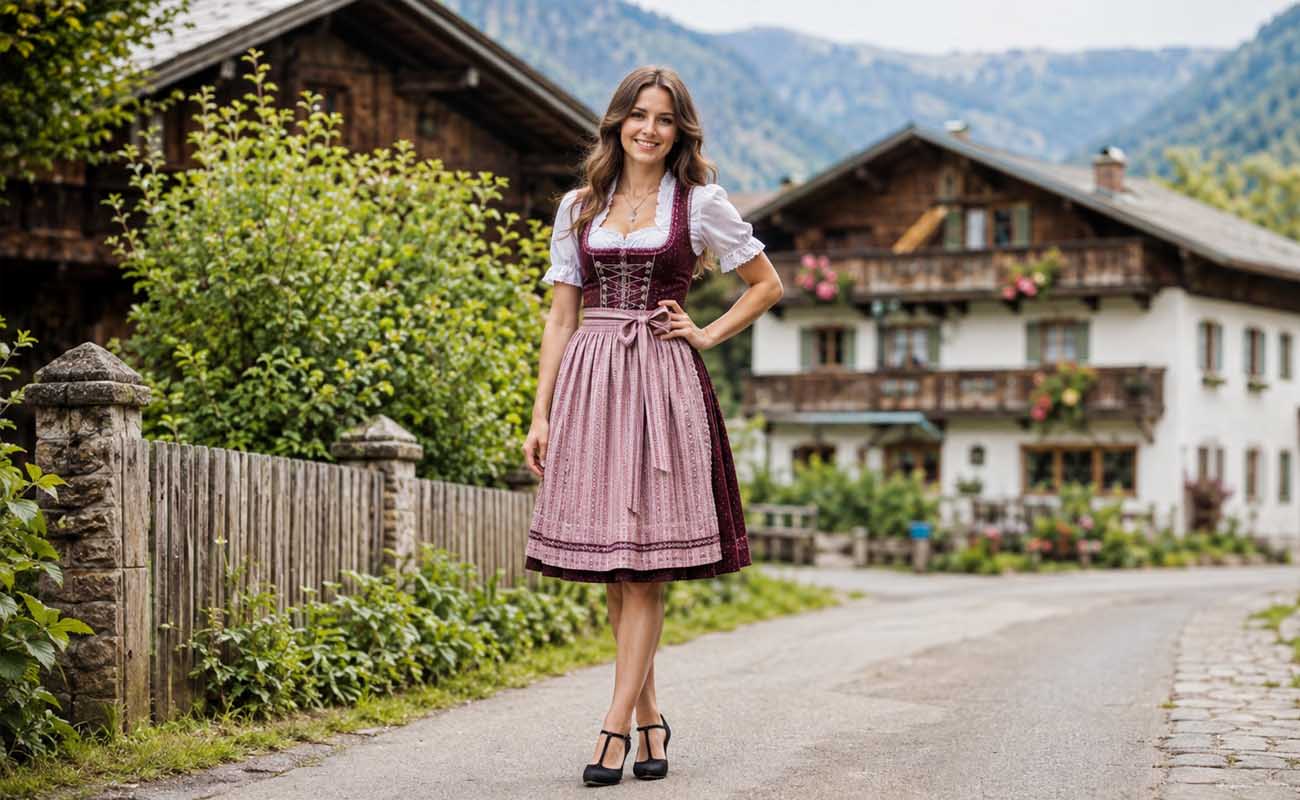
The Dirndl is the outfit most people picture when they think of Bavarian women’s fashion. It began as practical workwear for female farmhands and domestic servants in the 19th century, made from sturdy cotton or linen. By the early 20th century, upper-class Bavarian and Austrian women had adopted it as fashionable countryside attire, and it has stayed a national symbol ever since.
A traditional Dirndl has three core pieces: the bodice, which is fitted and often laced or buttoned to shape the waist and bust; the skirt, which falls to knee, midi, or ankle length depending on the occasion; and the apron, tied over the skirt, where the knot placement carries real social meaning (more on this below). A blouse worn underneath the bodice, usually with puffed or lace sleeves, completes the outfit. Shoppers looking for a ready-made version can browse Dirndl Dresses that already combine all three pieces in coordinated fabrics.
Not every Dirndl is built for the same occasion, which is one of the most common points of confusion for first-time buyers. Everyday Dirndls are made from cotton or linen in muted colors with minimal embellishment, ideal for casual outings or work. Festive Dirndls use silk, satin, or velvet with embroidery and beading, and are worn for weddings, Oktoberfest, and church events. Seasonal choices matter too — lightweight cotton suits summer festivals, while wool or velvet paired with a jacket or shawl is better for winter occasions.
Dirndl or Lederhosen: Which Should a Woman Wear?
There’s no rule that says Bavarian women must wear a Dirndl over Lederhosen, and in practice the choice usually comes down to comfort, event formality, and personal style. A Dirndl tends to suit occasions where movement is limited and presentation matters most, such as weddings, church services, formal photos, or sit-down dinners, because the fitted bodice and flowing skirt read as elegant and traditional. Women’s Lederhosen, on the other hand, are the more practical option for long days on your feet, dancing, or outdoor festival settings, since the leather holds up to spills, weather, and repeated wear far better than delicate Dirndl fabric. Many women now own both and simply choose based on the specific event, treating Lederhosen as the go-to for casual Oktoberfest days and the Dirndl as the pick for anything more formal.
Why the Apron Bow Position Actually Matters
This is one of the most-searched details about Bavarian women’s costume, and it’s a perfect example of a small detail with big cultural meaning. The bow on a Dirndl apron isn’t just decorative — it signals the wearer’s relationship status at a glance:
- Bow on the right side = the woman is married or in a relationship
- Bow on the left side = the woman is single and available
- Bow tied in the front/center = typically a young girl, or in some regions signals a widow
- Bow tied in the back = traditionally worn by waitstaff or serving staff
Whether or not people follow this custom strictly today, it’s still widely known and often used playfully at Oktoberfest.
Lederhosen for Women: The Modern Style Shift
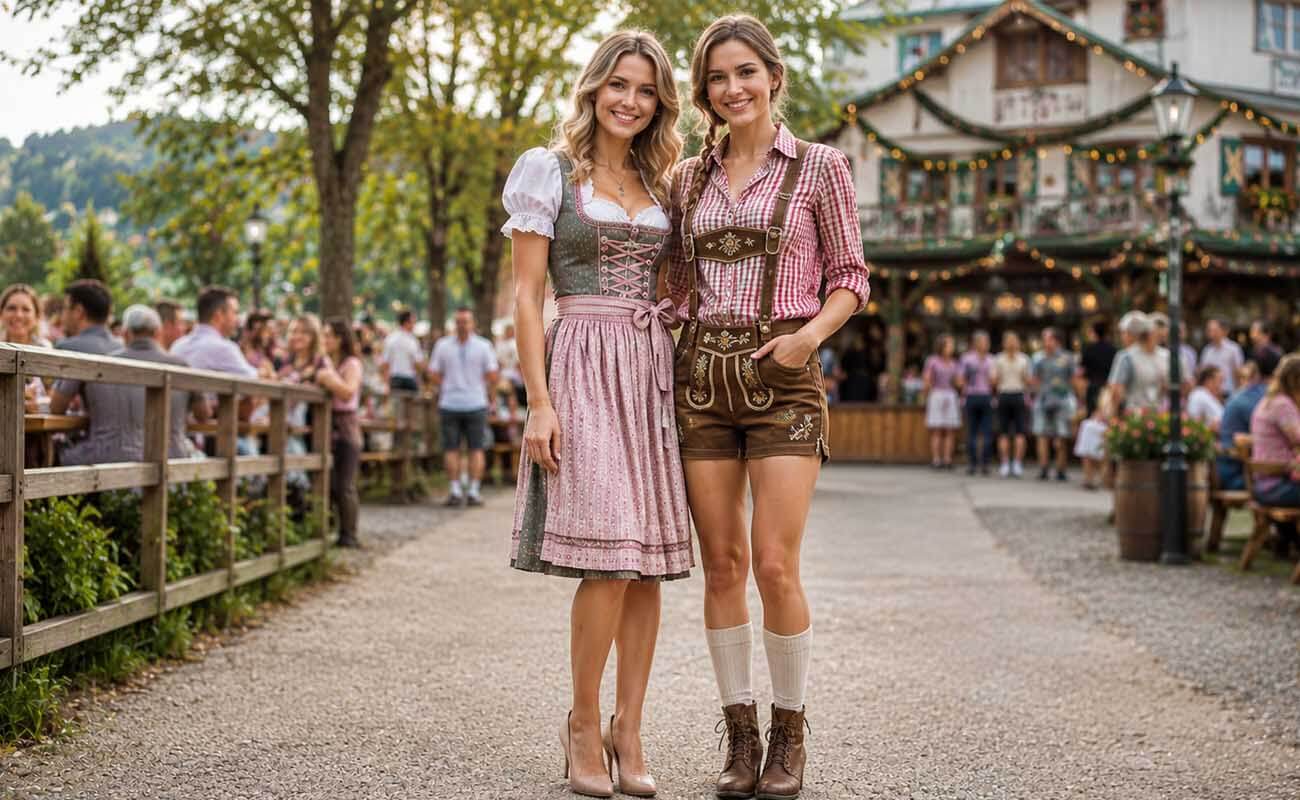
Lederhosen were historically men’s workwear, built from durable goat or deer leather to survive outdoor Alpine labor. Over the past decade, women’s Lederhosen have moved from a novelty item to a genuinely popular alternative to the Dirndl, and they now rank among the fastest-growing categories in Bavarian fashion.
- Cut shorter and more tailored than men’s versions for a flattering silhouette
- Often finished with embroidery, contrast stitching, or floral detailing
- Typically paired with a checkered shirt or Trachten blouse and suspenders
- Made from soft, long-lasting goat or deer leather that breaks in over time
- Favored for outdoor festivals, beer-hall settings, and anyone who wants a bolder, more practical alternative to a skirt
The appeal isn’t just aesthetic. Women’s Lederhosen offer more mobility than a Dirndl, which makes them popular for standing, dancing, and long festival days — a practical consideration that’s driven a lot of their renewed popularity in recent Oktoberfest seasons.
The Dirndl Blouse: The Detail That Changes the Whole Look
The blouse worn under a Dirndl bodice does more work than most people realize — it can shift an outfit from casual to formal without changing the dress itself. Traditional necklines include round, square, and sweetheart cuts, while sleeve style sets the tone too: puff sleeves add volume and femininity, and lace sleeves read more formal. Fabric follows the season, with cotton or linen for warm-weather comfort and wool or velvet for winter warmth. As a general rule, lace and satin blouses with long sleeves suit weddings and church events, while short cotton sleeves are better suited to casual or daytime wear. A well-stocked range of Dirndl Blouses makes it easy to find a piece in the right neckline and fabric for whichever look you’re building.
Because one Dirndl can be paired with several different blouses, this is often the easiest way to build multiple outfits from a single dress.
Accessorizing a Bavarian Outfit: Handbags, Shirts, and Shoes
The Dirndl and Lederhosen get most of the attention, but the accessories worn alongside them are what turn a plain outfit into a polished one. A small, structured Dirndl handbag is the traditional finishing touch for women pairing a Dirndl with a festive occasion — these bags are typically compact, often trimmed in leather or fabric that echoes the embroidery on the bodice, and are sized to carry only the essentials rather than a full daybag’s worth of items.
For women choosing Lederhosen instead of a Dirndl, the top layer matters just as much as the leather itself. A checkered or plain women’s shirt tucked into tailored Lederhosen is the standard pairing, and the color of the shirt is often used to coordinate with a partner’s or group’s outfit at larger festival gatherings. Footwear tends to follow tradition as well: flat leather shoes or ankle boots are worn with Lederhosen for comfort over long festival days, while low block heels are more common with a Dirndl for formal events. Thick wool socks, sometimes folded over the boot line, complete the traditional look in colder months.
None of these accessories are strictly required — plenty of women wear a Dirndl with simple flats and no handbag at all — but for anyone trying to get closer to an authentic regional look, the accessories are usually where that authenticity shows.
Other Traditional Garments Bavarian Women Wear
Beyond the Dirndl and Lederhosen, several other pieces make up the fuller Tracht wardrobe. The Spencer jacket is a short, fitted wool or felt jacket worn over the Dirndl for cooler weather or formal events like weddings and church services. The Trachten skirt is a simpler pleated or full skirt worn without the bodice, often paired with a blouse and a wide, decorated belt — the Trachten skirt collection is a good starting point for women who want the traditional silhouette without the fitted bodice of a full Dirndl. A Tracht apron can be worn with either a Dirndl or a Trachten skirt, made from cotton, linen, or silk and often trimmed with lace or embroidery. Finally, the Trachten belt is typically wide, often finished with a metal buckle, and worn to accent the waist over a skirt or bodice.
These accessory pieces are often what separate a costume from genuine Tracht. A Spencer jacket or a well-chosen belt signals that the wearer understands the tradition beyond just the headline Dirndl or Lederhosen, and in many Bavarian communities these details are still treated as markers of taste and regional pride rather than optional extras.
Regional Variations Across Bavaria
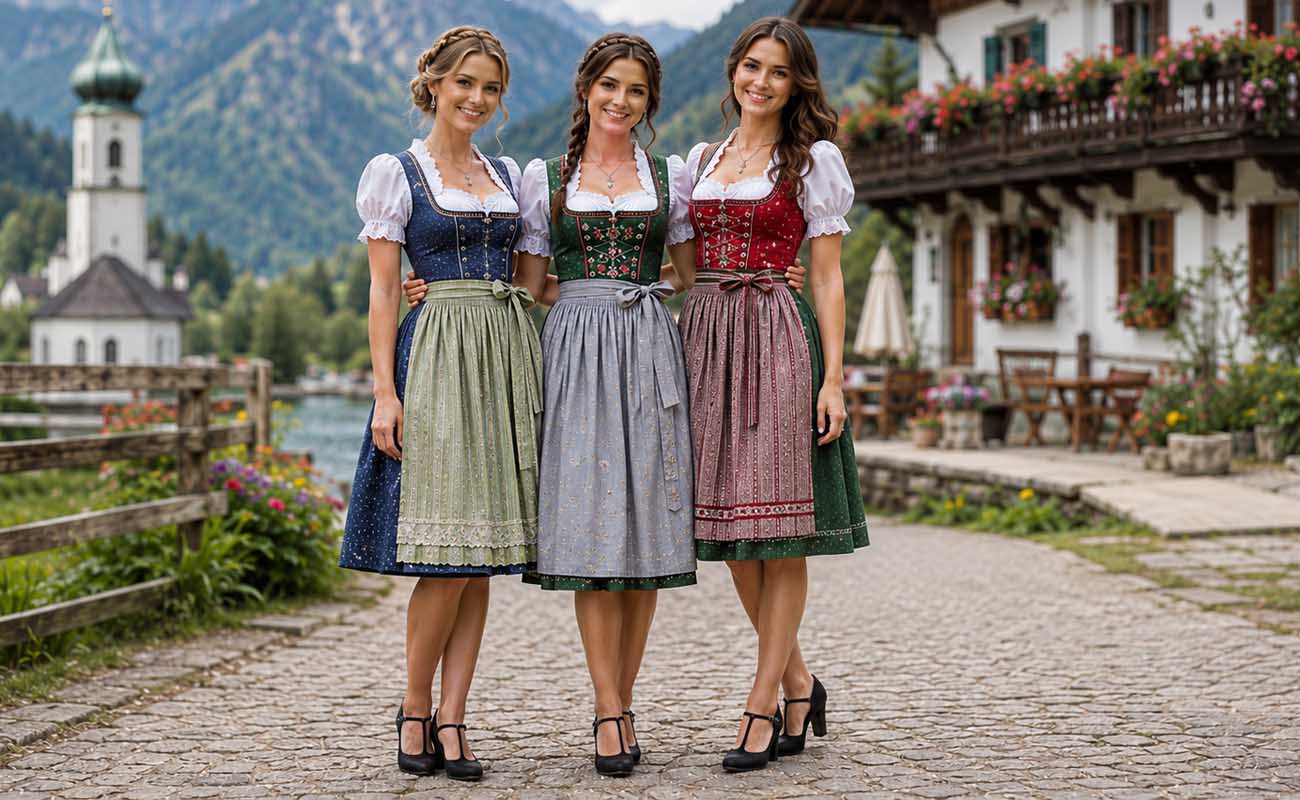
Because Tracht developed village by village rather than as one national uniform, style still varies noticeably by region. Upper Bavaria, around Munich, favors darker, richer colors with heavier embroidery — the style most associated with Oktoberfest. Franconia leans toward simpler cuts, lighter fabrics, and more subdued color palettes, while the Allgäu region is known for distinctive floral embroidery patterns tied to its local Alpine flora. The Miesbach style, meanwhile, is considered one of the more “classic” and widely copied Tracht templates outside Bavaria.
If you’re buying for an authentic regional look rather than a general festival outfit, checking which district’s pattern you’re getting is worth the extra research. Locals can often identify someone’s home region just from the color of the embroidery or the cut of the bodice, in much the same way a tartan pattern signals a specific Scottish clan. That level of detail is part of why Tracht is still taken seriously as a marker of identity rather than treated as a generic costume, even as it’s become a global Oktoberfest export.
How to Choose an Authentic Dirndl or Lederhosen
With more brands producing “Oktoberfest costumes” every year, quality and authenticity vary widely. Start with the material: genuine cotton, linen, wool, or leather will always outperform synthetic blends in both look and durability. Next, check the construction — the bodice lacing or buttons and the apron stitching are where loose seams give away a cheap costume fastest. Fit matters more than trend, since a well-fitted Dirndl bodice or tailored pair of Lederhosen will always look more authentic than a trendy but ill-fitting piece. It also helps to match the outfit to the occasion, choosing a festive Dirndl for weddings and formal events and a simpler everyday Dirndl or women’s Lederhosen for casual festival wear. Finally, if authenticity matters to you, try to match the embroidery style to a specific Bavarian region rather than settling for a generic “Oktoberfest” print.
Where to Shop Authentic Bavarian Tracht Online
Buying Tracht online comes with the same risks as buying any specialty clothing sight-unseen — sizing charts vary between brands, and product photos don’t always reveal fabric quality. The safest approach is to buy from a retailer that specializes specifically in Bavarian and Alpine clothing rather than a general costume shop, since specialist sellers are more likely to source genuine cotton, linen, and leather and to offer accurate regional styling. Stores like Alpen Lederhosen carry dedicated women’s ranges spanning Dirndl dresses, Lederhosen, blouses, skirts, and accessories, which makes it easier to build a coordinated outfit from one place instead of piecing it together from several unrelated sellers.
Before checking out, it’s worth reading a brand’s sizing guide closely, since Dirndl bodices in particular are meant to fit snugly and run differently from everyday dress sizing. Reviewing customer photos, where available, is also more reliable than studio product shots for judging how a fabric drapes or how vivid a color actually looks in person. If you’re new to Tracht shopping altogether, going through a few Bavarian style guides first can save you from an expensive mismatch, especially before a big event like Oktoberfest where returns and exchanges may be tight on time.
Common Mistakes to Avoid When Buying a Dirndl or Lederhosen
A few recurring mistakes show up again and again with first-time Tracht buyers, and most of them are easy to avoid once you know to look for them. The most common is sizing the bodice by regular dress size instead of bust and waist measurements, which usually results in a Dirndl that gapes at the bodice or won’t lace closed. Another is choosing a heavily embellished festive Dirndl for a casual daytime event, which can look overdressed next to simpler everyday Tracht. Buyers new to Lederhosen sometimes also underestimate how much genuine leather needs breaking in, expecting a stiff new pair to feel as flexible as a worn-in one from the first wear. Finally, skipping the apron bow altogether, or tying it without knowing what side it should sit on, is a small detail that locals notice quickly — it’s worth getting right even if you’re only wearing Tracht for one weekend. For a closer look at fit and sizing specifically, a few Oktoberfest outfit tips are usually worth reading before you finalize a size.
Frequently Asked Questions
The national costume of Bavarian ladies is Tracht, most commonly worn as a Dirndl — a dress with a fitted bodice, full skirt, and tied apron. Women’s Lederhosen have become a popular modern alternative.
No. Tracht is the umbrella term for all traditional Bavarian folk dress, while the Dirndl is one specific garment within that category, worn by women.
The apron bow signals relationship status: right side means married, left side means single, center front is typically for young girls, and back is traditionally worn by serving staff.
Yes. Women’s Lederhosen are a widely accepted and increasingly popular alternative to the Dirndl, especially for outdoor festivals where comfort and mobility matter.
Authentic Dirndls use cotton or linen for everyday and summer wear, and silk, satin, or velvet for festive and winter occasions.
In many rural parts of Bavaria, yes — Tracht is still worn for church, family celebrations, and community events, not only for tourist-facing festivals like Oktoberfest.
Either is acceptable. A Dirndl is the more traditional and formal choice, while women’s Lederhosen offer more comfort and mobility for long festival days, so the decision usually comes down to personal preference.
Check the fabric first — genuine cotton, linen, or silk rather than synthetic blends — then examine the bodice lacing and apron stitching, since loose seams are the clearest sign of a poorly made piece.
A small structured handbag, flat shoes or low block heels, and wool socks in colder months are the most common accessories, along with a coordinating blouse or shirt underneath
Ongoing Tracht buying guides, sizing tips, and cultural explainers are published regularly on dedicated Bavarian fashion blogs, which is a useful next stop if you want more detail beyond this overview.
Final Word
The Dirndl and women’s Lederhosen aren’t costumes in the fancy-dress sense — they’re a living tradition that Bavarian women have adapted, generation after generation, without losing what makes it recognizably Bavarian. That’s also why the market for genuine Tracht keeps growing even outside Germany: people aren’t just buying an outfit for one night, they’re buying into a piece of Alpine history that still means something to the people who wear it every day. Whether you’re dressing for Oktoberfest, a wedding, or simply want to understand the culture behind the outfit, the core idea stays the same: Tracht is heritage you wear, not just clothing you put on.
If this guide has you planning an outfit rather than just researching one, browsing a dedicated women’s Tracht range is the easiest next step, and reading a few more Bavarian fashion style guides is a good way to fine-tune the details before you buy.


