

Blog
How Much Should You Spend on Lederhosen?


Most people should budget $120–$300 for a good-quality pair of lederhosen. Entry-level synthetic or cotton-blend styles start around $50–$90, mid-range calfskin or goat leather pairs run $150–$350, and premium full-grain or deerskin lederhosen from established Bavarian workshops cost $400–$800+. Your ideal number depends on how often you’ll wear them, whether it’s a one-time Oktoberfest trip or a yearly tradition, and whether authenticity matters to you.
If you’re planning for Oktoberfest, a themed party, or you’re simply building out your Trachten wardrobe, this guide breaks down exactly what you’re paying for at every price point, so you don’t overspend on hype or underspend on something that falls apart after one wear.
Lederhosen pricing has genuinely shifted in recent years. Leather costs have climbed globally, more retailers now ship internationally with added customs fees, and demand for authentic Trachten has grown well beyond Germany and Austria. That means the “average price” you might remember from a couple of years ago is no longer a reliable number to plan around. This guide reflects current pricing so you can budget accurately, whether you’re buying your first pair or upgrading to something you’ll wear for the next decade.
Lederhosen Price Ranges Right Now
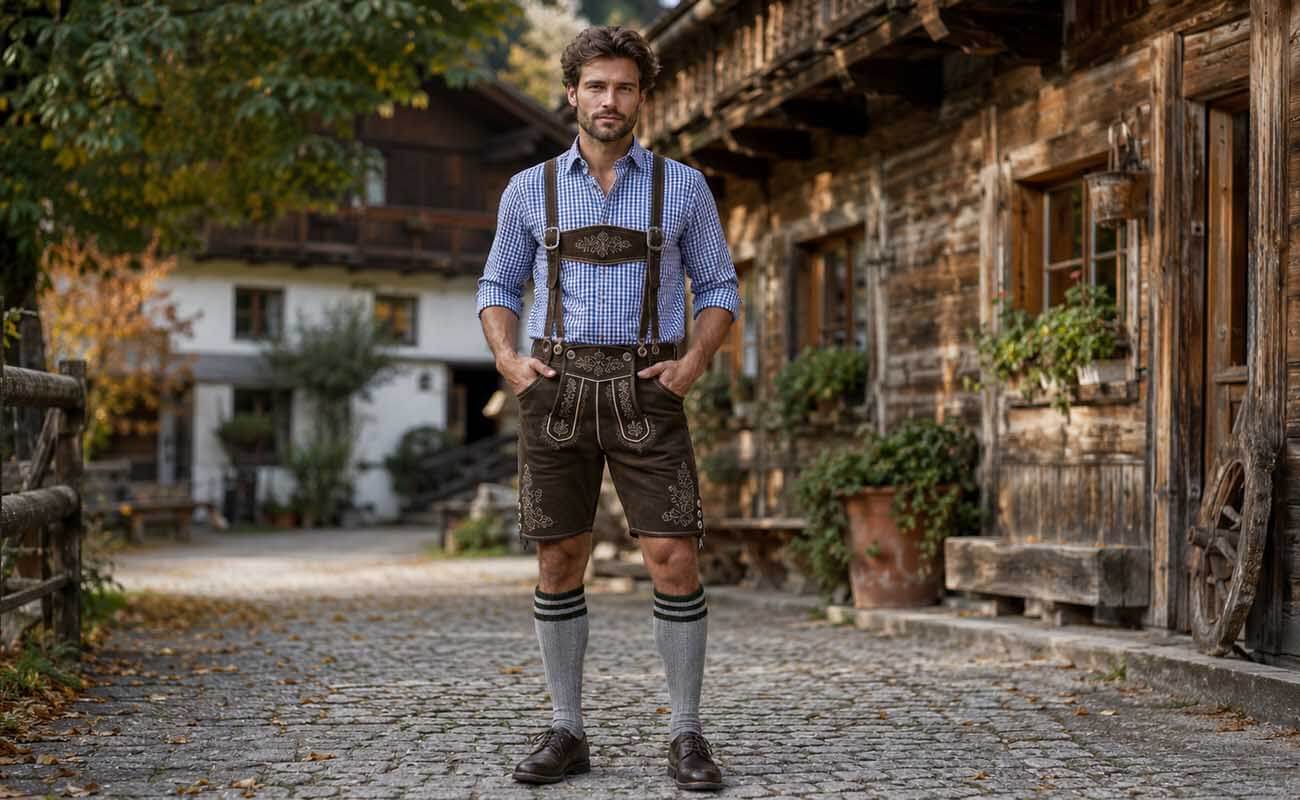
Here’s where the market sits right now:
- Budget tier ($50–$120): Synthetic leather, faux suede, or cotton-blend lederhosen. Fine for costume parties or a single casual event.
- Entry authentic tier ($120–$250): Real cowhide or goat leather, machine-stitched, decent hardware. The sweet spot for first-time Oktoberfest buyers.
- Mid-range tier ($250–$450): Full-grain cowhide or goatskin, reinforced seams, better embroidery, brand-name suspenders included.
- Premium/traditional tier ($450–$800+): Deerskin or elk leather, hand-stitched detailing, custom or made-to-measure fit, heirloom-quality construction.
- Vintage or antique lederhosen: Can range from $200 for worn pieces to $1,000+ for well-preserved, decades-old traditional designs sourced from Bavaria.
These ranges hold across most U.S. and U.K. retailers, though European workshops selling direct sometimes price 10–20% lower than what you’d pay through Oktoberfest-season markups abroad.
What Actually Drives the Price of Lederhosen?
Two pairs can look nearly identical online and still differ by $200. Here’s what’s really behind the number:
- Leather type – Deer leather is the most supple and prized, so it commands the highest prices. Goat leather and suede sit in the middle. Cow leather and synthetic blends are the most affordable, with cowhide being the sturdiest budget-friendly genuine leather option.
- Stitching method – Hand-stitched seams take hours of skilled labor and cost more than machine stitching, but hold up far longer.
- Embroidery detail – Hand-embroidered patterns on the bib and straps add real labor cost, not just decoration.
- Hardware quality – Solid brass buckles and buttons outlast plated metal, which tarnishes or corrodes.
- Country of manufacture – Lederhosen made in Germany or Austria typically cost more than those produced in lower-cost regions, even with comparable materials.
- Brand reputation – Established Trachten houses with decades of craftsmanship history price at a premium.
- Fit type – Made-to-measure or custom lederhosen always cost more than standard sizing.
Types of Leather Used in Lederhosen (And What They Cost)
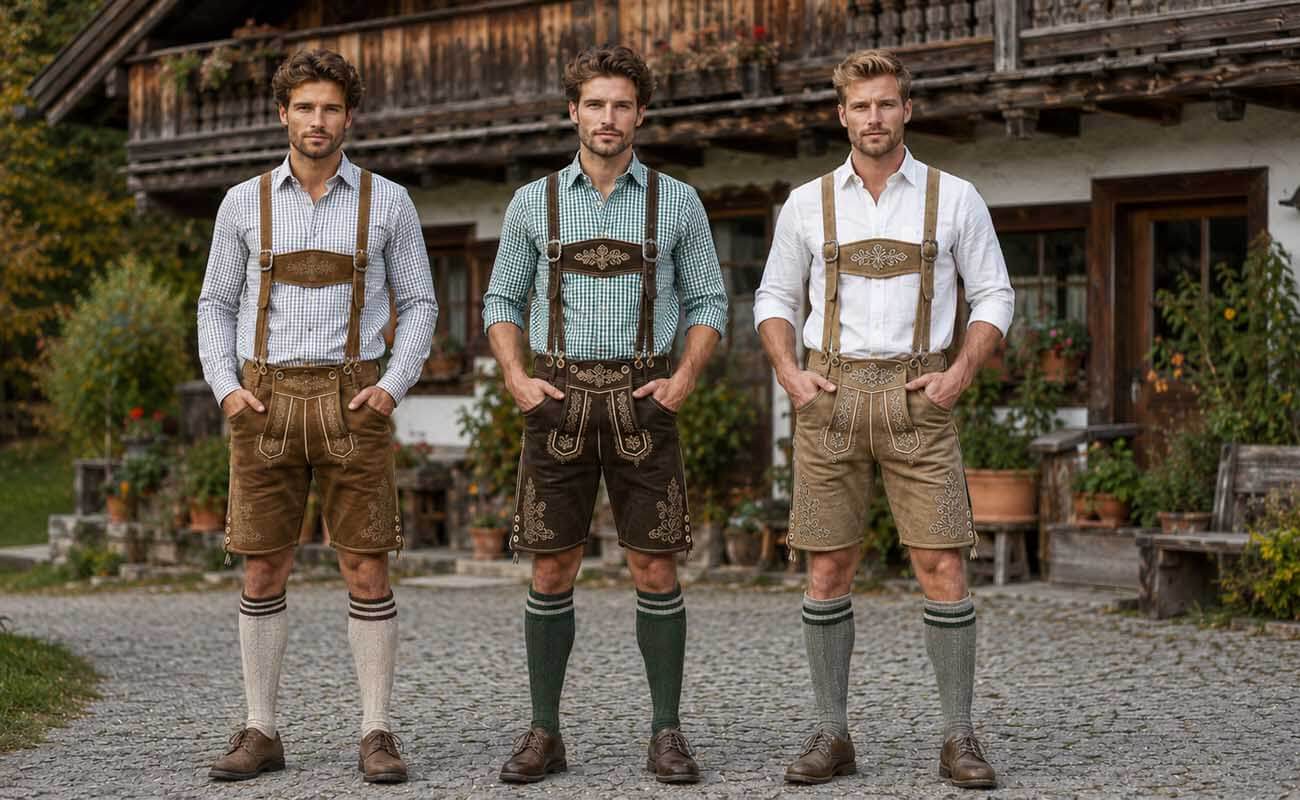
Not all leather is the same, and the type used is usually the biggest reason two pairs of lederhosen can be priced hundreds of dollars apart:
- Cow leather (cowhide): The most common and most affordable genuine leather. It’s thick, sturdy, and holds up well to everyday wear, making it a solid entry into real leather at roughly $120–$280. It’s slightly stiffer than goat or deer leather and takes longer to break in.
- Goat leather: Softer and more flexible than cowhide, with a fine natural grain. Goat leather lederhosen typically run $200–$400, a good middle ground between durability and comfort.
- Deer leather (deerskin): The most prized material for traditional Bavarian lederhosen. Exceptionally soft and lightweight, it molds closely to the body and develops a rich patina with age. Deerskin is the most expensive option, usually $450–$800+, largely due to limited supply.
- Suede leather: Made from the underside of animal hide, suede has a soft, napped texture rather than a smooth finish. It’s prized for its casual look and comfort, but is more porous and shows stains more easily, so it needs more careful maintenance. Prices generally sit in the $180–$400 range.
If you’re choosing purely on budget, cow leather offers the best value for durability per dollar. If comfort is the priority, goat leather is a strong middle option. If you want the most authentic Bavarian look, deerskin is the benchmark. Suede suits buyers who want a distinctive texture and don’t mind extra care. For a deeper comparison, see our full breakdown of goat vs deer lederhosen, or browse the full range in our men’s lederhosen collection.
Budget vs Mid-Range vs Premium: What You Actually Get
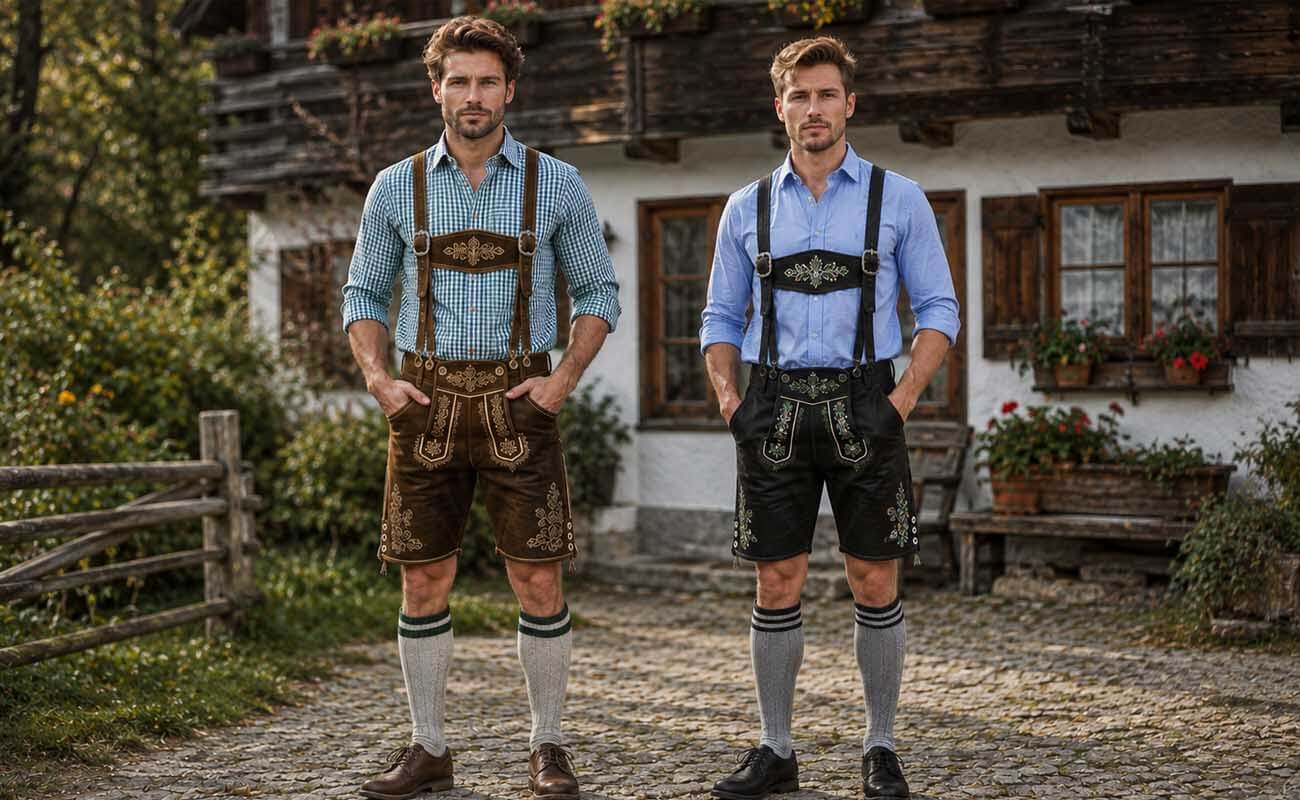
| Price Tier | Typical Cost | Material | Best For |
|---|---|---|---|
| Budget | $50–$120 | Synthetic / faux leather | One-time costume use, kids’ Oktoberfest costumes |
| Entry Authentic | $120–$250 | Cowhide or goat leather | First-time buyers, occasional Oktoberfest wear |
| Mid-Range | $250–$450 | Full-grain leather | Yearly Oktoberfest-goers, gifting |
| Premium | $450–$800+ | Deerskin / elk leather | Collectors, heirloom pieces, frequent wear |
Notice that jumping from budget to entry authentic gives you the biggest quality leap: real leather that ages well versus synthetic material that cracks or peels within a season. The jump from mid-range to premium buys you comfort, longevity, and craftsmanship refinement, but the functional difference is smaller.
How Lederhosen Pricing Varies by Where You Buy
Where you shop matters almost as much as what you buy. Retailers based in the U.S. or U.K. that import finished lederhosen usually build shipping, duties, and currency conversion into the sticker price, which pushes even mid-range pairs closer to $250–$350. Buying directly from a Bavarian or Austrian workshop can save money on the product itself, but international shipping and customs fees often close most of that gap by checkout. Marketplace sellers and general costume retailers tend to sit at the lowest end of the market, usually because they’re selling synthetic or blended materials rather than genuine leather.
A useful rule of thumb: if a “genuine leather” listing is priced noticeably below $100, treat that as a red flag rather than a bargain.
How Much Should a First-Time Buyer Spend on Lederhosen?
If this is your first pair and you’re not sure how often you’ll wear them again, don’t overspend.
- Budget $150–$220 if you want real leather without paying for premium extras.
- Skip synthetic leather unless it’s strictly a one-off costume event, since it doesn’t age well and often looks noticeably fake in photos.
- Avoid the $500+ tier on a first purchase. Save that for once you know you’ll wear lederhosen regularly.
- Check the return policy before buying online, since fit issues are the most common reason first-time buyers regret a purchase. If you’re unsure about sizing, our guide on how tight lederhosen should fit can help you avoid the most common ordering mistakes.
- Buy suspenders and shirt separately if needed, since some listings price the lederhosen alone and others bundle a full outfit, which affects your total budget. Browse lederhosen suspenders and Bavarian shirts if you need to complete the look, or check our full outfit sets for a ready-made bundle.
A $150–$250 pair of genuine leather lederhosen from a reputable retailer will comfortably get most people through several Oktoberfests without needing a replacement. Don’t forget the finishing touches either, since the right lederhosen shoes and socks can make even a mid-range outfit look far more polished.
Real Leather vs Synthetic Lederhosen: Which Is Worth the Price?
This is the single biggest factor in what you should spend. Real leather lederhosen, whether cowhide, goat, or deerskin, molds to your body over time, resists odor better, and can last a decade or more with basic care. The upfront cost is higher, but the cost per wear drops dramatically if you wear them more than two or three times.
Synthetic lederhosen are lighter on the wallet and need no leather maintenance, but they tend to lose shape, crack at stress points, and rarely pass close inspection at Oktoberfest, where authenticity is part of the culture. They make sense for a single themed party, a costume you’ll only wear once, or for children who will outgrow the size within a year anyway.
If you’re deciding between the two, ask yourself one question: will I wear these more than twice? If yes, real leather almost always pays for itself.
Smart Ways to Save Without Sacrificing Quality
You don’t need to spend $500 to get an authentic, good-looking pair. A few practical moves can cut your cost significantly:
- Buy off-season. Prices often drop right after Oktoberfest ends in early October and stay lower through spring.
- Watch for bundle discounts. Many retailers price a lederhosen, shirt, and suspenders set lower than buying each piece separately.
- Consider goat leather over deerskin. It offers similar durability and a softer feel at a noticeably lower price than premium deerskin.
- Check the second-hand and vintage market. Well-maintained used lederhosen, especially from German sellers, can offer premium quality at mid-range prices.
- Compare shipping and import fees before checkout. A cheaper listing can end up costing more once customs and international shipping are added.
- Sign up for retailer newsletters before major sales windows, since many Trachten retailers run early-bird Oktoberfest discounts in July and August.
Is It Worth Spending More on Lederhosen? (Cost Per Wear)

A useful way to judge your budget is cost per wear rather than sticker price alone.
- A $90 synthetic pair worn once works out to $90 per wear.
- A $220 genuine leather pair worn 10 times over five years works out to $22 per wear.
- A $600 deerskin pair worn 30+ times over a lifetime can work out to under $20 per wear, and it often gets passed down or resold at a fraction of the loss compared to synthetic materials.
Viewed this way, spending more on genuine leather is usually the more economical choice for anyone who plans to wear lederhosen more than once or twice.
Frequently Asked Questions
A good, genuine leather pair typically costs between $150 and $350, depending on the leather type, stitching, and brand.
Cheap synthetic lederhosen under $100 are fine for a single costume event, but they wear out quickly and aren’t recommended for repeated use or an authentic look.
Leather type and hand-stitching drive the highest costs. Deerskin with hand-embroidered detailing sits at the top of the price range.
Yes, many retailers raise prices or reduce discounts from late August through October due to peak demand, so buying earlier in the year or right after the season often saves money.
Online retailers usually offer a wider range of sizes and prices, while buying in person lets you check leather quality and fit before paying.
Genuine leather lederhosen, properly cared for, commonly last 10 to 20 years or longer, which is why many buyers see them as a one-time investment.
If you’re only attending a single event and don’t expect to wear them again, renting or a lower-cost synthetic pair usually makes more sense. If there’s any chance you’ll wear them again, buying a mid-range leather pair is typically the better long-term value.
Not always. Many listings price the leather shorts alone, while others sell a complete outfit including a shirt, suspenders, and sometimes socks. Always check exactly what’s included before comparing prices between retailers.
How to Care for Lederhosen So Your Investment Lasts
A small amount of care protects the value of whatever price tier you choose.
- Avoid washing leather lederhosen in water. Spot-clean stains with a damp cloth and air dry away from direct heat.
- Condition the leather once or twice a year with a leather conditioner made for garments, not shoe polish or heavy waxes.
- Store them flat or on a wide hanger, not folded for long periods, to avoid permanent creasing.
- Let them air out after wearing rather than sealing them in a bag immediately, since trapped moisture is the most common cause of leather damage.
- Address small repairs quickly. A loose stitch or button is inexpensive to fix but can turn costly if ignored.
Budgeting for the Complete Lederhosen Outfit
The lederhosen themselves are usually only part of the total spend. A complete, authentic look typically includes several other pieces:
- Suspenders: A well-made pair of leather suspenders usually runs $30–$80 and is often the detail that makes an outfit look either authentic or costume-like. Our post on why you can’t wear a belt with suspenders explains the traditional reasoning.
- Shirt: A traditional Bavarian shirt adds roughly $40–$100 depending on fabric quality and embroidery.
- Shoes: Proper lederhosen shoes typically cost $80–$180. See our guide on what shoes to wear with lederhosen for the traditional options.
- Socks: Traditional Trachten socks run $15–$40 a pair, and the style you choose actually matters, as covered in wearing the right socks with lederhosen.
- Belt: Some styles use a lederhosen belt instead of suspenders, generally priced around $30–$70.
- Vest or waistcoat: Optional but common for a more formal look, waistcoats typically add $60–$150.
Add it all up, and a complete mid-range outfit built around a $200 pair of lederhosen often lands closer to $350–$450 once shoes, socks, a shirt, and suspenders are included. It’s worth budgeting for the full outfit from the start rather than being surprised by add-on costs later.
If you’re shopping as a couple or family, it’s worth checking the women’s side too. A dirndl dress follows similar pricing logic to lederhosen, and pairing outfits together for Oktoberfest is a common way retailers bundle discounts.
Related Reading
If you’re still narrowing down your budget and your look, these guides cover the details that affect both fit and cost:
- Goat vs Deer Lederhosen: Which One Suits You?
- How Tight Should Lederhosen Fit?
- Stepping Up Your Lederhosen Game: What Shoes to Wear?
- Are You Wearing the Right Socks With Lederhosen?
- Can Anyone Walk Into Oktoberfest? Unveiling the Truth!
- What Are the Rules to Wearing Suspenders?
You can also browse the complete Journal for more Trachten buying guides, or head straight to the lederhosen collection to start comparing styles and prices.
Final Verdict: What Should You Actually Spend?
For most buyers right now, $150–$300 is the realistic sweet spot: enough to get genuine leather, solid stitching, and a fit that holds up for years, without paying premium prices for details you may not need. Reserve the $450+ tier for collectors, frequent wearers, or anyone who wants a true heirloom piece. And unless it’s strictly a one-time costume, it’s worth skipping synthetic leather altogether, since the long-term cost per wear rarely justifies the initial savings.
The right budget isn’t about spending the most or the least, it’s about matching your spending to how often you’ll actually wear them and how much authenticity matters to you.


One thought on “How Much Should You Spend on Lederhosen?”