

Blog
The Ultimate Guide to Lederhosen Suspenders — Rules, Fit & Style Mistakes


Lederhosen suspenders are wide, traditional leather braces worn over the shoulders to hold up Bavarian lederhosen. The key rules are: never pair them with a belt, choose H-back or X-back styles for even weight distribution, size them so the front strap sits flat across the chest without pulling, and match embroidery and leather tone to the rest of your outfit. Getting these three things right — rules, fit, and avoiding common mistakes — is what separates an authentic Lederhosen look from a costume-y one.
Lederhosen suspenders are one of the most recognizable parts of traditional Bavarian dress, but they’re also one of the most misunderstood. Unlike ordinary dress suspenders, they’re built wider, thicker, and more decorative — which means the usual suspender rules don’t fully apply. This guide covers exactly how Lederhosen suspenders should be worn: the rules that govern them, how to get the fit right, and the style mistakes that instantly give away a poorly put-together outfit. For more style breakdowns like this one, browse the full Alpen Lederhosen journal, where we cover everything from fit guides to Bavarian fashion history.
What Makes Lederhosen Suspenders Different
Before getting into rules and fit, it helps to understand what actually separates Lederhosen suspenders from regular braces. Genuine Lederhosen suspenders are made from thick cowhide, deer, or goat leather rather than the silk, cotton, or elastic used in standard dress suspenders, and they’re noticeably wider — often two to three inches at the chest strap — to support the heavier weight of leather shorts or trousers. Most attach with leather buttons or metal hooks directly into the lederhosen waistband instead of clips, and traditional pairs feature a decorative front piece known as a “Tragering” or “H-Träger,” often embroidered with edelweiss, deer antlers, or regional motifs that carry cultural meaning rather than being purely decorative. They’re also almost always cut in an H-back or X-back shape for stability, since a Y-back style, common on regular suspenders, doesn’t distribute the weight of heavy leather trousers properly. These differences are exactly why the rules and fit guidance below don’t fully overlap with the advice you’d get for a standard suit or shirt suspender — and why it’s worth browsing genuine men’s Lederhosen and matching Lederhosen suspenders as a set rather than shopping the two separately.
The Core Rules of Wearing Lederhosen Suspenders

These are the non-negotiable rules — break these and the outfit stops looking traditional and starts looking like a costume.
- Never wear a belt with Lederhosen suspenders. Authentic lederhosen are cut with a higher rise specifically for suspenders; adding a belt is both unnecessary and considered a beginner mistake.
- Keep the front piece centered and flat. The decorative chest strap (Tragering) should sit flat against the chest, not twisted or riding to one side.
- Match leather tone to your lederhosen. Suspenders should be the same or a complementary shade of leather as the shorts or trousers — mismatched leather tones look disjointed.
- Respect the embroidery, don’t overdo it elsewhere. If your suspenders have detailed stitching, keep the rest of the outfit relatively simple so the suspenders remain the visual anchor.
- Wear them fully visible, not layered under a jacket. Unlike formal dress suspenders, Lederhosen suspenders are meant to be seen — they’re a feature, not a hidden functional layer.
- Choose H-back or X-back only. A Y-back style isn’t traditional for lederhosen and doesn’t distribute the weight of leather trousers properly.
Getting the Fit Right

Fit is where most people go wrong with Lederhosen suspenders, since they behave differently from regular braces.
- Length: The straps should hold the lederhosen at the natural waist, not low on the hips, with just enough tension to keep the shorts in place when you sit, bend, or dance.
- Chest strap position: The horizontal front piece should sit roughly at mid-chest, not too high near the collarbone or too low near the stomach.
- Shoulder width: Straps should sit fully on top of the shoulder, not sliding toward the arm; if they slip, the attachment points need adjusting, not the strap itself.
- Tension test: Raise your arms and sit down while wearing them; if the straps pull uncomfortably or the lederhosen rides up excessively, they’re adjusted too tight.
- Sizing by body type: Broader builds should size up in strap width for visual balance, while slimmer builds can go with narrower traditional H-back designs without looking overwhelmed.
New leather suspenders are often stiff, so expect a short break-in period of a few wears before the leather softens and starts moving naturally with you.
Common Style Mistakes to Avoid
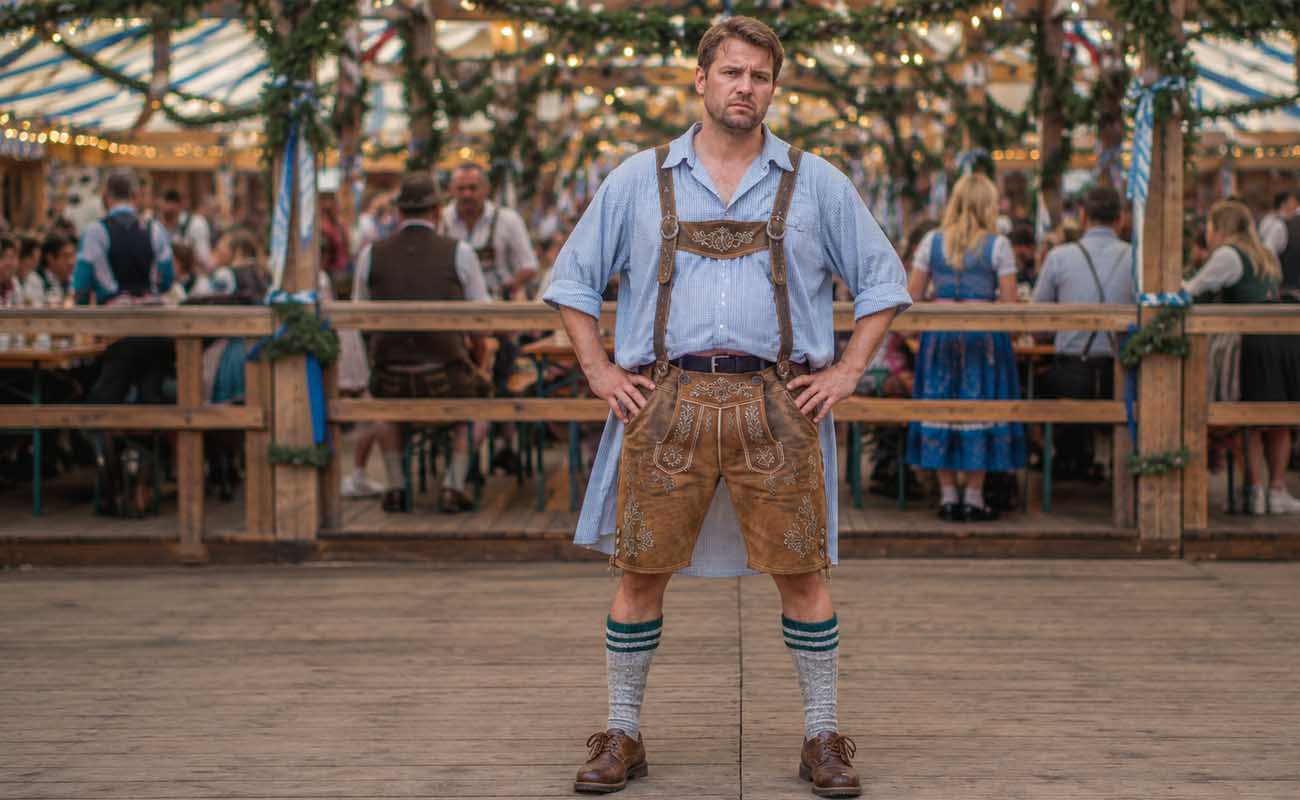
Even with good intentions, these mistakes are the most common giveaways of an inexperienced Lederhosen outfit.
- Wearing a belt underneath — the single most common and most noticeable mistake.
- Choosing the wrong back style, since thin Y-back or dress-style suspenders under lederhosen look mismatched with the rugged, traditional nature of the outfit.
- Mismatched leather colors, such as pairing dark brown suspenders with black lederhosen, which breaks the visual cohesion the outfit is built around.
- Over-accessorizing with too many pins, patches, or extra straps on top of already-embroidered suspenders, which makes the outfit look cluttered rather than authentic.
- Ignoring shirt fit, since a baggy or wrinkled shirt underneath will show through the visible suspenders and undercut the polished look.
- Wearing them too loose, which causes constant shifting during dancing or movement — a properly fitted pair should stay in place through normal activity.
A Short History of Lederhosen Suspenders
Understanding where Lederhosen suspenders came from explains why the rules above aren’t arbitrary — they’re rooted in centuries of practical design. Lederhosen were originally workwear for farmers and laborers in the Alpine regions, and the wide leather suspenders existed purely to support heavy leather trousers during physical labor, where comfort and durability came before style. By the 19th century, lederhosen and their suspenders had shifted from strictly functional workwear into traditional Trachten, or folk costume, worn at festivals, weddings, and celebrations — this is when embroidery and decorative Tragering pieces became common. Different Bavarian and Alpine regions went on to develop their own embroidery patterns and suspender widths, which is why a Tragering from one area can look noticeably different from another and why authentic, well-made sets are still valued over generic reproductions today. The suspenders seen at Oktoberfest now are a direct continuation of that festive Trachten tradition, which is also why leather quality and stitching still matter so much to buyers — a mass-produced imitation simply doesn’t carry the same weight, both literally and culturally, as a properly made pair.
When and Where to Wear Lederhosen Suspenders
Knowing the right occasion is just as important as getting the rules and fit correct. Oktoberfest and beer festivals remain the most common and expected setting, where full lederhosen with visible, well-fitted suspenders is the standard look. Traditional Bavarian weddings or folk festivals, known as Volksfest, often call for a slightly more formal version, sometimes with finer embroidery and matching accessories like a Trachten vest. Alpine or heritage-themed events — costume parties, cultural exhibitions, or Bavarian-themed corporate gatherings — are also appropriate settings. It’s increasingly common to see leather Lederhosen-style suspenders paired with jeans or cargo pants for a rugged, heritage-inspired casual look even outside a festival context. What doesn’t work is wearing them in strictly formal business settings or black-tie events, since Lederhosen suspenders are a folk-costume element rather than formalwear, and mixing the two contexts undermines both looks.
How to Choose the Right Pair When Buying
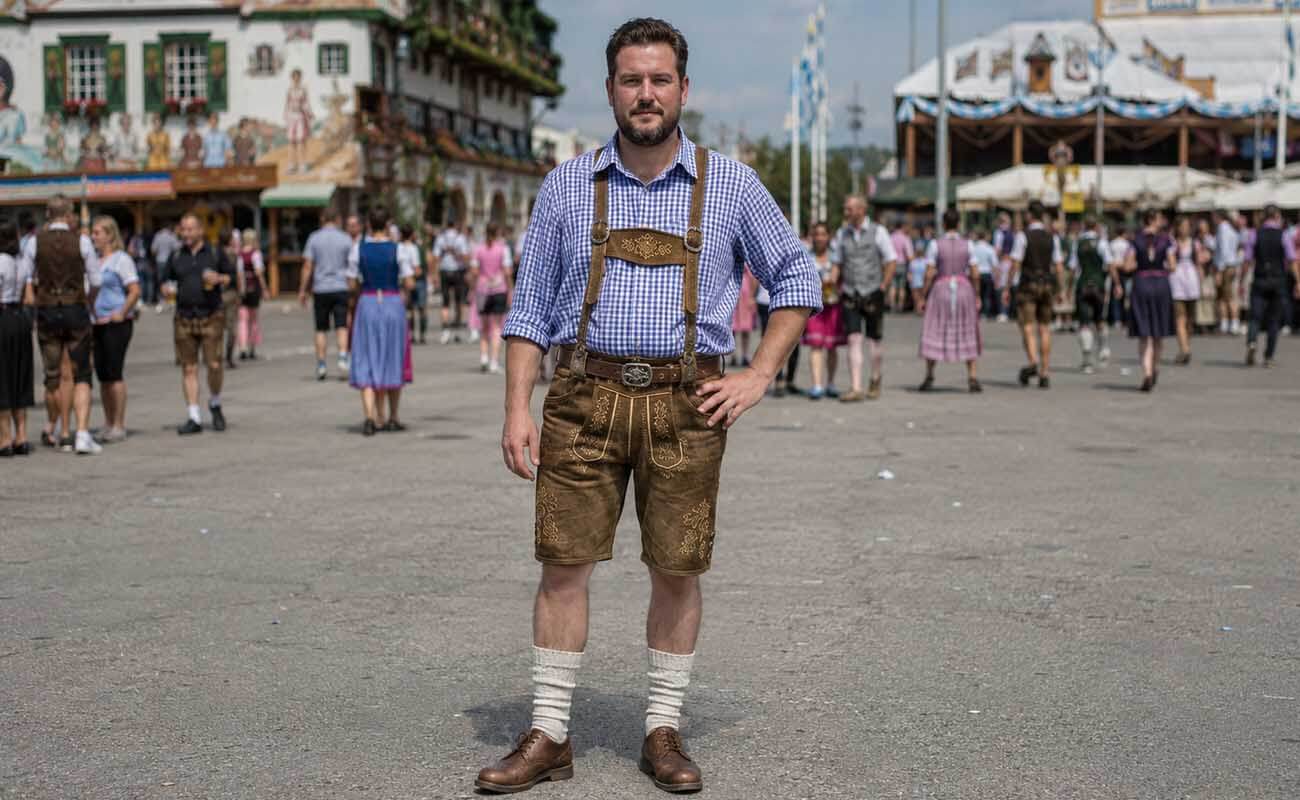
If you’re shopping for Lederhosen suspenders rather than styling an existing pair, a few buying criteria separate an authentic set from a cheap imitation. Genuine cowhide, deer, or goat leather will show a natural grain and slight variation, while a uniform, plastic-like texture usually signals synthetic material. Hand-finished or reinforced stitching along the embroidery and strap edges holds up far longer than glued or loosely stitched decoration, and buying suspenders as part of a matched lederhosen set — rather than mixing brands — is the easiest way to guarantee the leather tone and hardware finish align. Buttons, hooks, or buckles should be solid metal rather than lightweight plastic-coated pieces that wear out or discolor quickly, and it’s worth looking for suspenders with a few adjustment points so the fit can be fine-tuned as described earlier. Suspenders made in Germany or Austria by established Trachten makers are also generally more reliable in leather quality and stitching than unbranded imports, so checking the origin before buying is worth the extra minute.
Caring for Leather Lederhosen Suspenders
Because genuine Lederhosen suspenders are a leather investment piece, proper care extends their life significantly. Wipe them down with a slightly damp cloth after wear rather than soaking or machine washing, which can warp the leather and damage embroidery, and apply a leather conditioner every few months — especially before and after festival season — to prevent the leather from drying out and cracking. Store the suspenders flat or hung by the back strap in a cool, dry place, since folding tightly for long periods can create permanent creases in thick leather, and keep them away from prolonged direct sunlight, which fades embroidery colors and dries out leather faster than normal wear. Wiping metal buttons or hooks periodically also prevents tarnish, particularly if the suspenders are worn in humid or rainy festival conditions.
Pairing Lederhosen Suspenders with the Rest of Your Trachten Outfit
Lederhosen suspenders never work in isolation — they’re one part of a full traditional outfit, and the strongest looks treat the suspenders as the anchor that the rest of the outfit builds around. A checked or plain Bavarian shirt in a color that doesn’t compete with the embroidery keeps the visual focus on the suspenders rather than splitting attention between two busy elements. Many traditional outfits also layer a waistcoat or vest over part of the suspenders for formal Volksfest occasions, which softens the look while still letting the embroidered chest strap show through. Below the waist, the suspenders should visually connect to the Lederhosen belts or trouser trim if your outfit includes one as a decorative (non-functional) element, along with coordinating Trachten socks and Lederhosen shoes in a similar leather tone. The goal across every layer is the same principle covered earlier: let the suspenders be the statement piece, and keep everything else deliberately simple so the outfit reads as cohesive rather than busy.
It’s worth noting that women’s Bavarian outfits handle this differently — a Dirndl dress doesn’t typically use the same style of leather suspenders, since the bodice itself serves a similar structural and decorative role. If you’re dressing as a couple or group for Oktoberfest, coordinating leather tones between the men’s Lederhosen suspenders and the women’s Dirndl accessories is a simple way to make the overall group outfit feel intentional rather than thrown together.
A Simple Pre-Event Checklist
Before heading out to Oktoberfest, a wedding, or any Bavarian-themed event, running through a short checklist can catch most of the mistakes covered above before they become visible in photos. First, confirm there’s no belt anywhere near the waistband — if the trousers have belt loops instead of suspender buttons, they’re the wrong trousers for this outfit. Second, do the tension test: sit down, raise your arms, and reach forward to make sure the straps hold their position without pulling or sliding. Third, check that the leather tone of the suspenders reasonably matches the lederhosen, and that any visible hardware (buttons, buckles, hooks) is consistent in finish. Finally, glance at the shirt underneath for wrinkles or bagginess, since it will be fully visible around and beneath the straps all day. Running through these four checks takes less than a minute and prevents the most common mistakes covered throughout this guide.
Rules, Fit & Mistakes at a Glance
| Category | Do | Don’t |
|---|---|---|
| Rules | Wear visible, no belt, H/X-back | Combine with a belt or Y-back style |
| Fit | Snug at natural waist, flat chest strap | Loose straps that slide or ride up |
| Style | Match leather tone throughout | Mix mismatched leather colors or finishes |
| Accessories | Keep the rest of the outfit simple | Overload with extra pins or patches |
Frequently Asked Questions About Lederhosen Suspenders
No. Traditional lederhosen are tailored with a higher rise specifically to work with suspenders, so a belt is both unnecessary and considered incorrect styling.
H-back suspenders have a horizontal bar connecting the two straps across the back for stability, while X-back straps cross over each other. Both are traditional for lederhosen, though H-back is slightly more common on heavier or embroidered designs.
Yes, ideally. Matching or closely complementary leather tones between the suspenders and the shorts or trousers create a cohesive, intentional look rather than a mismatched one.
They should sit flat on the shoulders and hold the lederhosen at your natural waist without pulling when you move, sit, or raise your arms. If they constantly slip or dig in, they need adjusting.
For an authentic look, leather is the traditional and expected material. Elastic or synthetic versions exist for cost or comfort reasons, but they’re generally considered less authentic for formal Oktoberfest or traditional Bavarian settings.
Yes, increasingly so — leather Lederhosen-style suspenders are being paired with jeans, cargo pants, or heavy cotton trousers for a rugged, heritage-inspired casual look, though the traditional embroidered versions are still best reserved for festivals and Bavarian cultural events.Yes, increasingly so — leather Lederhosen-style suspenders are being paired with jeans, cargo pants, or heavy cotton trousers for a rugged, heritage-inspired casual look, though the traditional embroidered versions are still best reserved for festivals and Bavarian cultural events.
A simple checked or plain Bavarian shirt, and optionally a waistcoat for more formal occasions, work best. Keeping the shirt uncomplicated lets the embroidered suspenders stay the visual focus of the outfit rather than competing with a busy pattern.
Related Reading
If you’re building out a full Bavarian wardrobe, a few other guides on the Alpen Lederhosen blog are worth reading alongside this one. Also Check Out: When Did Men Stop Wearing Suspenders? for more background on how suspenders fell out of and back into mainstream fashion, and Why Can’t You Wear a Belt with Suspenders? for a deeper look at the belt-versus-suspenders rule referenced throughout this guide. If you’re new to the accessory entirely, What Are the Rules to Wearing Suspenders? covers the general rules that apply to dress suspenders outside the Bavarian context.
Final Word
Lederhosen suspenders aren’t just a functional accessory — they’re the centerpiece of a traditional Bavarian outfit, which is exactly why the rules around them matter more than with ordinary braces. Get the three fundamentals right — never combine them with a belt, fit them so the chest strap sits flat and secure, and avoid the common mismatched-leather or over-accessorizing mistakes — and the outfit reads as authentic rather than costume-like, whether you’re at Oktoberfest or a traditional Bavarian event. And if you’re putting together your outfit for this year’s festival season, it’s worth checking the current Oktoberfest sale for matched lederhosen and suspender sets before prices climb closer to the event.


One thought on “The Ultimate Guide to Lederhosen Suspenders — Rules, Fit & Style Mistakes”