

Blog
What is a German Beer Girl Called? Unraveling the Mystery!


Walk into a Bavarian beer hall or an Oktoberfest tent and you will see them right away: smiling women in colorful Dirndls, weaving through the crowd with a handful of heavy steins. Visitors often ask the same question the moment they sit down: what is a German beer girl actually called? The honest answer is more interesting than a single word, because it opens a window into Bavarian language, clothing and hospitality.
In this guide you will learn the real German terms, the history behind the role, what these servers wear, where to meet them and how to say thank you in the right way. If you want more festival vocabulary and outfit ideas afterwards, browse our Oktoberfest guides and Bavarian fashion tips, or explore traditional German clothing at Alpen Lederhosen.
So, What Is a German Beer Girl Called?
There is no single official title for a “beer girl” in Germany. The term is an English nickname rather than a German job name. In everyday German, a waitress is called a “Kellnerin” and a waiter is a “Kellner.” These are the standard words used in restaurants across the country, and they are always safe to use.
At Oktoberfest and in many Bavarian beer halls, however, you will often hear the word “Bedienung.” It literally means “service” and refers to the person who looks after your table. Locals use it as a general term, and it works for servers of any gender. You may also see English-speaking visitors talk about a “beer maiden,” a phrase that fits the traditional image but is not a formal German title.
If you want the full breakdown of these job titles, including regional differences in Austria and Switzerland, read our guide on what an Oktoberfest waiter is called in German. The short version is simple: use “Kellnerin” when you are unsure, and know that “Bedienung” is what you will hear most in the tents.
The Tradition Behind German Beer Girls
The role grew out of Germany’s long beer culture. Beer has been brewed in Bavaria for centuries, and the famous purity law of 1516 shaped how it was made. As taverns, monasteries and beer halls grew, so did the need for people who could serve large crowds quickly and with good humor. Serving beer became a respected skill, passed from one generation to the next.
Oktoberfest gave the tradition its biggest stage. The festival began in 1810 as a royal wedding celebration in Munich, and over the decades it grew into the world’s largest folk festival. As the tents got bigger, the servers became the heart of the experience. Today thousands of people work in the tents each year, and the servers are as much a part of the festival as the brass bands and the roast chicken.
The clothing tells its own story. The Dirndl began as practical workwear for women in Alpine regions, and its name comes from a Bavarian word for a young woman or maid. In the nineteenth century, the fashion spread to wealthier families who admired the simple, rural style, and it slowly became a symbol of regional pride. Wearing a Dirndl behind the bar or between the benches connects every server to that long tradition.
To this day the work is passed on within families and teams. Many servers begin as helpers, learn the rhythm of the tent from experienced colleagues, and return season after season. That sense of continuity is one reason the profession feels so rooted in Bavarian identity.
Characteristics of a Traditional German Beer Girl
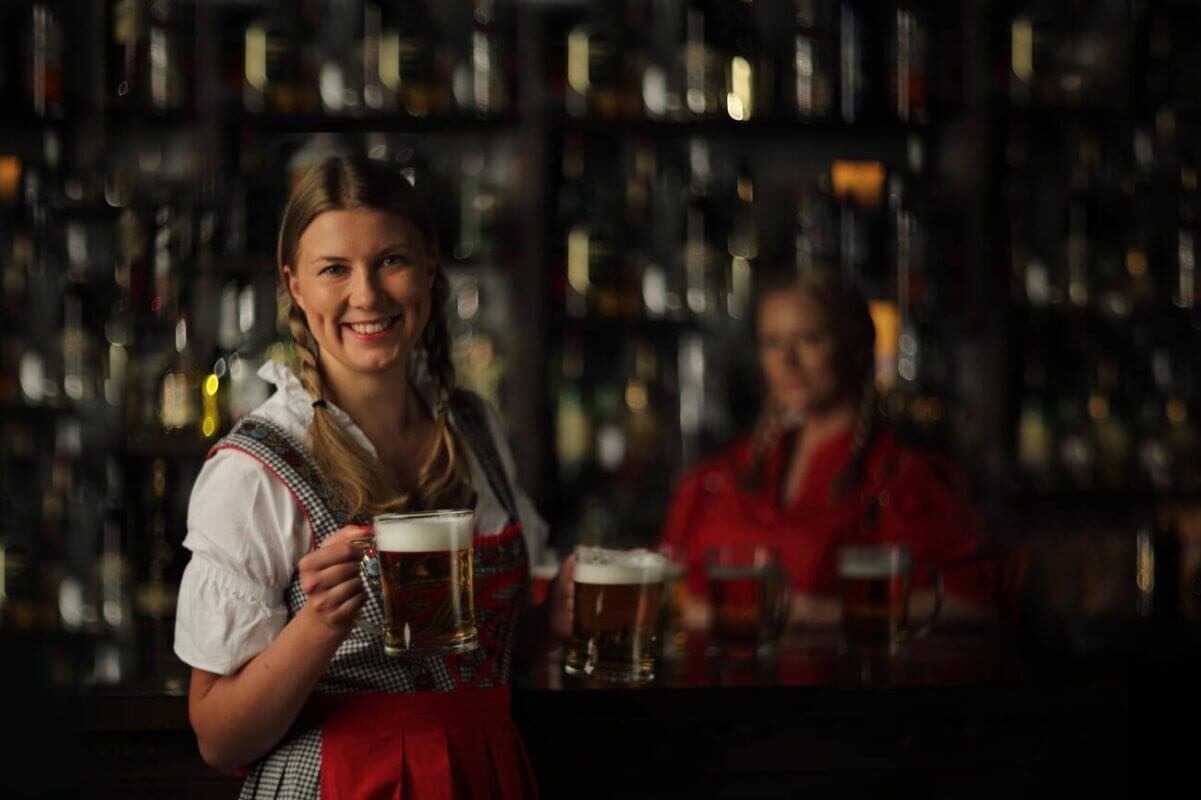
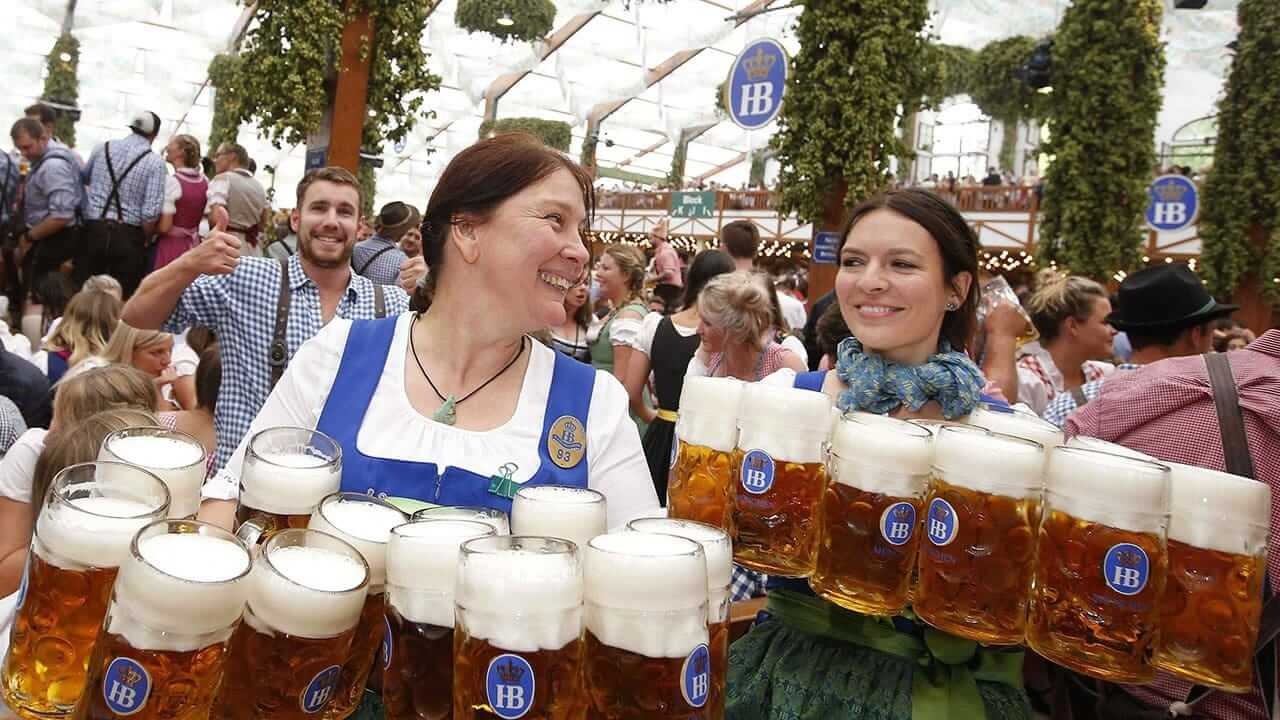
What makes a traditional server stand out? First, strength and balance. A full one-liter stein, called a “Maß,” weighs more than two kilograms, and experienced servers can carry up to ten of them at once. They do it through narrow aisles, past singing guests, without spilling a drop. It looks effortless, but it takes years of practice and real physical fitness.
Second, hospitality. A good server remembers faces, keeps track of many orders and still finds time for a joke. This warmth is closely tied to the German idea of “Gemütlichkeit,” a word that describes a cozy, friendly and relaxed atmosphere. Guests who feel welcome stay longer, sing louder and come back next year.
Third, the outfit. The Dirndl is made of four classic parts: the bodice (“Mieder”), the blouse (“Bluse”), the skirt (“Rock”) and the apron (“Schürze”). Each piece has a job, from the snug bodice that gives structure to the apron that protects the skirt. You can find matching pieces in our Dirndl blouse collection, and you can finish the look with a Dirndl handbag.
One famous detail is the apron bow. According to custom, a bow tied on the left means the wearer is single, while a bow on the right means she is taken. Not everyone follows the rule today, but it is a charming tradition that visitors love to learn. For more on how people really dress at the festival, see what German girls wear to Oktoberfest.
If you want a deeper look at traditional dresses, you can explore our Dirndl dress collection and pick the color and length that suit you best.
Modern Interpretations: Evolution of the Beer Serving Role
The job has changed a great deal. Today servers use modern tools such as electronic ordering devices and card readers, and many tents manage reservations online. The stein is still the same, but the way orders are tracked has moved with the times, which makes the work faster and more organized for both servers and guests.
Uniforms have evolved as well. Many tents still insist on a classic Dirndl, yet designers now offer new colors, patterns and cuts, from knee-length styles to longer, more elegant versions. Some servers wear modern Trachten blouses with updated sleeves, while others choose lighter fabrics so they can stay comfortable during long shifts. Tradition remains the foundation, but personal style has more room than before.
The role is also more inclusive. Men and women both work as “Bedienung,” and tents welcome staff from many countries and backgrounds. Guests today expect friendly, professional service, and servers meet that expectation with skill rather than stereotypes. The focus has moved from appearance to expertise, which is a healthy change for the whole industry.
If you love the classic Dirndl look, a few of our popular styles include the Dirndl Roseline, the Damilia Dirndl, the Carina Dirndl and the Traditional Dirndl Mareile. Prefer a different silhouette? Many women now choose women’s lederhosen or a Bavarian skirt with a Dirndl blouse. Watch our new arrivals and the Oktoberfest sale for seasonal offers.
Famous Beer Halls Where German Beer Girls Shine
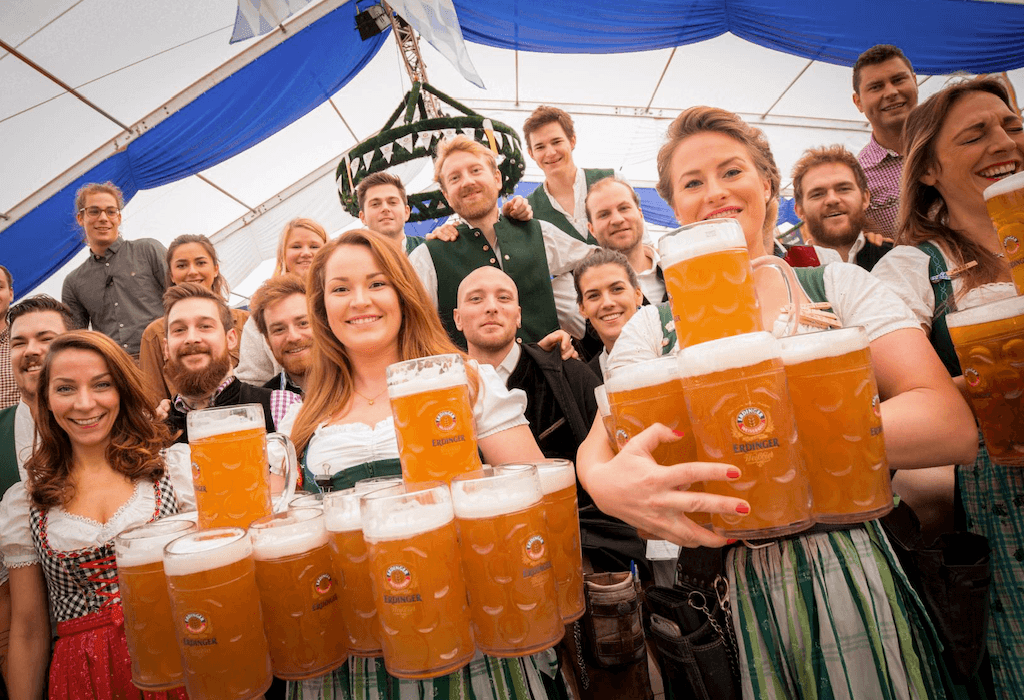
Where can you meet a traditional server today? The most famous stage is, of course, Oktoberfest in Munich. Every year the Theresienwiese grounds fill with large tents, each with its own music, menu and atmosphere. Servers work long days here, and the energy of the crowd carries them through. Planning a trip is easier if you read whether anyone can walk into Oktoberfest before you go.
Outside the festival season, Munich’s historic beer halls are a great place to experience the tradition. The Hofbräuhaus is probably the best known, a huge hall with long wooden tables, live brass music and servers who move quickly between the benches. Other Bavarian cities and towns have their own traditional halls and beer gardens, where you can enjoy a pretzel, a roast and a cold Maß under the trees.
You do not even need to travel to Germany. Oktoberfest celebrations now take place around the world, from the United Kingdom to the United States. If you are curious about events closer to home, take a look at the top reasons to attend Oktoberfest in Newcastle, or see how the festival looks in another European capital in our post on Oktoberfest Paris 2025.
Visiting with family? Food is a big part of the day, and our guide on what kids eat at Oktoberfest will help you plan. And if you spot someone in a funny hat, why people wear chicken hats at Oktoberfest explains one of the festival’s silliest traditions.
Cultural Significance Beyond Just Serving Beer
A server in a tent is more than a person with a tray. She is a host, a guide and, for many visitors, the first real contact with Bavarian culture. She explains how to order, helps newcomers find a seat and keeps the mood friendly when the crowd gets loud. This role as an informal ambassador is a big part of why the tradition has lasted so long.
Servers also help keep local customs alive. They wear regional clothing, speak the local dialect and carry the habits of the tent from one season to the next. For visitors, hearing a friendly “Grüß Gott” or “Servus” is part of the authentic experience. These small moments remind us that Oktoberfest is not just a drinking event but a cultural celebration.
Clothing is a big part of that culture. Men at the festival wear authentic lederhosen for men with a waistcoat in the same spirit, and you can learn the name of the vest at Oktoberfest to understand the full costume. If you want to dig into the details of the men’s side, our article what lederhosen means in German is a great place to start.
Finally, there is the economic side. Servers rely on tips, and during the festival those tips can make up a large share of their earnings. Giving a fair Trinkgeld is therefore a meaningful way to respect their hard work and keep the tradition healthy.
Embracing Diversity: Women Making Their Mark in the Industry
Beer was once seen as a mostly male world, yet women have always played a major role in it. They have brewed, served, managed taverns and built businesses. Today more women than ever work as brewers, sommeliers, restaurant owners and festival organizers, and the beer scene is richer for it.
For servers, the picture is just as positive. Many women treat the job as a serious profession and a source of pride. Some return to the same tent every year, while others move into management, training new staff or running their own venues. Their experience shows that serving beer is a skilled career, not just a seasonal task.
Comfort and fit matter in a job this physical. Choosing breathable fabrics, a well-made bodice and shoes that support long hours on the feet makes a real difference. The same idea applies to men’s clothing, and our article on the difference between lederhosen and bundhosen shows how comfort and tradition can go together. Wondering about pricing? See how much authentic lederhosen costs in Munich and how much you should spend on lederhosen.
The Legacy Lives On: Future Prospects for German Beer Girls
What does the future hold for this tradition? The role is likely to keep its core identity while adapting to new habits. Younger servers bring fresh ideas, from social media storytelling to sustainable practices in the tents. At the same time, the love for traditional clothing is growing, and more visitors than ever arrive in a Dirndl or lederhosen.
Tourism will keep the tradition visible. Millions of people travel to Bavaria for the festival, and many of them take home a story about the server who looked after their table. That personal connection is hard to replace, and it keeps the profession relevant even as technology changes the details of the job.
Sustainability is also becoming part of the conversation. Many venues now focus on reusable materials, regional ingredients and fair working conditions. These changes help protect both the tradition and the people who carry it forward, and they make the festival more welcoming for the next generation.
For visitors, the best way to support this tradition is simple: arrive curious, be patient when the tent is busy and treat your server with kindness. A short conversation, a genuine thank you and a fair tip can brighten a long shift. Many servers say the friendly guests are the reason they come back every year, and that human connection is what keeps the whole festival feeling warm and welcoming for everyone who walks in, every single season.
German Beer Girl Words You Should Know
If you want to order like a local, a few simple German words go a long way. Here are the ones you will hear most often in a beer hall or tent.
- Kellnerin: the standard German word for a waitress.
- Bedienung: literally “service”; the word often used at Oktoberfest for the server at your table.
- Maß: the traditional one-liter beer mug.
- Prost: “cheers”, said when glasses meet.
- Trinkgeld: a tip, which servers truly appreciate.
- Danke / Bitte: “thank you” and “please”, always welcome.
A friendly “Entschuldigung” (excuse me) and eye contact will get your server’s attention much faster than shouting. A smile and a polite “Eine Maß, bitte” is all you need to order a liter of beer.
How to Dress Like a German Beer Girl (Dirndl Guide)
You do not have to work in a tent to enjoy the look. A classic Dirndl outfit is easy to build once you know the pieces, and every part has a shop category to start from.
The key pieces
- Dirndl dress: choose your color and length from the Dirndl dress collection. Lengths usually range from mini to midi to long.
- Blouse: a Dirndl blouse gives the dress its classic neckline and sleeves.
- Accessories: add a Dirndl handbag and a small shawl or jacket for cooler evenings.
- Alternatives: try women’s lederhosen or a women’s Oktoberfest shirt.
Dressing as a group?
If your partner or friends are joining you, a ready-made lederhosen outfit set makes matching easy. Men can browse men’s Oktoberfest clothing, then read how tight lederhosen should fit before buying.
Frequently Asked Questions
There is no single official title. In everyday German a waitress is a “Kellnerin,” and at Oktoberfest you will often hear “Bedienung,” meaning “service” or “server.”
They traditionally wear a Dirndl with a bodice, blouse, skirt and apron. Explore similar styles in our Dirndl collection.
By tradition, a bow on the left means single and a bow on the right means taken, though many people simply tie it for style.
Experienced servers at Oktoberfest often carry up to ten full one-liter steins at once.
Yes. Tipping (Trinkgeld) is customary, and rounding up the bill or adding around ten percent is a common way to say thank you.
Conclusion: Cheers to the Unsung Heroes – Prost!
So, what is a German beer girl called? In everyday German she is a Kellnerin, at Oktoberfest she is part of the Bedienung, and in the hearts of many visitors she is simply the person who made the night unforgettable. Behind the smile is real skill: strength, memory, language and hospitality, all wrapped in a tradition that goes back generations.
Ready to join the celebration in style? Shop the women’s collection and men’s collection, discover more Bavarian clothing, or keep reading our Oktoberfest guides and Bavarian fashion tips. Prost!


One thought on “What is a German Beer Girl Called? Unraveling the Mystery!”