

Blog
Why Can’t You Wear a Belt with Suspenders?

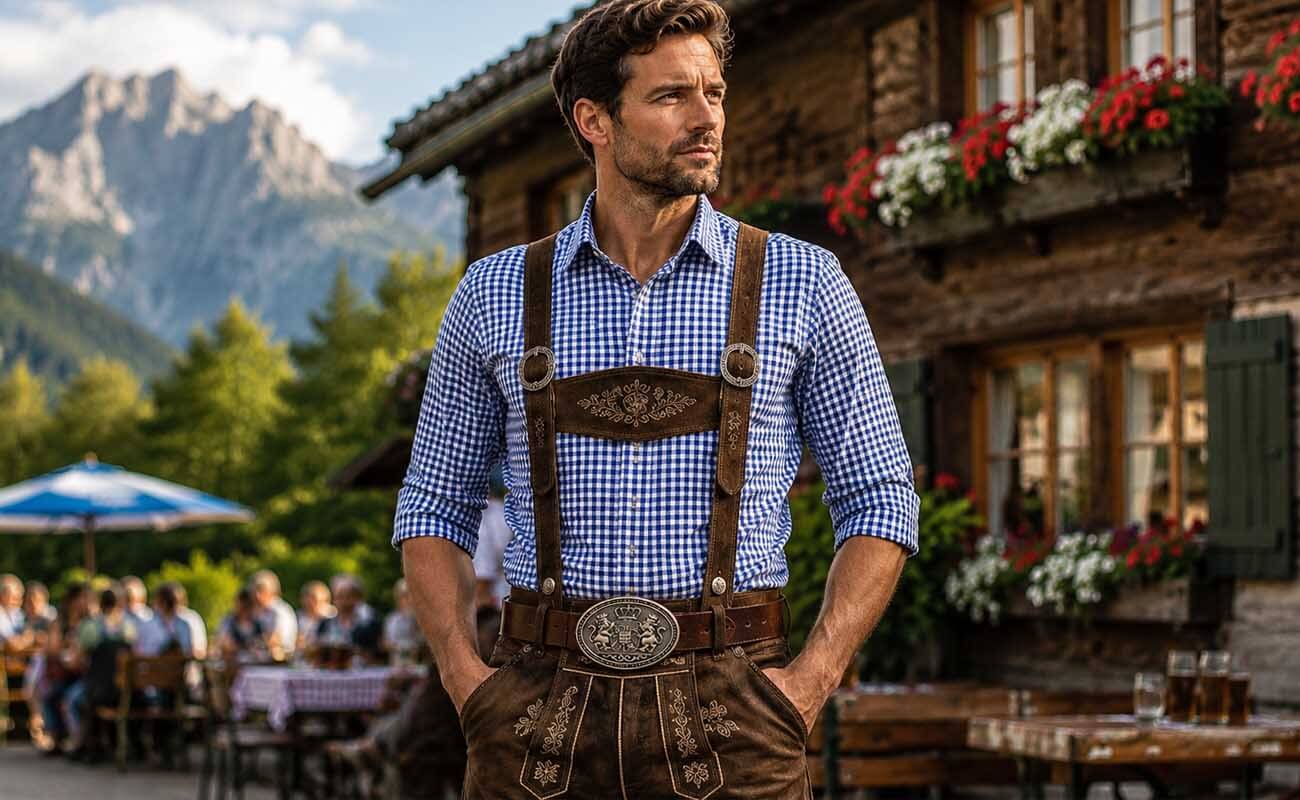
You technically can wear a belt with suspenders, but menswear tradition advises against it because both accessories do the same job — holding up your trousers. Wearing both is considered visual clutter, a signal of “trying too hard,” and a sign that your trousers don’t fit correctly in the first place. Suspender trousers are cut with button tabs, not belt loops, so combining the two often isn’t even physically clean. Most stylists treat this as a style guideline, not an absolute rule — streetwear and fashion-forward menswear occasionally break it on purpose.
Have you ever stood in front of the mirror, trousers slipping slightly, and wondered: why can’t you wear a belt with suspenders? It’s one of the most searched menswear questions online, and it deserves a clear, direct explanation — not just tradition for tradition’s sake.
The short version: belts and suspenders (called braces in the UK) exist to solve the same problem — keeping your trousers at your waist. Wearing both is redundant, and in classic menswear, redundancy reads as a styling mistake rather than a styling choice. But the full answer is more interesting than that one-line rule, and understanding it will actually make you dress better, whether you’re wearing a tailored suit, traditional Bavarian lederhosen with suspenders, or streetwear. This guide walks through the practical, historical, and stylistic reasons behind the rule, when it’s genuinely fine to break it, and what to do instead if you’d rather avoid the debate altogether. For a closer look at how braces are meant to be worn on their own, see our guide on the rules to wearing suspenders.
The Real Reason Belts and Suspenders Don’t Mix
There are three concrete reasons this rule exists, and they hold up today just as much as they did decades ago.
- Trouser construction conflicts. Suspender trousers (also called “suspender pants” or trousers cut for braces) are made with button tabs inside the waistband, not belt loops. If the trousers have loops for a belt, they usually aren’t designed for suspenders at all. Wearing both often means forcing a belt onto trousers that weren’t built for one.
- Redundant function looks unintentional. Two tools doing one job signals to the eye that something is “off” — either the trousers don’t fit, or the wearer isn’t confident in their outfit. Stylists call this visual redundancy, and it’s one of the fastest ways to make a sharp outfit look unfinished.
- Comfort and practicality suffer. A belt cinched at the waist while suspenders pull trousers upward creates competing pressure points. It can bunch fabric, distort the trouser line, and actually make the fit look worse than using just one.
In short, the rule isn’t about arbitrary tradition — it’s rooted in tailoring logic. Trousers are engineered for one support system, and mixing systems undermines both. A tailor cutting a pair of trousers has to decide, at the design stage, whether the waistband will sit on the natural waist and rely on friction (a belt) or hang from the shoulders and rely on tension (suspenders). Building a garment that does both well is difficult, which is why most manufacturers — from budget retailers to bespoke tailors — commit to one system rather than compromising on both.
Belts vs. Suspenders: Function and Fit Compared
Understanding why they clash starts with understanding what each accessory is actually built to do.
- Belts thread through belt loops and sit at the natural waist, relying on friction and tightness to hold trousers up. They’re practical, easy to adjust, and double as a style accent (leather grain, buckle finish, color).
- Suspenders/braces clip or button onto the trouser waistband and go over the shoulders, distributing weight vertically instead of cinching horizontally. This is why suspenders are often more comfortable for people who sit a lot, or who want a looser, more relaxed waist fit.
- Trouser cut determines the choice. Suspender trousers are typically cut higher and looser through the waist since there’s no belt tightening things down; belted trousers are cut to sit snugly at the natural waistline.
- Historically, suspenders came first. Suspenders date back to the 18th century as an undergarment-style accessory, while belts became mainstream menswear staples later, once looser-fitting trousers gave way to more fitted, low-rise cuts in the 20th century.
The takeaway is that they’re not interchangeable accessories with the same fit outcome. Choosing one over the other is really a choice about how you want your trousers to sit, not just an aesthetic preference. Someone who spends most of the day seated at a desk may genuinely prefer the shoulder-borne support of suspenders, while someone who wants a closer, more streamlined silhouette will usually reach for a belt instead. Neither is objectively better — they’re built for different waistbands and different comfort priorities, which is exactly why combining them so often feels like it’s working against the garment rather than with it. If you’re curious how suspender styling has changed over time, our piece on when men stopped wearing suspenders covers that shift in more depth.
Is It Really a Fashion Rule, or Just a Guideline?
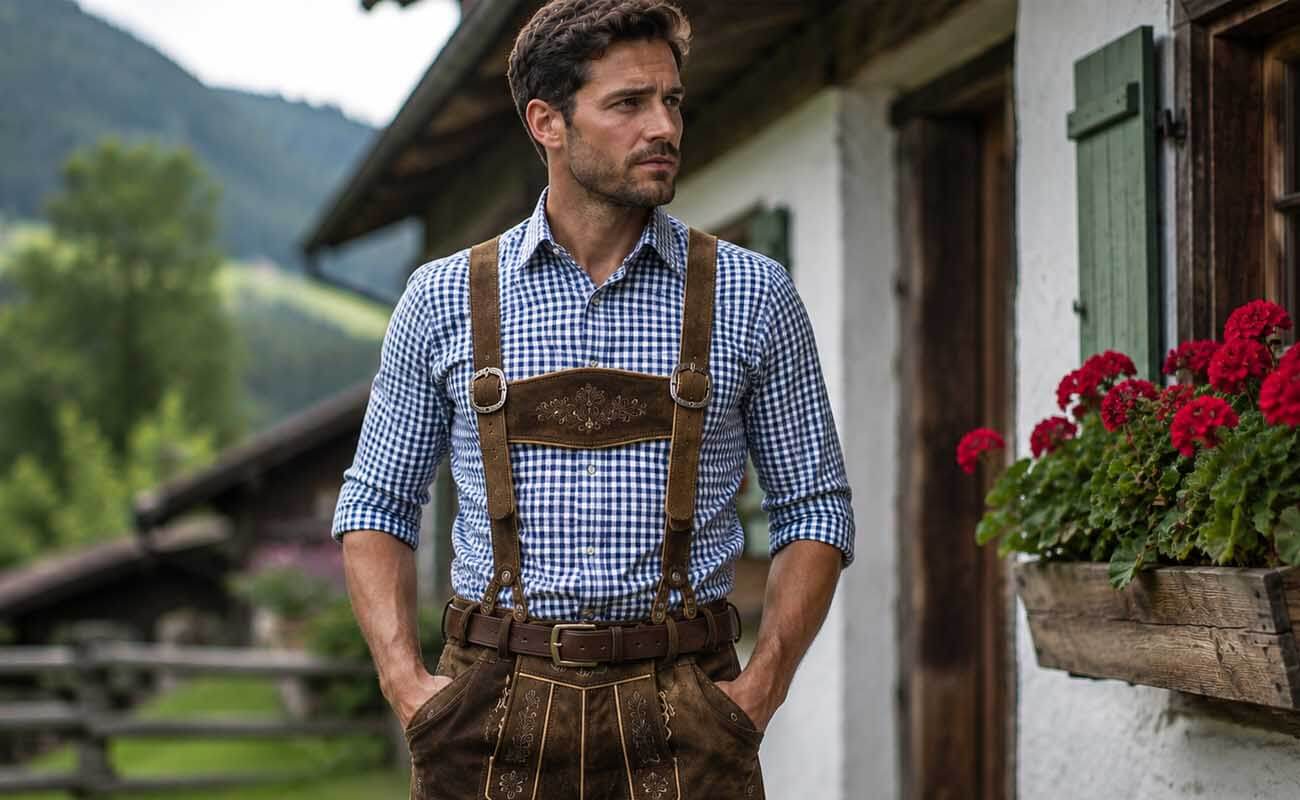
This is where a lot of confusion comes from, and it’s the most important nuance to understand. In classic tailoring and formalwear — think black-tie, traditional business suiting, or a groom’s wedding suit — combining a belt and suspenders was once treated as a genuine faux pas, a sign the wearer didn’t understand menswear fundamentals. That version of the rule was strict, unwritten, and passed down through generations of tailors, style columns, and old-school etiquette guides.
Fashion, however, rarely stays frozen. Modern style authorities are considerably more flexible than they used to be: the “rule” still holds firmly for formal and classic tailoring, but it’s routinely broken in casual, streetwear, and fashion-forward contexts, where intentional rule-breaking is often the whole point of the outfit. Context changes everything here. A three-piece wedding suit calling for suspenders and no belt is a completely different situation from a relaxed pair of chore pants, where a belt-and-suspender combo can read as intentional, layered styling rather than a mistake. Most menswear experts, tailors, and professional stylists still land on the same core piece of advice regardless of how the question is framed: avoid combining them in formal settings, and use your own judgment everywhere else.
So if you’re asking whether it’s a real rule, the honest answer is that it’s a strong style convention rooted in practical tailoring logic — not a fashion law that can never be broken. It behaves less like a legal boundary and more like a default setting: the safe, tested choice that experienced dressers deviate from only when they have a specific reason to.
When It’s Okay to Break the Rule
Fashion has moved steadily toward individuality and deliberate rule-breaking over the past decade, and belt-and-suspender combinations are no exception to that shift. There are several legitimate contexts where wearing both actually works rather than reading as a mistake.
Streetwear and workwear styling is probably the most common one — here, suspenders often hang loose, unclipped or draped, purely as a decorative layer, while a belt quietly does the actual functional work of holding the trousers up. Costume, uniform, and traditional dress offer another clear exception: certain Bavarian lederhosen outfits use leather suspenders, or Hosenträger, that are both structural and decorative, and these are sometimes paired with a separate leather belt worn purely as an accessory rather than for support. High-fashion runway and editorial looks push this even further, with designers intentionally clashing traditional rules to create visual tension and make a statement — the entire point is to challenge the viewer’s expectations rather than to dress “correctly.” And finally, whenever suspenders are purely decorative — clipped to the trousers but not actually load-bearing — while a properly fitted belt handles the real job of holding the trousers up, the combination stops being redundant and starts being layered styling.
The rule of thumb across all of these exceptions is the same: if it looks intentional, with both pieces styled to work together through matching leather tones or complementary hardware, it can succeed. If it looks like you simply forgot to pick one, it won’t.
Best Alternatives to Wearing Both
If you’d rather sidestep the debate entirely and still achieve a clean, well-put-together look, several options solve the same underlying problem — trousers that fit and stay in place — without introducing any visual redundancy.
- Side-tab or self-adjusting waistbands — built into the trouser itself, so no visible accessory is needed at all. This is a common feature on tailored formalwear and tuxedo trousers.
- Properly tailored, higher-rise trousers — when trousers actually fit your waist correctly, you often don’t need either accessory to keep them in place.
- Statement footwear — bold shoes or boots pull visual attention downward, balancing an outfit that has minimal waist accessories and shifting focus away from the waistband altogether.
- Layering pieces — a vest, waistcoat, or cardigan adds structure and visual interest without competing waist elements, and it’s a classic way to dress up an otherwise simple trouser-and-shirt combination. Browse our waistcoats and vests collection for options that pair well with either belted or suspender trousers.
- One strong accessory, done well — a quality leather belt or a well-matched pair of suspenders, chosen based on the trouser’s actual construction rather than personal habit, will almost always look more deliberate than using both at once.
Any one of these approaches lets you keep your trousers secure and your outfit polished, without ever raising the question of whether the belt and suspenders are fighting each other for attention.
The History Behind the Rule
Understanding where this style convention actually comes from makes it easier to know when to follow it and when to ignore it. Suspenders, or braces, predate belts as everyday trouser support by a considerable margin. In the 18th and 19th centuries, men’s trousers sat high on the natural waist and were cut with almost no shaping for a belt — suspenders were the only practical way to keep them up, and for much of that period they were considered an undergarment rather than a visible style statement. Belts didn’t become mainstream menswear staples until the early-to-mid 20th century, when military uniforms popularized lower, more fitted waistlines and trouser design shifted to include belt loops as a standard feature.
This is the real origin of the “rule”: for most of tailoring history, a garment was designed for one system or the other, never both. A trouser built for suspenders had no belt loops because none were needed. A trouser built for a belt had no button tabs because there was nothing to attach suspenders to. The clash isn’t really a fashion opinion at its root — it’s a leftover of how trousers were physically constructed for well over a century. Only in recent decades, as fast fashion and mass-market manufacturing started adding belt loops to nearly every trouser “just in case,” did the option to wear both even become common in the first place — which is exactly why the confusion around this question exists today. Once trousers stopped being built exclusively for one system, the door opened for people to combine both, even when the garment itself wasn’t really designed to support that choice. For more on this shift, read our breakdown of when men stopped wearing suspenders.
How to Style Trousers Correctly for Either Option
If you’re deciding between a belt and suspenders rather than trying to combine them, a few practical fit checks make the decision considerably easier. Start by checking the waistband construction: button tabs on the inside of the waistband mean the trousers were designed for suspenders, while belt loops with no tabs mean they were designed for a belt. This single detail usually settles the question before style preference even enters the conversation.
From there, consider your outfit’s formality. Suspenders read as more traditional and formal, and they’re common in three-piece suits, tuxedos, and heritage workwear like lederhosen, while belts read as more versatile and everyday, working comfortably across casual and business-casual looks. Comfort and body type matter too — if you sit for long periods or prefer a looser waist, suspenders distribute weight over the shoulders instead of cinching the stomach, which many people find noticeably more comfortable over a full day of wear. Whichever option you land on, take a moment to match metals and materials: coordinate buckle or clip hardware with your watch, shoes, or belt buckle finish, whether that’s silver, brass, or antique gold, for a look that feels cohesive rather than accidental. Above all, don’t fight the trouser’s design. Forcing clip-on suspenders onto a trouser with no button tabs, or forcing a belt onto high-rise suspender trousers, usually looks like a workaround rather than a genuine style choice, even in cases where it isn’t technically “wrong.” If you’re specifically working with traditional leather trousers, see our guide on how tight lederhosen should fit for the correct waist and thigh fit before choosing a support method.
Belts, Suspenders, and Traditional Menswear: The Lederhosen Example
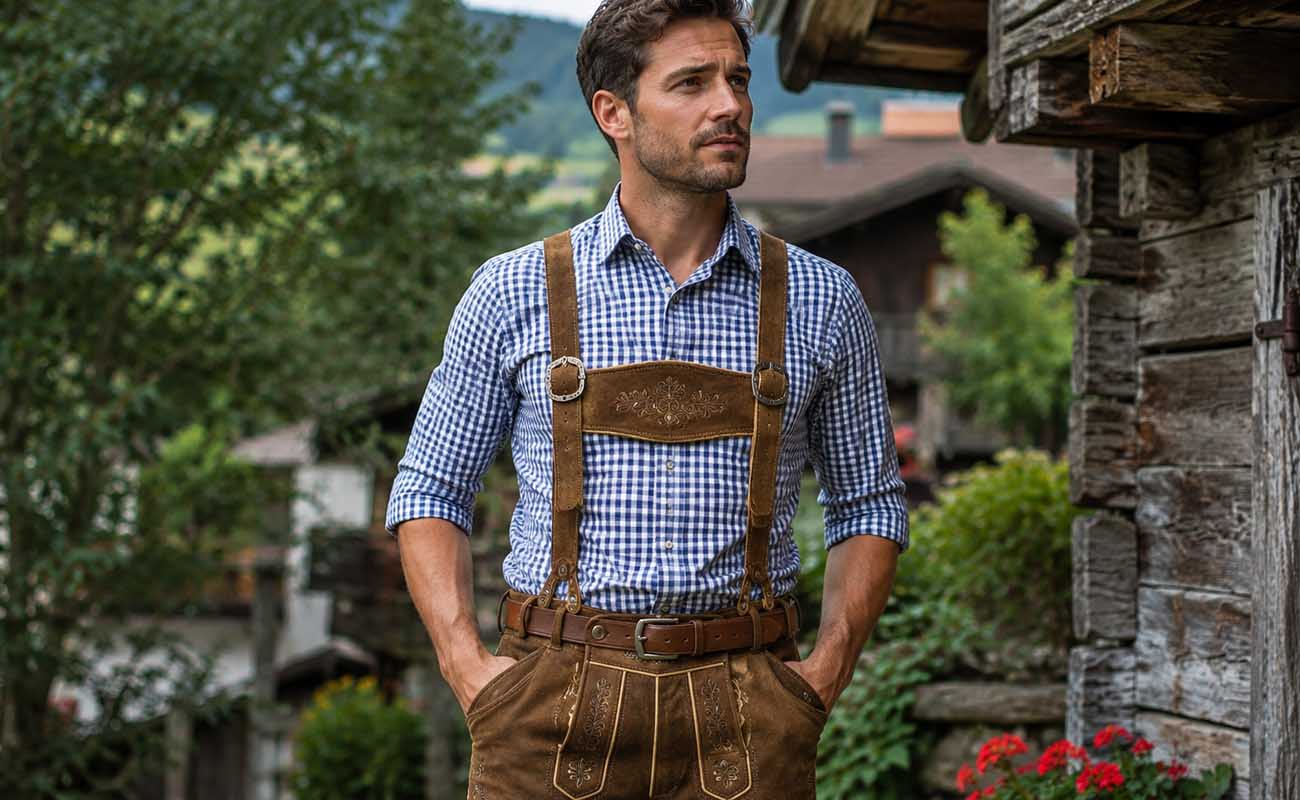
Traditional Bavarian and Alpine menswear offers one of the clearest real-world examples of this rule in action. Authentic lederhosen are cut high-waisted, without belt loops, specifically to be worn with leather suspenders known as Hosenträger. The suspenders aren’t just decorative — they’re structurally necessary, because the trousers are cut loose through the waist by design, made for movement, dancing, and outdoor wear rather than for a tight, belted fit. Trying to force a belt onto genuine lederhosen would mean fighting the entire logic of how the garment was cut in the first place. To confirm this isn’t just a Bavarian-only convention, our article on whether only Bavarians wear lederhosen covers how widely this style of dress is actually worn.
This is why you’ll rarely see a belt used for actual support with genuine lederhosen. When a belt does appear in traditional Trachten styling, it’s typically a separate accessory worn for decoration over the leather, not for holding the trousers up — reinforcing the same underlying principle covered throughout this guide: one accessory does the functional work, and if a second one appears, it’s there for style, not for structure. It’s a useful real-world illustration of the broader rule, because lederhosen make the trouser construction visible in a way that a modern pair of chinos or dress trousers usually doesn’t. Pairing suspenders correctly is only part of the outfit — see our guide on what color shirt to wear with lederhosen to complete the look.
Frequently Asked Questions
Yes, it’s physically possible if the trousers have both belt loops and button tabs, but most stylists advise against it because the two accessories serve the same function and can clash visually.
Yes. Suspenders are designed to fully support trousers on their own, which is why suspender trousers are typically cut without belt loops.
In formal and classic tailoring contexts, yes, it’s still considered a mistake. In casual, streetwear, or intentionally styled outfits, it’s increasingly accepted as a deliberate fashion choice.
Traditional Bavarian lederhosen are cut high-waisted and use leather suspenders (Hosenträger) as the structural support system; a belt isn’t needed and typically isn’t part of the traditional design.
Redundancy. Two accessories performing the same function make an outfit look unintentional or poorly fitted, rather than adding coordinated style.
Key Takeaways
- Belts and suspenders both hold up trousers, so wearing both is functionally redundant.
- Suspender trousers are cut with button tabs, not belt loops, making the combo impractical on properly designed pieces.
- The “no belt with suspenders” guideline is strongest in formal and classic tailoring, and more flexible in casual or fashion-forward styling.
- If you do combine them, make it look intentional — matching materials, one purely decorative element, and a trouser cut that supports both.
- The simplest solution is choosing trousers that fit properly and picking the accessory that matches the trouser’s actual construction.
Related Reading
- What Are The Rules To Wearing Suspenders?
- When Did Men Stop Wearing Suspenders?
- How Tight Should Lederhosen Fit?
- What Color Shirt to Wear With Lederhosen?
- Do Only Bavarians Wear Lederhosen? Myths Debunked!
Looking for more men’s styling guides? Visit our full Alpen Lederhosen blog or shop the men’s lederhosen and suspenders collection to find pieces built the right way from the start.


