

Blog
What is The Name of The Vest At Oktoberfest?


Oktoberfest, the world’s largest beer festival, is synonymous with jubilant celebrations, Bavarian culture, and traditional attire. Held annually in Munich, Germany, this 16- to 18-day festival attracts millions of visitors from around the globe, eager to partake in the festivities, enjoy the rich array of beers, and experience the vibrant cultural heritage of Bavaria. The festival’s atmosphere is marked by lively music, colorful parades, and an array of culinary delights, all set against the backdrop of bustling beer tents and fairground rides.
Central to the Oktoberfest experience is the wearing of traditional Bavarian clothing, which plays a pivotal role in celebrating this iconic festival. For many attendees, donning traditional attire is not merely a matter of adhering to custom but a way to immerse themselves fully in the spirit of Oktoberfest. The sight of men in lederhosen and women in dirndls adds a visual charm to the festival, creating a picturesque tableau that is quintessentially Bavarian. This traditional clothing serves as a bridge connecting the present-day festivities with the region’s historical and cultural roots, fostering a sense of community and shared heritage among participants. Planning your trip? Our guides on whether anyone can walk into Oktoberfest and the least crowded day at Oktoberfest will help you get ready.
Key Takeaways
- The vest worn at Oktoberfest is called a Weste in German (plural Westen), and it can be worn by both men and women.
- Men usually wear it over a shirt and under a Trachten jacket, while women wear it over a blouse.
- Vests made for Lederhosen are rugged and practical, while those for Dirndls are softer and more decorated.
- Wool, velvet, brocade, cotton, and linen are the most common fabrics, chosen by weather and formality.
Understanding Traditional German Attire

The significance of traditional clothing at Oktoberfest cannot be overstated. These garments are more than just costumes; they are symbols of Bavarian pride and identity. Wearing traditional attire is a way to honor the customs and traditions of the past, showing respect for the cultural heritage that has been passed down through generations. It also serves as a means of uniting people, as the distinctive outfits create a sense of camaraderie among festival-goers, regardless of their background.
Men typically wear lederhosen, which are leather shorts or breeches, often paired with a checkered or plain Bavarian shirt, knee-high Trachten socks, and sturdy Trachten shoes. Lederhosen can be adorned with intricate embroidery, adding to their aesthetic appeal. Women, on the other hand, wear dirndls, which are traditional dresses comprising a bodice, blouse, full skirt, and apron. Dirndls can vary in style and design, ranging from simple and understated to elaborately decorated with lace and embroidery.
In addition to lederhosen and dirndls, other traditional garments include Trachten jackets, waistcoats, and hats. These items complement the main attire, adding layers of elegance and authenticity to the overall look. Accessories such as belts, scarves, and jewelry further enhance the traditional outfits, making each ensemble unique and reflective of the wearer’s style. For a full outfit overview, read the best attire for a Bavarian party.
The Iconic Lederhosen
Lederhosen, literally translating to “leather trousers,” are perhaps the most recognizable element of men’s traditional attire at Oktoberfest. You can read more about the name in what Lederhosen means in German. These knee-length or short leather pants are typically made from durable materials such as deerskin or goatskin, ensuring they can withstand the rigors of outdoor activities and festival merrymaking. If you’re choosing between the two, see goat vs. deer Lederhosen. The leather’s durability is complemented by its ability to become more comfortable over time, molding to the wearer’s body and developing a unique patina.
Historically, lederhosen was worn by Bavarian peasants and laborers due to their practicality and resilience. They were ideal for physical labor, hunting, and outdoor pursuits, offering protection and ease of movement. Over the centuries, lederhosen evolved from practical workwear into a symbol of Bavarian culture and tradition, eventually becoming a staple of festive attire. For the longer cut, see the difference between Lederhosen and Bundhosen and browse our Bundhosen.
Modern lederhosen often features intricate embroidery, adding a touch of artistry to the garment. The embroidery can include traditional motifs such as edelweiss flowers, deer, and oak leaves, each symbol carrying its cultural significance. The suspenders, or “hosenträger,” which hold up the lederhosen, are also often embroidered, further enhancing the visual appeal of the outfit. Our ultimate guide to Lederhosen suspenders explains fit and style rules.
The Dirndl: A Women’s Perspective
The dirndl is the quintessential traditional dress for women at Oktoberfest, embodying both elegance and cultural heritage. This traditional Bavarian dress consists of several key components: a fitted bodice, a blouse, a full skirt, and an apron. The dirndl’s design emphasizes femininity, with the fitted bodice accentuating the waist and the full skirt adding volume and movement.
Dirndls come in a variety of styles, ranging from simple and practical to ornate and decorative. The choice of fabric, color, and embellishments can significantly alter the look of a dirndl, allowing for personal expression and creativity. Common fabrics include cotton, silk, and linen, each offering different textures and levels of formality. The apron, often made from a contrasting fabric, adds a layer of style and can be tied in various ways to convey different messages. For instance, the position of the apron bow can indicate the wearer’s relationship status: tied on the left signifies single, on the right indicates married or taken, in the center suggests virginity, and at the back signifies widowhood.
The dirndl’s versatility makes it suitable for a wide range of occasions, from casual gatherings to formal events. At Oktoberfest, the dirndl is not only a fashion statement but also a celebration of Bavarian tradition. The vibrant colors and intricate patterns of the dresses contribute to the festive atmosphere, creating a visual feast that complements the lively spirit of the festival.
Related: Do You Need To Wear A Bra With A Dirndl?
Exploring the Vests at Oktoberfest
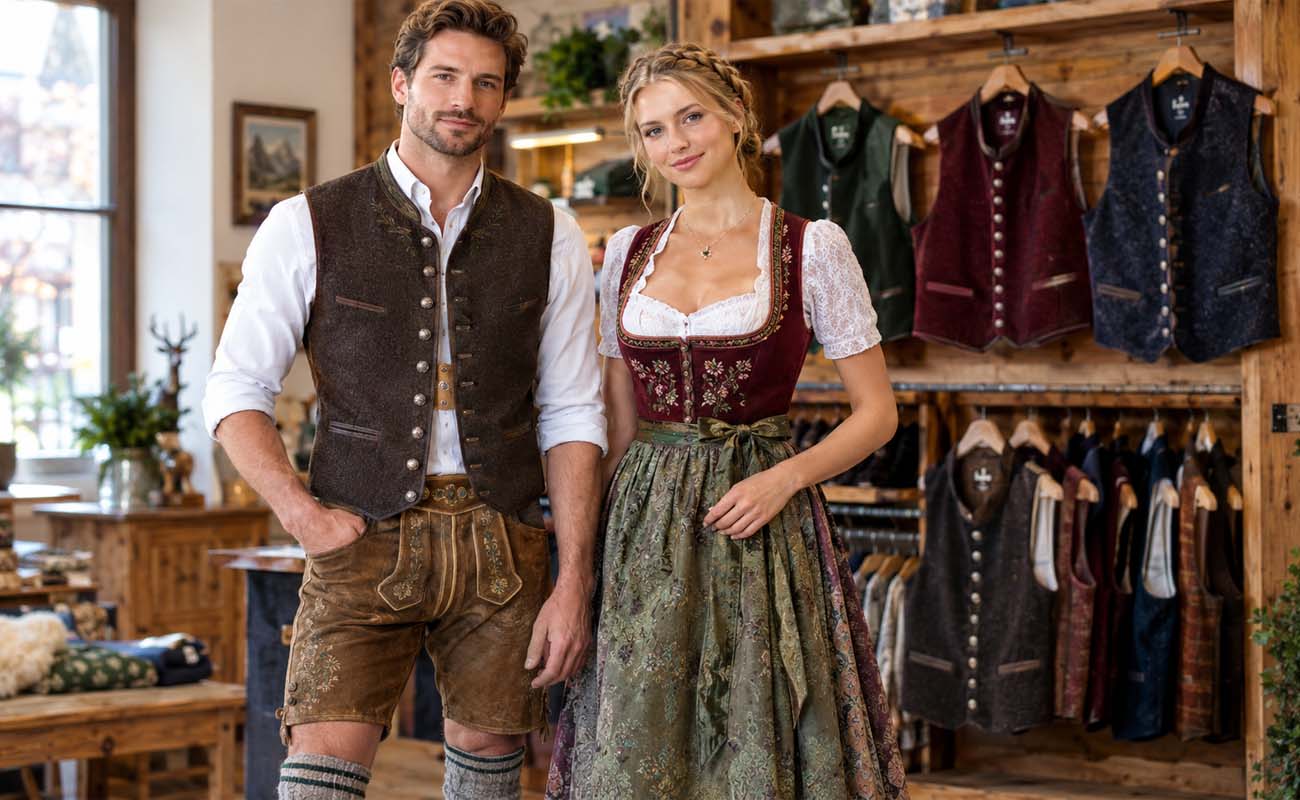
Vests, or “Westen,” are an integral part of traditional Bavarian attire, adding an extra layer of style and sophistication to the ensemble. These vests can be worn by both men and women, often paired with lederhosen or dirndls to complete the outfit. For men, vests are typically worn over a shirt and under a Trachten jacket, while women might wear them over their blouses and under their dirndls or Trachten jackets.
Vests come in various styles, ranging from simple and understated to elaborately decorated with embroidery and patterns. The choice of vest can significantly enhance the overall look, adding a touch of elegance and individuality. Men’s vests are often made from materials such as wool, velvet, or brocade, featuring traditional motifs and intricate detailing. Women’s vests can be similarly adorned, with designs that complement the dirndl and enhance the feminine silhouette.
The differentiation between vests worn with lederhosen and those with other outfits lies primarily in the design and fit. Vests designed for lederhosen are typically more rugged and practical, made from durable materials that complement the leather trousers. In contrast, vests worn with dirndls or other traditional dresses may feature softer fabrics and more intricate embellishments, aligning with the overall aesthetic of the women’s attire.
Vests with Lederhosen vs. Dirndl at a Glance
| Feature | Vest with Lederhosen | Vest with Dirndl |
|---|---|---|
| Overall design | Rugged and practical | Softer, with more intricate embellishments |
| Typical materials | Durable materials such as wool, velvet, or brocade | Softer fabrics that match the dirndl |
| How it is worn | Over a shirt and under a Trachten jacket | Over the blouse, sometimes with a Trachten jacket |
| Overall effect | Complements the leather trousers | Adds elegance and enhances the feminine silhouette |
Also Read: Authentic Bavarian Attires For Men For Oktoberfest
Vest Styles and Fabrics
The styles of vests seen at Oktoberfest are as diverse as the festival itself. Popular styles include the classic waistcoat, which features a fitted design with buttons down the front, and the more relaxed, open-front vest, which offers a casual yet stylish look. Embroidery and patterns play a significant role in vest design, with traditional motifs such as edelweiss flowers, alpine scenes, and geometric patterns being particularly popular.
Fabrics used for making vests vary widely, each offering different textures, levels of comfort, and degrees of formality. Wool is a common choice, providing warmth and durability, making it ideal for cooler weather. Velvet and brocade are also popular, adding a luxurious feel to the garment. Cotton and linen are favored for their breathability and comfort, especially in warmer conditions. The choice of fabric often depends on the intended use of the vest, with more formal events calling for richer, more ornate materials. At the same time, casual gatherings might favor simpler, more practical options.
A quick fabric guide to help you match the vest to the day:
- Wool: Provides warmth and durability, which makes it the best choice for cooler weather and the chilly evenings that often follow a warm festival afternoon.
- Velvet: Adds a luxurious feel and works well for formal events, evening parties, and any outfit where you want a richer, more polished look.
- Brocade: Offers rich patterns and a more ornate finish, so it suits wearers who want the vest to be a statement piece rather than a background layer.
- Cotton: Breathable and comfortable, so it is a practical option for warm daytime visits and casual gatherings where you will be walking and dancing.
- Linen: Lightweight and airy, a good choice in warmer conditions, especially when you are layering over a shirt and want to stay cool.
How to Choose the Right Vest for Oktoberfest
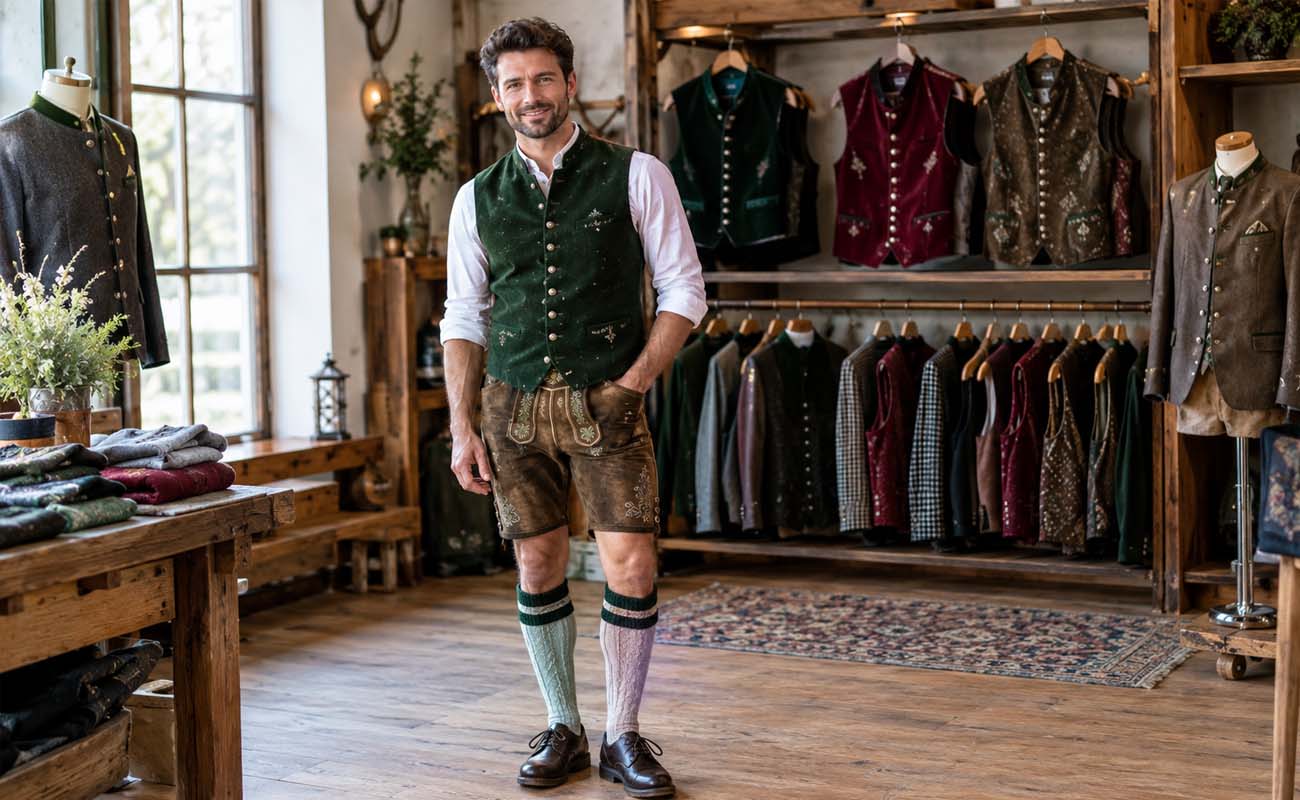
Selecting the right vest for Oktoberfest involves considering several factors, including personal style, body type, and the overall aesthetic of the traditional attire. When choosing a vest, it’s important to consider the fit, as a well-fitted vest can enhance the silhouette and complement the rest of the outfit. Vests that are too tight can be uncomfortable, while those that are too loose may look sloppy. If you’re wearing Lederhosen too, read how tight Lederhosen should fit so the whole outfit sits well together.
Color and pattern are also crucial considerations. Traditional colors such as green, red, and brown are popular choices, often complemented by intricate embroidery. Patterns can range from simple stripes and checks to elaborate floral and geometric designs. It’s important to choose a color and pattern that aligns with personal taste and complements the rest of the attire. Our guide to the most popular color of Lederhosen can help you match tones.
A simple checklist when you are choosing a vest:
- Check the fit: A vest that is too tight feels uncomfortable and one that is too loose looks sloppy, so aim for a fitted shape that still lets you move, sit, and dance.
- Try it with your layers: Put it on over the shirt or blouse you plan to wear, and if you will add a Trachten jacket on top, check that the jacket still closes comfortably.
- Match the vest to the outfit: Choose rugged, durable materials for Lederhosen, and softer, more decorated fabrics for a Dirndl.
- Pick traditional colors: Green, red, and brown are popular, and they pair well with embroidery and with classic leather tones.
- Choose a pattern you like: Simple stripes and checks look understated, while floral and geometric designs add personality, so pick one that suits your taste.
- Think about the weather: Wool keeps you warm in the evening, while cotton or linen is more comfortable on a warm day.
Care and Maintenance of Your Oktoberfest Vest
Proper care and maintenance are essential for preserving the quality and appearance of traditional garments, ensuring they can be enjoyed for years to come. When it comes to cleaning your vest, it’s important to follow the care instructions provided by the manufacturer. Many traditional vests are made from delicate fabrics that require special care, such as dry cleaning or gentle hand washing.
Storing your vest correctly is also crucial. It’s advisable to store vests in a cool, dry place, away from direct sunlight, which can cause fading. Using padded hangers can help maintain the shape of the vest, while protective garment bags can prevent dust and damage.
A simple care routine to keep your vest looking new:
- Read the care label first: Follow the manufacturer’s instructions, since fabrics such as velvet, brocade, and wool can each need different care.
- Choose gentle cleaning: Delicate vests usually need dry cleaning or careful hand washing rather than a hot machine cycle.
- Store it in a cool, dry place: Keep it away from direct sunlight, which can fade the color and embroidery over time.
- Use a padded hanger: This helps the vest keep its shape and stops the shoulders from stretching.
- Use a garment bag for longer storage: It protects against dust and damage between festival seasons.
Conclusion
In conclusion, the vest worn at Oktoberfest is a key component of traditional Bavarian attire, adding both style and cultural significance to the festival ensemble. Choosing the right vest involves considering factors such as fit, fabric, color, and pattern, all of which contribute to the overall aesthetic and comfort of the outfit. Proper care and maintenance ensure that these garments can be cherished and enjoyed for years to come, preserving the rich cultural heritage they represent. Embracing traditional attire at Oktoberfest enhances the festive experience and pays homage to the vibrant history and culture of Bavaria, fostering a sense of unity and celebration among festival-goers. Ready to complete your outfit? Browse our Waistcoats and Vests, Lederhosen Sets, Women’s Lederhosen, and Dirndl Dresses, or read more guides on our Journal.
Checkout: What is an Oktoberfest Waiter Called in German?
Related: What is a German beer girl called? Unraveling the Mystery!
Pro Tip: A vest looks best as part of a complete outfit. Pair it with a Bavarian shirt and suspenders, add a Trachten jacket for cooler evenings, and finish with a Dirndl handbag or Lederhosen belt. Check New Arrivals and the Oktoberfest Sale for current styles, and see how much authentic Lederhosen costs in Munich to set a budget. Bringing the family? Read what kids eat at Oktoberfest, and for fun extras see why people wear chicken hats at Oktoberfest.
Frequently Asked Questions About Oktoberfest Vests
Traditional attire is an essential part of the Oktoberfest experience. Wearing traditional Bavarian clothing, such as lederhosen for men and dirndls for women, honors the cultural heritage and customs of Bavaria. It also enhances the festive atmosphere, fostering a sense of community and shared celebration among attendees. Traditional attire adds to the visual charm of the festival, creating a picturesque and immersive experience.
Vests worn at Oktoberfest are referred to as “Westen” in German. They are an integral part of traditional Bavarian attire and can be worn by both men and women. Vests add an extra layer of style and sophistication to the ensemble, often featuring traditional motifs and intricate embroidery. They can be made from various fabrics, including wool, velvet, and brocade.
Vests designed for lederhosen are typically more rugged and practical, made from durable materials that complement the leather trousers. They often feature simpler designs and are meant to enhance the overall look of the men’s attire. Vests worn with dirndls or other traditional dresses may feature softer fabrics and more intricate embellishments, aligning with the women’s attire’s aesthetic and adding to the elegance and femininity of the outfit.
Popular vest styles at Oktoberfest include the classic waistcoat, which has a fitted design with buttons down the front, and the more relaxed, open-front vest. Embroidery and patterns are common, with traditional motifs such as edelweiss flowers, alpine scenes, and geometric designs. The choice of vest style can significantly enhance the overall look, adding a touch of individuality and elegance to the attire.
Common fabrics for Oktoberfest vests include wool, velvet, brocade, cotton, and linen. Wool provides warmth and durability, making it ideal for cooler weather, while velvet and brocade add a luxurious feel. Cotton and linen are favored for their breathability and comfort, especially in warmer conditions. The choice of fabric often depends on the vest’s intended use and the level of formality desired.
When choosing a vest for Oktoberfest, consider factors such as fit, fabric, color, and pattern. A well-fitted vest enhances the silhouette and complements the rest of the outfit. Traditional colors such as green, red, and brown are popular, often featuring intricate embroidery. Patterns can range from simple stripes and checks to elaborate floral and geometric designs. The vest should reflect your style and enhance your enjoyment of the festival.
When choosing a safe travel purse, look for features that enhance security. Anti-theft designs are crucial; these include materials that are difficult to cut or tear, such as reinforced fabrics or metal mesh. Secure compartments with lockable zippers or hidden pockets can protect your valuables from pickpockets. Additionally, RFID-blocking technology is important for preventing unauthorized scanning of your credit cards and passport. Purses with these features help keep your belongings secure while you’re traveling.


