

Blog
How Tight Should Lederhosen Fit? The Complete Sizing Guide

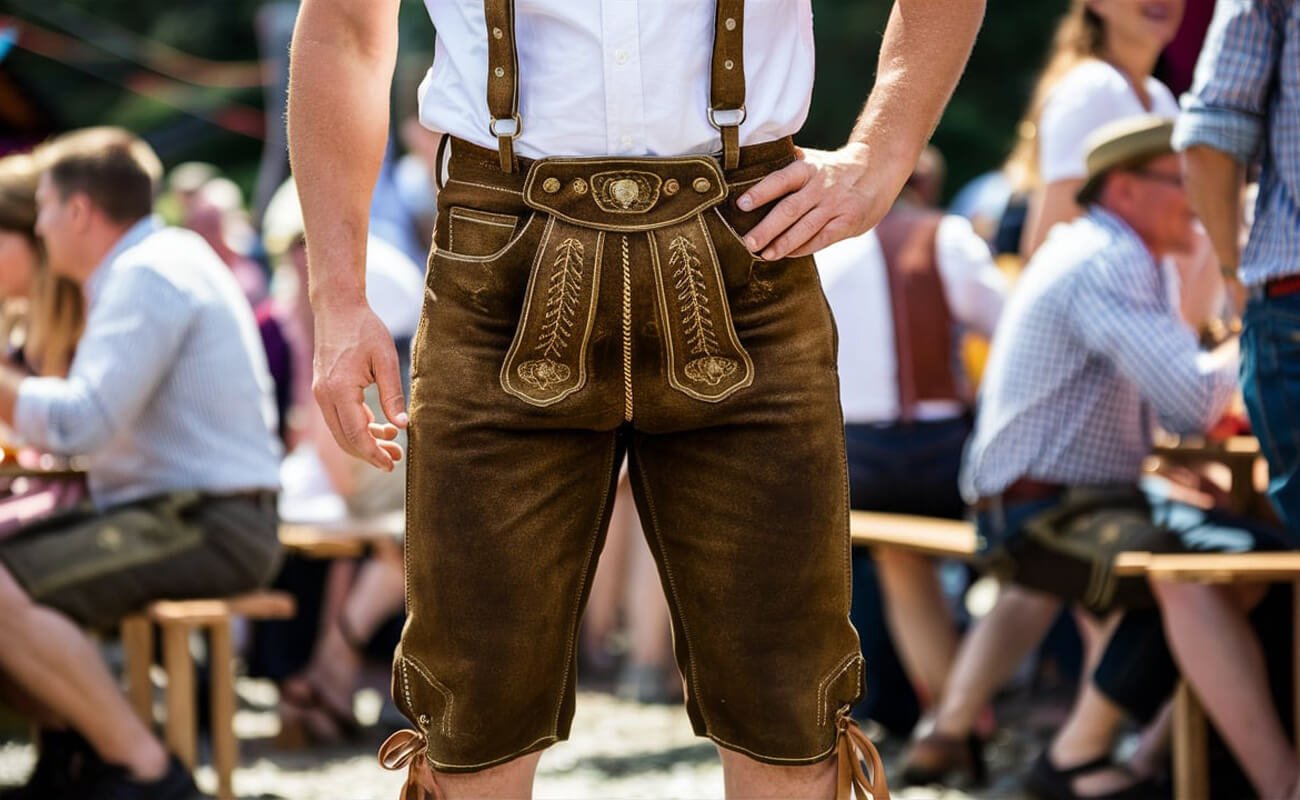
Lederhosen should fit snug but not restrictive — close enough at the waist that you can slide two fingers comfortably between the leather and your body, close through the seat and thigh without pinching, and slightly loose at first because genuine leather stretches and molds to your body within the first few wears. If you can sit, squat, and raise your beer stein without the waistband digging in or the seat straining, the fit is right.
That one-paragraph answer is the short version. Below is the full, updated breakdown — how sizing has changed, how to measure yourself correctly, how the fit differs by body type and gender, and the exact warning signs that tell you a pair is too tight or too loose.
Why the “Right Fit” Answer Has Changed
Lederhosen fit advice used to focus only on waist and inseam numbers. Today, two things have shifted this conversation: leather technology has improved, with more brands now using pre-stretched or semi-tanned leather that moves with the body from day one instead of requiring weeks of stiff break-in; and body-shape-specific cuts have become mainstream, with most retailers now offering slim, regular, and relaxed fits side by side, plus dedicated women’s rise and hip proportions rather than a scaled-down men’s pattern.
So the modern answer to “how tight should lederhosen fit” isn’t a single number — it’s a fit test you can run on any pair, in any style, from any era of leather.
The 2-Finger Rule: The Fastest Way to Check Waist Fit
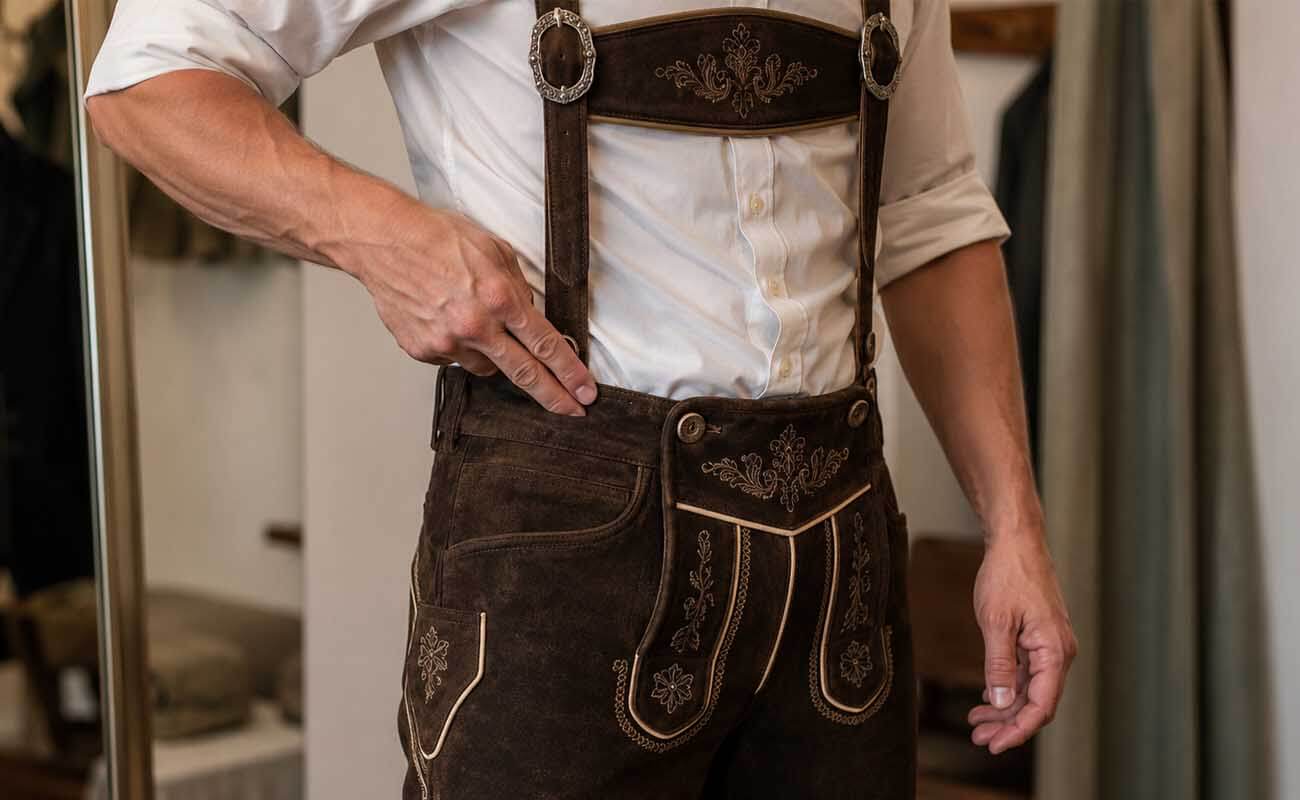
If you remember only one rule, remember this one. It is the industry-standard quick test tailors and Trachten outfitters use:
- Put the lederhosen on and fasten the waist as you normally would (button, buckle, or lacing).
- Slide two fingers, side by side, between the waistband and your stomach.
- If two fingers fit snugly — not loosely, not with a struggle — the waist size is correct.
- If you can fit three or more fingers, the waist is too loose and will sag as the leather stretches further.
- If you can barely get one finger in, or none, the pair is too tight and will only get more restrictive as the day goes on.
This test works whether you’re trying on a $150 off-the-rack pair or a $600 custom Bavarian set, and it remains the most searched and most reliable sizing checkpoint for anyone heading into Oktoberfest. In short: fasten the waist normally, slide two fingers in, and check the result — three-plus fingers means too loose and it will sag further with wear, while one finger or none means too tight and it will only get more restrictive.
Step-by-Step: How to Measure Yourself for Lederhosen
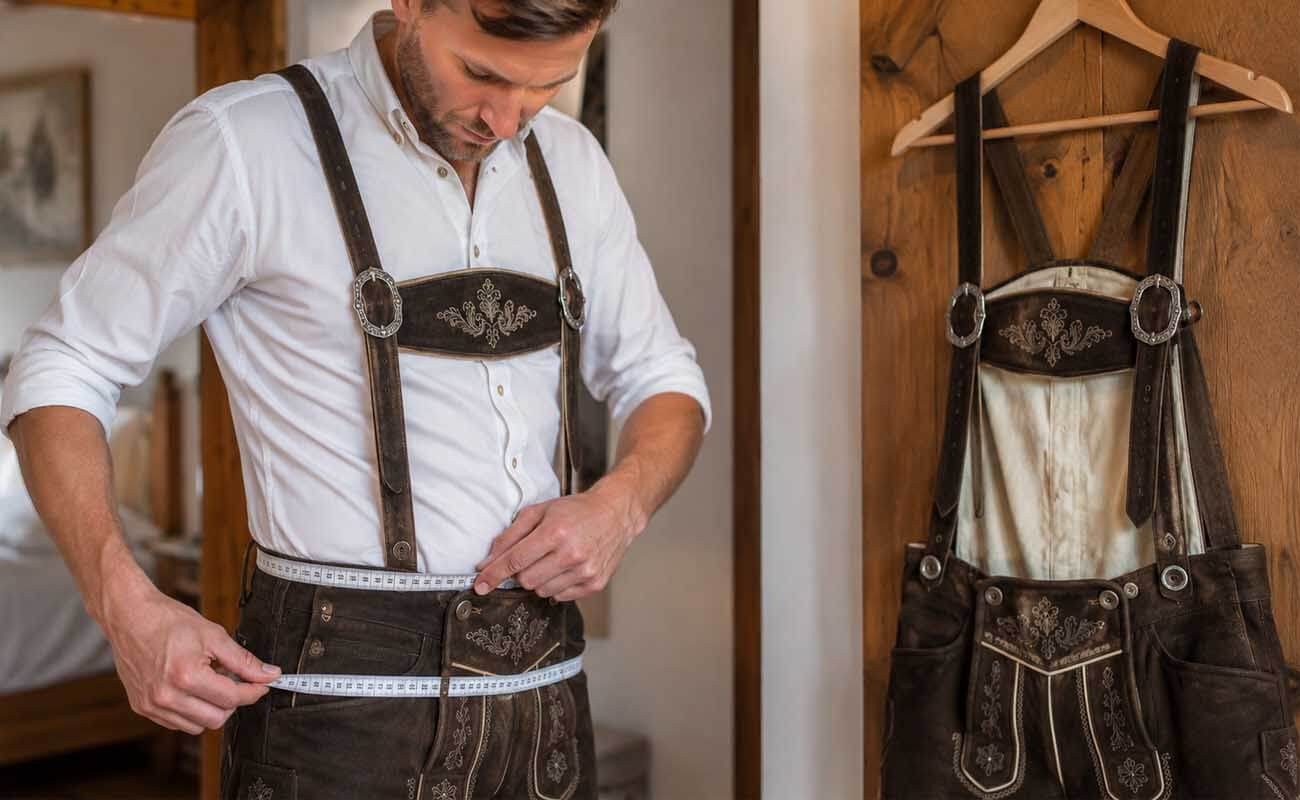
Getting your measurements right before you buy avoids 90% of fit complaints. Use a flexible fabric tape measure and follow these steps:
- Waist: Measure around your natural waistline — roughly where your body bends side to side, not where your jeans currently sit. Keep the tape snug but not pulled tight.
- Hips/seat: Measure around the fullest part of your hips and rear. This matters more than most buyers expect, since lederhosen are cut with almost no stretch through the seat in traditional leather styles.
- Inseam: Stand straight, feet shoulder-width apart. Measure from the crotch seam down to just below the knee for classic knee-length lederhosen, or to mid-thigh for shorts-style.
- Thigh circumference: Wrap the tape around the widest part of your upper thigh. This determines whether you’ll feel pinching when you sit or bend.
Compare these four numbers against the brand’s specific size chart — not a generic size (S/M/L), since lederhosen sizing varies more between brands than jeans or suits do.
Signs Your Lederhosen Fit Correctly
A properly fitted pair should pass all of these checks before you leave the fitting room or before you cut off the return tags:
- You can squat fully and stand back up without the waistband cutting into your stomach.
- Sitting down doesn’t cause the fabric to pull tight across your thighs or crotch.
- The waistband sits at your natural waist, not slipping down to your hips within minutes.
- Suspenders (if attached) lie flat against your shoulders without gapping or digging in.
- You can walk, dance, and raise your arms overhead (think: toasting with a stein) without restriction.
- The leather has slight give — a small amount of tension, but not resistance, when you move.
Signs Lederhosen Are Too Tight
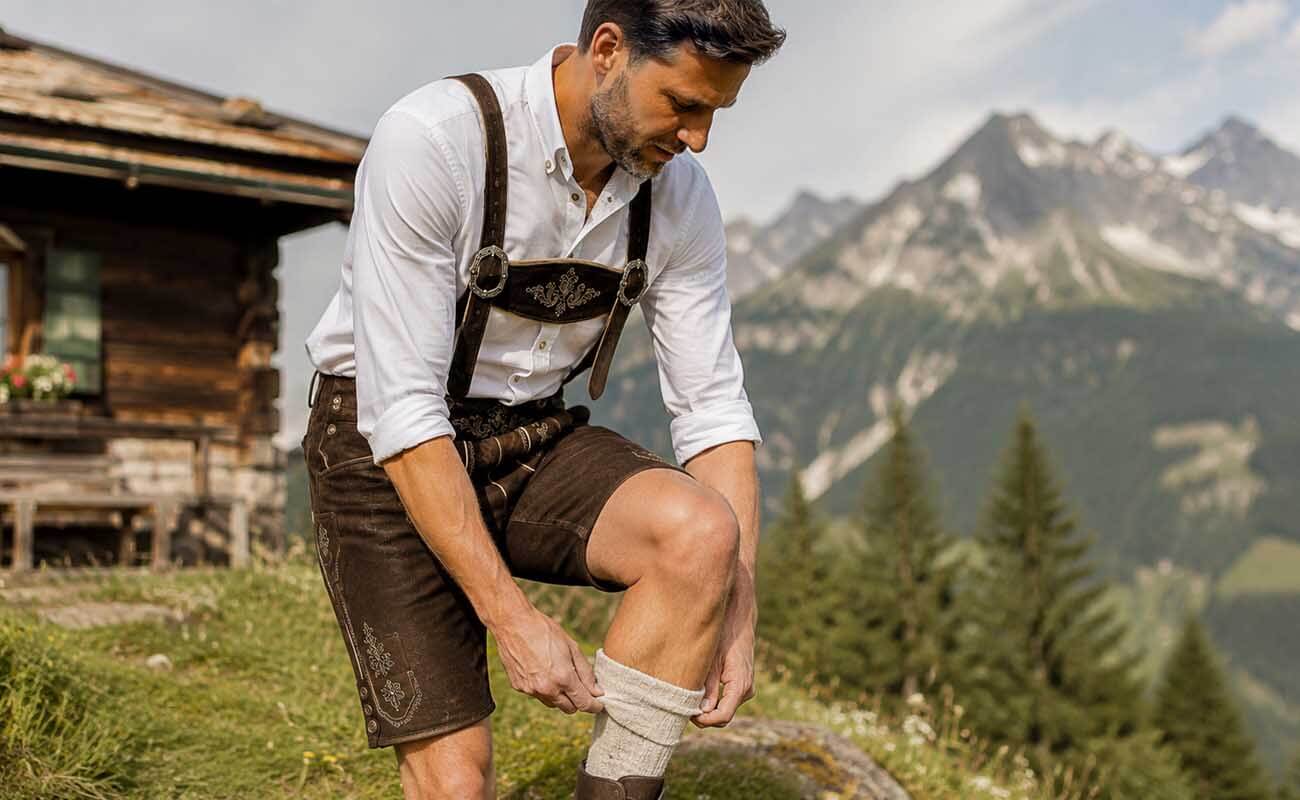
Too-tight lederhosen are the most common Oktoberfest sizing complaint, and genuine leather makes the problem worse over a long day because it doesn’t breathe or stretch on demand the way fabric does. Watch for:
- Red pressure marks or indentation lines on your waist or thighs after wearing for 15–20 minutes.
- Difficulty bending at the knee or sitting in a chair without the leather straining.
- A waistband that requires sucking in your stomach to fasten.
- Visible pulling or stress lines in the leather across the seat when you bend forward.
- Numbness or tingling in the legs after extended sitting — a sign circulation is being restricted.
If you notice two or more of these, size up — even if the waist number “matches” your measurement, since leather thickness and lining can reduce internal room by half an inch or more compared to fabric trousers.
Signs Lederhosen Are Too Loose
Oversized lederhosen aren’t just a comfort issue — with genuine leather, they’ll only get looser as the material stretches through wear, especially in the seat and knees.
- The waistband drops below your natural waistline within an hour of wearing.
- Excess fabric bunches at the crotch or inner thigh when you walk.
- Suspenders need constant re-tightening to hold the waist in place.
- The silhouette looks baggy rather than tailored, even when standing still.
- Buckles or lacing are pulled to their tightest setting and still leave slack.
How Much Should You Size Down for Leather Stretch?
This is one of the most-searched follow-up questions, since it separates leather lederhosen from anything else in a wardrobe. Full-grain or traditional tanned leather typically stretches roughly half an inch to one inch at the waist and thigh after 5–10 wears, so it’s best bought snug rather than loose. Pre-stretched or softer nappa-style leather stretches less — around a quarter inch — so a true-to-measurement fit is usually correct from day one. Suede or lightweight leather blends have minimal stretch, so size to your exact measurements rather than sizing down.
A simple rule outfitters give first-time buyers: if you’re unsure between two sizes in genuine leather, choose the smaller one and break it in — never the larger one hoping it will “fit eventually,” since loose leather rarely tightens back up.
Fit by Body Type
A slim or tailored-fit cut through the thigh and seat suits a slim build best, creating a more proportioned silhouette than a traditional relaxed cut, which can look boxy on a smaller frame. For an athletic or muscular build, prioritize thigh and seat room over waist size — a regular or relaxed cut through the leg prevents the classic “too tight to sit” problem common with off-the-rack sizing for muscular thighs. A broader or fuller build benefits from adjustable lacing at the sides or back, which allows fine-tuning the waist without needing full alterations, and high-rise traditional cuts tend to sit more comfortably than low-rise modern styles. Taller frames should confirm inseam length specifically, since knee-length lederhosen should end just at or slightly below the kneecap rather than mid-calf. Shorter frames usually look more proportioned in a shorter inseam, since knee-length styles can visually shorten the leg.
Men’s vs. Women’s Lederhosen: Fit Differences That Matter

Women’s lederhosen are not simply a scaled-down men’s pattern, and treating them that way is the single most common sizing mistake retailers still make. Women’s cuts typically sit at a shorter, more contoured rise through the hip than men’s traditional high-waist cuts, and women’s patterns account for a larger hip-to-waist differential, so waist measurement alone is a less reliable sizing guide than it is for men. Fitted, shorter-length women’s lederhosen has also become one of the fastest-growing style categories, prioritizing mobility over the traditional knee-length silhouette. Because women’s body proportions vary more widely relative to standard sizing, tailoring the rise and waist is far more common — and far more effective — than exchanging for a different stock size.
Also read: Dirndl vs. Lederhosen: Which Is Best for Women? — if you’re still deciding which piece suits the occasion, this comparison breaks down when each makes more sense. You can browse sizes and styles directly in the women’s lederhosen collection.
Quick-Fix Adjustments Before You Buy a New Size
Before assuming you need a different size entirely, try these small adjustments — they solve the majority of borderline fit issues. Tightening or loosening suspenders shifts where the waistband sits on your torso — and if you’re not sure how they’re supposed to sit in the first place, the rules to wearing suspenders is worth a quick read. Adjusting side lacing or buckles and belts (common on many current collections) can fine-tune waist circumference by up to an inch without altering the leather itself. Having a tailor let out or take in the waist seam is a standard service most Trachten specialists offer, and breaking in tight new leather gradually — by wearing it around the house in short sessions before an all-day event — softens it without the need for a size exchange.
Leather Type Also Changes How “Tight” Should Feel
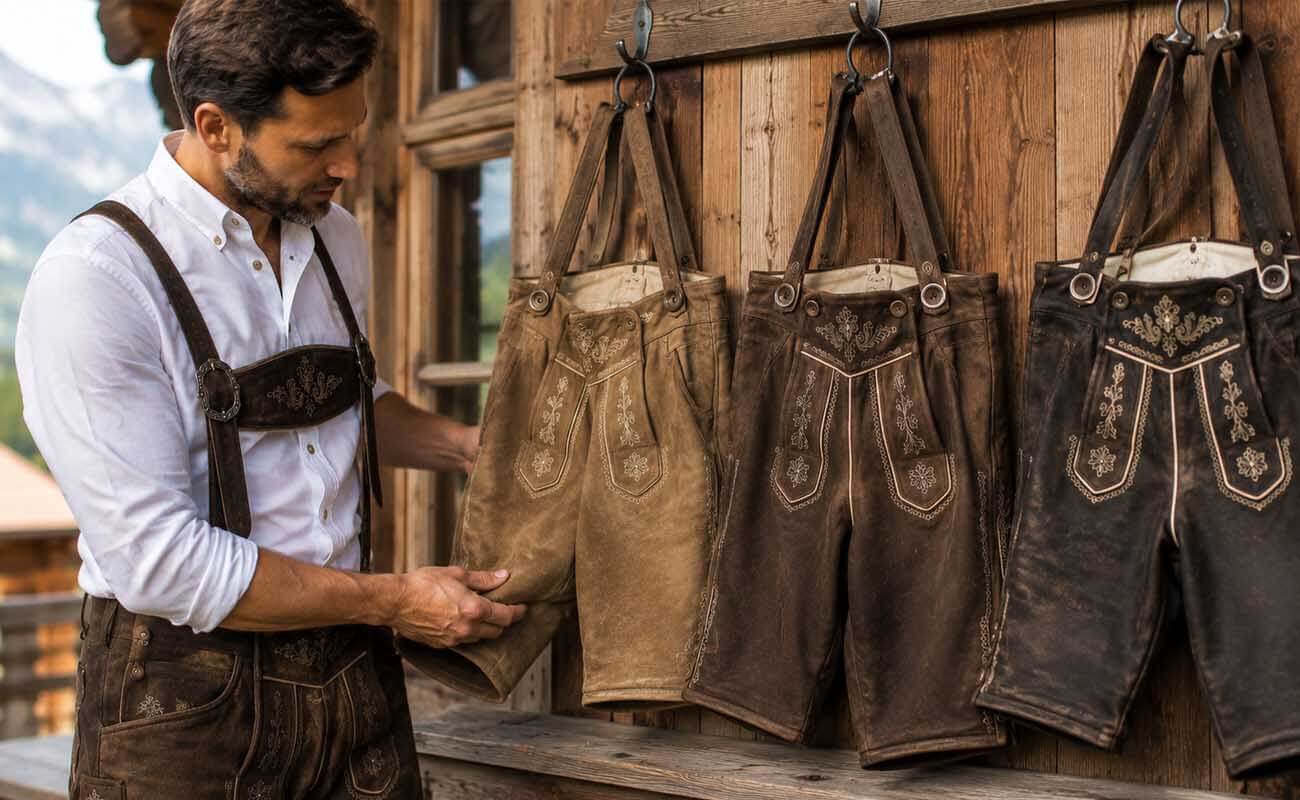
Not all lederhosen leather behaves the same way, and this is one of the most overlooked parts of sizing. Deer leather is naturally soft and pliable with more give from the first wear, so a true-to-measurement fit usually feels comfortable immediately, with only minor stretch afterward. Goat leather is slightly firmer than deerskin but lighter than cowhide, with moderate stretch — a good middle-ground choice if you’re unsure whether to size down. (If you’re still deciding between the two, this breakdown of goat vs. deer lederhosen covers the differences in detail.) Cowhide, the traditional heavy leather, is the stiffest option and the slowest to break in, which is where the “buy snug, not loose” rule matters most, since it stretches the most over repeated wear but takes the longest to soften. Synthetic or leather-blend lederhosen, increasingly common in budget-friendly collections, barely stretch at all, so they should be sized to your exact measurements rather than sized down.
Knowing which leather your pair uses before buying tells you exactly how much room to leave — and prevents the two most common mistakes: buying cowhide too tight expecting instant comfort, or buying a synthetic blend too loose expecting it to stretch like traditional leather. Browsing the full men’s lederhosen collection is a good way to compare leather types side by side before you commit to a size.
Common Sizing Mistakes to Avoid
One of the most frequent mistakes is sizing by jeans size instead of measuring, since lederhosen sit higher and fit differently than denim, so a regular pants size is rarely an accurate guide. Ignoring the seat and thigh measurement is another common issue — waist fit alone doesn’t guarantee comfort, and a snug waist paired with a tight seat is still a bad fit. Buying oversized “to be safe” backfires with genuine leather, since loose lederhosen only get looser and there’s no equivalent of “growing into” the fit. Skipping the sit-and-squat test in the fitting room is a mistake too, because a pair that looks perfect standing still can turn out too restrictive the moment you sit down at a beer table. Finally, not accounting for what you’ll wear underneath can throw off the true fit, since traditional lederhosen are usually worn with minimal layering and trying them on over thick clothing skews the measurement.
Frequently Asked Questions
Lederhosen should be snug, not tight or loose. The waistband should allow two fingers of space comfortably, and the leather should sit close to the body without restricting movement, sitting, or bending.
Yes. Genuine leather lederhosen typically stretch about half an inch to one inch at the waist and thigh within the first 5–10 wears, which is why they should fit snug — not loose — when new.
Lederhosen that are too tight cause visible pressure marks, restrict bending and sitting, and can strain or crack the leather over the seat. Sizing up or having the waist let out by a tailor solves this.
Measure your natural waist, hip/seat, thigh, and inseam with a flexible tape measure, then compare those numbers to the specific brand’s size chart rather than relying on generic S/M/L sizing.
No. Women’s lederhosen use a different rise and hip-to-waist ratio than men’s traditional cuts, so it’s best to size using the brand’s women’s-specific chart and expect a more common need for waist or rise alterations.
Final Takeaway
The right lederhosen fit still comes down to one test: snug at the waist with two fingers of room, close but unrestricted through the seat and thigh, and comfortable enough to sit, squat, and move freely through a full day of celebration. Buy true-to-measurement or slightly snug — never loose — since genuine leather stretches rather than shrinks, and let it mold to your body naturally over the first several wears. Use suspenders, side lacing, or a quick tailoring adjustment to fine-tune the rest, and when in doubt between two sizes, size down rather than up.
Checkout: What Are Lederhosen Pockets For?
For more sizing guides, styling tips, and Trachten know-how, browse the full Alpen Lederhosen journal, or head straight to the men’s lederhosen and women’s lederhosen collections to find your perfect fit.


