

Blog
How Are Bavarians Different From other Germans?


Bavarians are different from other Germans in language, religion, cuisine, dress, and historical identity. Bavaria was an independent kingdom until 1871, kept a mostly Catholic population while much of northern Germany turned Protestant, speaks a distinct Bavarian dialect (Bairisch) that can be hard for other Germans to follow, and still treats Lederhosen, Dirndls, and Oktoberfest as everyday cultural markers rather than costumes. Bavaria is also the only German state that officially calls itself a “Free State” (Freistaat Bayern), reflecting a regional identity that many Bavarians place above, or alongside, their German one.
If you only remember one thing, remember this: Bavarians see themselves as Bavarian first and German second, and almost every cultural difference on this list traces back to that single fact.
Nestled in the southeast corner of the country, Bavaria (Bayern) is Germany’s largest state by area and its second-most populous. Munich, its capital, is often the first stop for visitors chasing beer gardens and Alpine views, but the deeper story is that Bavaria spent centuries as its own kingdom before Germany even existed as a unified nation. That history still shapes how Bavarians talk, eat, worship, dress, and vote today.
This updated guide walks through the real, evidence-based differences between Bavarians and other Germans, why they still matter, and how they show up in daily life, from a Munich beer hall to a Berlin office. For more deep dives into Bavarian culture and Trachten traditions, browse the full Alpen Lederhosen blog.
1. Bavaria Was Its Own Kingdom and Still Calls Itself “Free”
Unlike most German regions, Bavaria existed as an independent kingdom from 1806 until it joined the German Empire in 1871, and it kept its own monarchy, the Wittelsbach dynasty, for over 700 years before that. Prussia, by contrast, effectively built modern Germany around itself, which is why Bavaria’s relationship with “being German” has always felt more like a late, negotiated arrangement than an original identity.
That history still shows up in Bavaria’s legal name today. Officially, it is the “Freistaat Bayern,” or Free State of Bavaria, a title it has used since 1918 and one that only a handful of German states carry. Politically, Bavaria is also the only state with its own dominant party, the CSU (Christian Social Union), which exists nowhere else in Germany and maintains a permanent alliance with the CDU everywhere else in the country. In recent years, Bavaria has pushed harder than most states for regional control over taxation, education policy, and even border checks during EU migration debates, a modern echo of the same instinct for autonomy that kept it independent for so long.
This sense of political separateness also explains why Bavaria markets and preserves its own cultural symbols so aggressively. State pride isn’t treated as regional trivia in Bavaria; it’s treated as a living political identity, reinforced through school curricula, state ceremonies, and public holidays that don’t exist anywhere else in Germany.
2. The Bavarian Dialect (Bairisch) Is Nearly a Separate Language
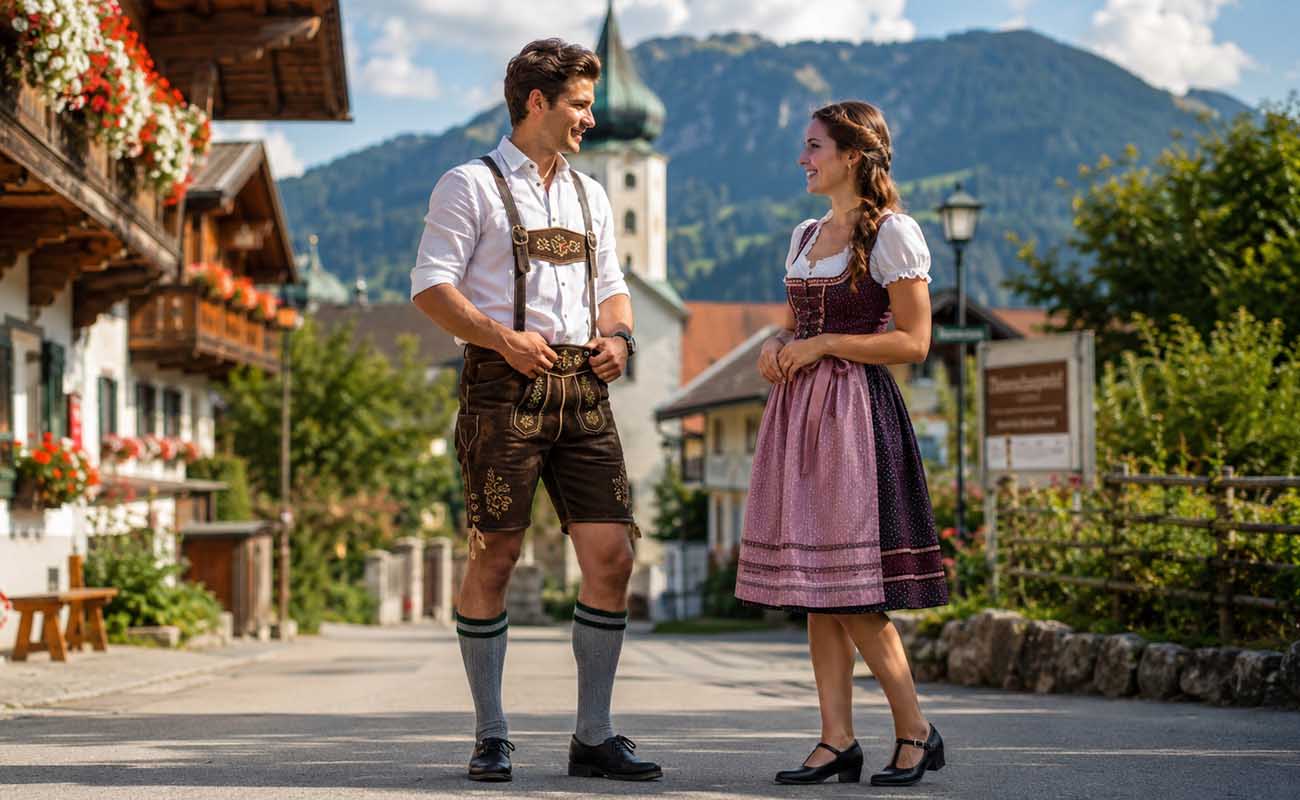
Standard German (Hochdeutsch) is understood everywhere in Germany, but everyday spoken Bavarian, known as Bairisch, is different enough in vocabulary, grammar, and pronunciation that Germans from Hamburg or Cologne often struggle to follow a fast conversation in rural Bavaria.
Fast facts about Bairisch:
- It is officially recognized as a distinct language variety, not just an accent.
- Common greetings differ completely: Bavarians say “Servus” or “Grüß Gott” instead of the standard “Hallo” or “Guten Tag.” If you want the full breakdown of Bavarian greetings, see How Do You Say Hello In Bavarian German?
- Sentence structure and verb forms shift, since Bavarian often drops or reshapes the standard German “-en” verb endings.
- Regional sub-dialects exist even within Bavaria, with Upper Bavarian, Franconian, and Swabian-influenced speech all sounding different from one another.
Because of this, most Bavarians are effectively bilingual: they speak Hochdeutsch at school, work, and with outsiders, and switch to dialect at home or with locals. Tourists visiting Munich or the Alpine countryside often find that a few Bavarian phrases go a long way toward being welcomed as more than just a visitor.
3. Religion: Catholic Bavaria vs. Protestant Northern Germany
The 16th-century Reformation split German-speaking Europe, and Bavaria stayed firmly on the Catholic side while much of the north and east became Protestant. That divide never fully closed. Bavaria still has one of the highest shares of Catholic residents of any German state, well above the national average, and public Catholic holidays such as Corpus Christi (Fronleichnam) are official state holidays there even though they are not observed nationwide.
The Catholic imprint reaches into everyday institutions too. Crucifixes remain a common, and historically legally mandated, sight in Bavarian public school classrooms, a practice that has sparked national debate precisely because it is unusual outside Bavaria. Church-linked traditions, from local processions to patron-saint festivals to the blessing of animals and harvests, still mark the yearly calendar in rural Bavarian towns in a way they no longer do across much of northern Germany. Even Bavaria’s biggest secular festival, Oktoberfest, opens with a religious-style civic ceremony, the tapping of the first keg, which underlines how tightly ritual and tradition are woven into Bavarian public life.
4. Food and Beer Culture Run on Different Rules
Bavarian food culture is heartier, more meat- and pork-centric, and built around communal eating, while Bavarian beer culture operates almost as its own institution.
What sets Bavarian food and drink apart:
- Weisswurst, a white veal sausage, is traditionally eaten only before noon, with sweet mustard and a pretzel, a rule most Germans outside Bavaria don’t follow or even know.
- Obatzda, a paprika-spiced cheese spread, and Brezn (pretzels) are beer-garden staples rarely seen the same way up north.
- Bavaria is the birthplace of the Reinheitsgebot, the 1516 Beer Purity Law still referenced as the foundation of German brewing standards.
- Bavarians drink beer by the Maß, a one-liter stein, while elsewhere in Germany smaller 0.3–0.5 liter glasses are standard.
- Oktoberfest, held in Munich each year, remains the world’s largest folk festival, though locals will point out that authentic Bavarian beer-garden culture runs year-round, not just during the festival. If you’re planning to bring children, it’s worth reading Are Children Allowed in The Beer Tents At Oktoberfest? before you go.
Beer gardens themselves are a distinctly Bavarian social institution. Many allow visitors to bring their own food as long as they buy beer from the venue, a tradition dating back to 19th-century laws that let brewers cool their beer cellars with shade trees, then opened those shaded courtyards to the public. That custom barely exists outside Bavaria today.
5. Traditional Dress Is Still Everyday Wear, Not Just Costume
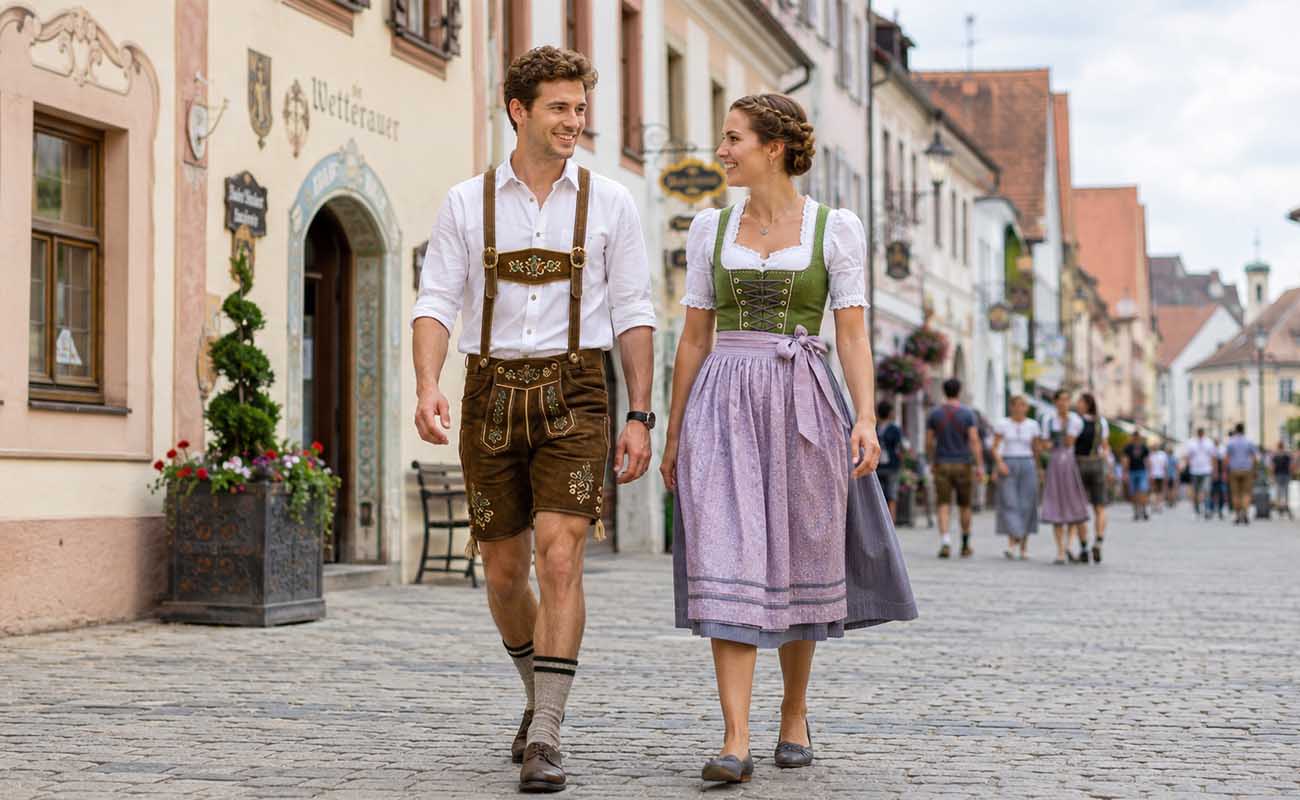
In most of Germany, folk costume is a museum piece. In Bavaria, Lederhosen (leather shorts or breeches) and Dirndls, the traditional dress with bodice, blouse, skirt, and apron, are still worn for weddings, festivals, church holidays, and, increasingly, as everyday fashion among younger Bavarians.
Tracht sales rise every year around Oktoberfest, but many Bavarian families own traditional dress specifically for recurring events like weddings and christenings, not just the festival season. Even small details carry meaning: the way a Dirndl apron bow is tied still functions as a widely known, if informal, social signal about relationship status, a custom largely unknown outside the region. Complete outfits typically include suspenders, traditional Bavarian shirts, and the right footwear; if you’re new to Trachten dressing, our guide on what shoes to wear with Lederhosen and our notes on how tight Lederhosen should fit cover the basics before your first outing.
Modern Tracht fashion has also grown into its own retail category, blending traditional tailoring with contemporary cuts, which is why Bavarian-style clothing brands continue to expand internationally today. Outside Bavaria, this kind of everyday traditional dress is far rarer; our piece on where Lederhosen are not worn explains just how geographically specific this custom really is, even within the German-speaking world.
6. Alpine Geography Shapes a Different Way of Life
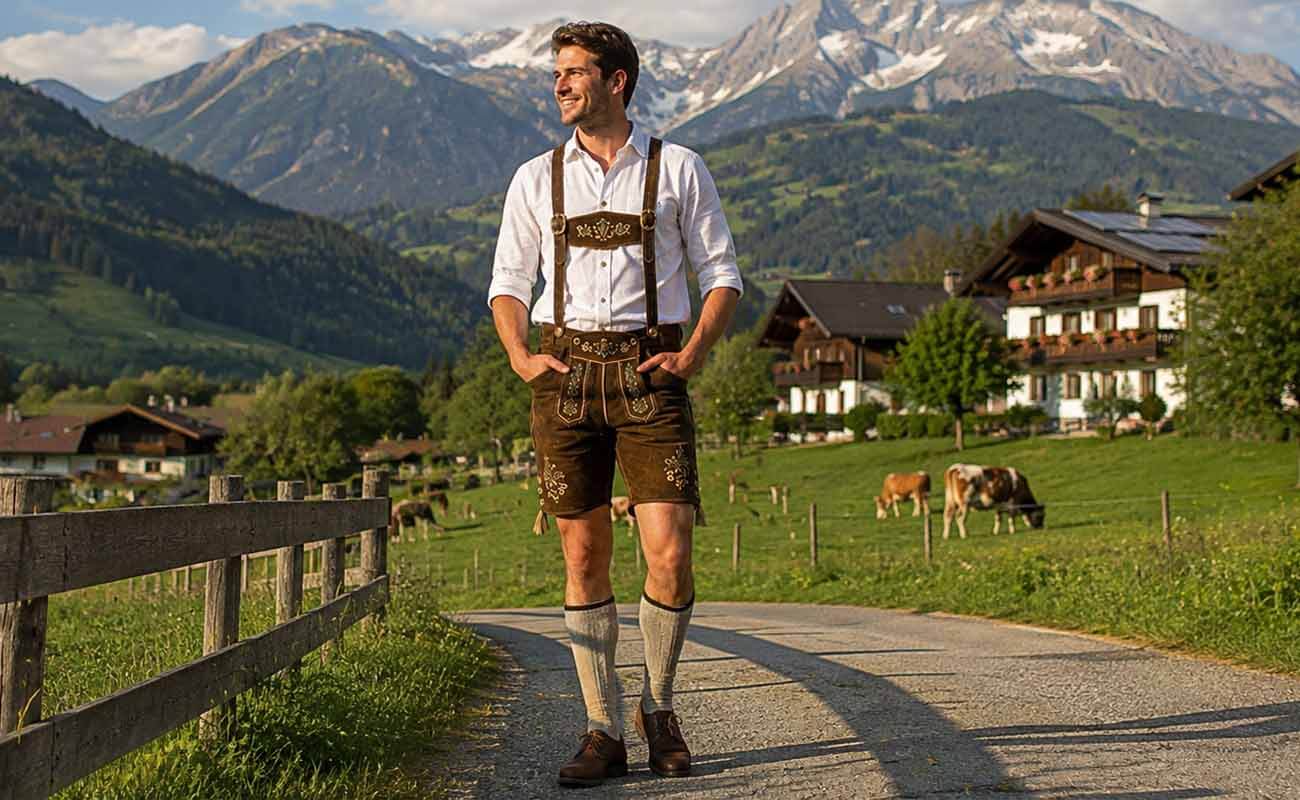
Bavaria borders the Alps, giving it a landscape, and a lifestyle, unlike flatter, coastal, or industrial regions of Germany. Skiing, hiking, and mountain biking are built into the regional calendar in a way they simply can’t be in northern port cities like Hamburg or Bremen, and Alpine dairy farming supports a strong local cheese and dairy economy distinct from the food traditions of the North Sea coast.
Small Alpine villages also preserve customs with no real equivalent in flat, urbanized northern states, such as the Maibaum, or Maypole tradition, and the Almabtrieb, an autumn festival that brings cattle herds down from mountain pastures with music and decoration. These aren’t tourist performances; they remain functioning parts of the agricultural and social calendar in Alpine Bavaria, and many of the same villages that host them also maintain centuries-old tailoring workshops for authentic Lederhosen, since mountain life and traditional craftsmanship have always been closely linked in the region.
7. Politics and Economy: A State That Still Thinks Like a Nation
Bavaria’s economy is one of the strongest in Germany, home to major companies like BMW, Siemens, and Adidas, and this economic weight feeds a political culture that often positions itself against, not just within, national policy. The CSU, Bavaria’s ruling party, frequently takes harder-line positions on immigration, EU policy, and taxation than its national CDU partner, and Bavaria has repeatedly challenged federal tax-redistribution rules, known as the Länderfinanzausgleich, arguing it contributes more to the national budget than it receives.
Regional pride shows up in practical, everyday ways too. Bavarian license plates, state symbols, and even school curricula give more weight to Bavarian history than a typical German state curriculum gives to its own region, reinforcing the sense that Bavaria operates with one foot inside Germany and one foot as its own political entity. That same instinct extends into how Bavaria promotes itself economically: tourism campaigns lean heavily into folk identity, from Alpine scenery to traditional dress, because that distinctiveness is precisely what draws millions of visitors to Munich and the Bavarian countryside every year.
8. Identity: “Bavarian First, German Second”
Perhaps the clearest difference isn’t a custom or a food. It’s a mindset. Surveys on regional identity in Germany consistently show Bavarians reporting stronger regional attachment than residents of most other German states, and many Bavarians introduce themselves as “Bavarian” before “German,” especially to international visitors.
This shows up visually too: the Bavarian flag, with its white-and-blue diamonds, is flown as often, if not more often, than the German national flag on private homes and businesses in rural Bavaria. It isn’t separatism in a practical sense (Bavaria isn’t leaving Germany), but it is a genuine, living regional identity that shapes elections, school pride, sports rivalries, and everyday conversation. It’s also why traditional accessories like suspenders and Lederhosen belts remain popular gifts and keepsakes among Bavarians living outside the state, functioning as portable symbols of home.
9. Sports Culture: Local Rivalries Run Deeper Than National Pride
Football is a national obsession across Germany, but Bavaria’s relationship with the sport carries an extra layer of regional identity that other states don’t quite replicate. FC Bayern Munich, one of the most dominant clubs in European football, is treated less like “a German team” and more like a Bavarian institution, with its success regularly framed in local media as a point of Bavarian, not just national, pride. Rivalries between Bavarian clubs and northern clubs, such as Bayern Munich against Borussia Dortmund or Hamburger SV, often carry a regional “north versus south” undertone that goes beyond a typical sports rivalry.
Traditional Bavarian sports add another layer that has no meaningful presence elsewhere in Germany, including Fingerhakeln, a form of finger-wrestling, and Eisstockschießen, Bavarian curling, both still practiced at village festivals today. These games are usually played in full Tracht at harvest and autumn festivals, blending sport, costume, and community celebration in a way that’s distinctly Bavarian.
10. Not All of Bavaria Is the Same: Franconia’s Own Identity
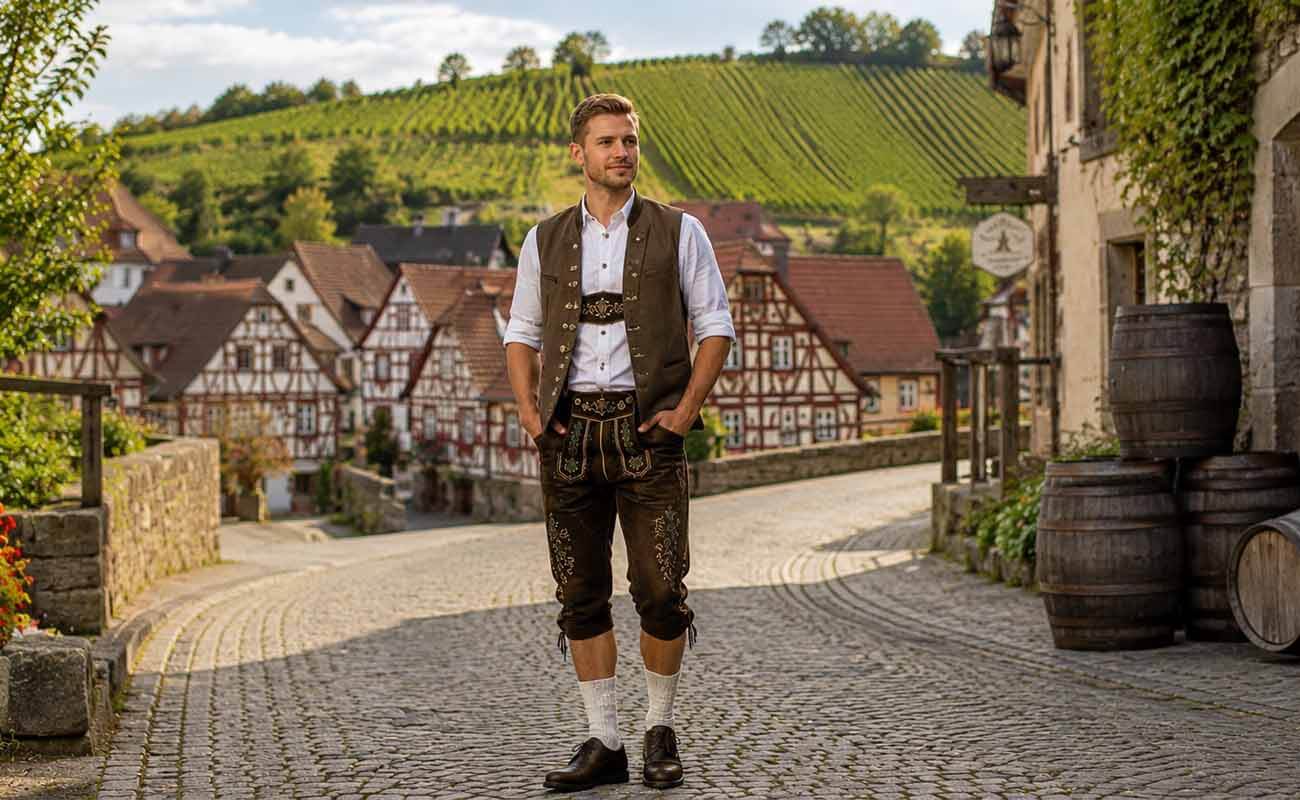
One nuance often missed by outsiders is that Bavaria itself isn’t culturally uniform. Northern Bavaria, the Franconia region that includes Nuremberg and Würzburg, has its own dialect, its own wine culture rather than a beer-first culture, and a long-standing resistance to being lumped in with “Bavarian” stereotypes tied to Munich and the Alps.
Franconians speak Franconian dialects, distinct from the Bairisch spoken in Upper and Lower Bavaria, and Franconia is itself a major German wine-producing region, a sharp contrast to the beer-first identity associated with Munich and the Alpine south. The political and cultural tension between Franconia and “core” Bavaria is a long-running, well-documented regional dynamic, and it’s a useful reminder that “Bavarian identity” has internal diversity, not just a single Munich-centered stereotype. Statements about “Bavarians” often really describe Upper Bavaria and Munich specifically, not the state as a whole. Even Trachten styles vary regionally, with Franconian folk dress differing in cut and color from the Lederhosen and Dirndl most associated with Munich and Oktoberfest.
How Bavarians Differ From Other Germans: Quick Comparison
| Category | Bavaria | Rest of Germany (general pattern) |
|---|---|---|
| Historical status | Independent kingdom until 1871; still a “Free State” | Mostly unified under Prussian-led statehood |
| Dominant religion | Majority Catholic | Largely Protestant in the north/east, mixed elsewhere |
| Language | Bairisch dialect, distinct grammar/vocabulary | Standard Hochdeutsch dominant in daily use |
| Beer serving size | 1-liter Maß standard | 0.3–0.5 liter glasses standard |
| Traditional dress | Everyday/festival wear (Lederhosen, Dirndl) | Mostly reserved for museums or rare folk events |
| Politics | CSU (Bavaria-only party) | CDU and other national parties |
| Regional identity | “Bavarian first, German second” common sentiment | National identity typically takes precedence |
Frequently Asked Questions
Yes, but with a strong regional identity layered on top. Most Bavarians identify as both Bavarian and German, often naming their Bavarian identity first, especially when talking with people from outside Germany.
Bavaria’s centuries as a separate kingdom, combined with its Alpine geography, allowed a distinct dialect (Bairisch) to develop and survive, even as standard Hochdeutsch became the shared language of German media, schools, and business nationwide.
Oktoberfest originated in Munich, Bavaria, in 1810, and remains fundamentally a Bavarian festival, even though smaller Oktoberfest-style events are now hosted across Germany and worldwide.
Traditional Tracht clothing has regional variants across the German-speaking Alps, including Austria, but Bavaria, particularly Munich and Upper Bavaria, is the region most associated with Lederhosen and Dirndls as living, everyday traditional dress rather than historical costume. Interested buyers often also ask about authentic pricing; see what authentic Lederhosen cost in Munich for a realistic breakdown.
Religion and regional identity stand out most: Bavaria is predominantly Catholic with a strong sense of regional autonomy, while much of northern Germany is historically Protestant with a more nationally oriented identity.
Bavaria is consistently one of Germany’s top-performing state economies, driven by automotive, engineering, and technology industries headquartered in and around Munich.
Yes. Beyond the dress itself, styling choices like footwear and accessories matter; our guide on whether you wear socks with a Dirndl covers the traditional versus modern approach.
Final Thoughts
Bavaria’s differences from the rest of Germany aren’t stereotypes dressed up for tourists. They’re rooted in thirteen centuries of independent history, a surviving regional dialect, a distinct religious identity, and a food and dress culture that Bavarians still actively live, not just perform for Oktoberfest. Understanding this helps explain why Bavaria continues to think of itself as a “Free State” within Germany rather than simply another region on the map.
Whether you’re planning a trip to Munich, shopping for authentic Trachten clothing, or just curious about what makes Bavaria tick, the short version holds up: Bavarians are proudly German, but they’re Bavarian first. For more guides like this one, explore the rest of the Alpen Lederhosen blog.


