

Blog
Do You Wear Socks With a Dirndl?


Quick Answer
Do you wear socks with a dirndl? No — socks are optional with a dirndl, not mandatory. Traditional Bavarian and Austrian dirndl outfits are commonly worn bare-legged, with tights, or with knee-high socks, depending on the region, the season, and the formality of the event. Most Oktoberfest and festival-goers today choose bare legs or sheer tights for warm weather, while knee-high or over-the-knee socks remain popular for cooler seasons, folk festivals, and traditional “Tracht” dress codes.
There is no single rule that applies everywhere — this guide breaks down exactly when to wear socks with a dirndl, which styles work best, and how to avoid the most common styling mistakes.
Key Takeaways (TL;DR)
- Socks with a dirndl are a style choice, not a strict tradition — bare legs, tights, ankle socks, knee-highs, and over-the-knee socks are all considered acceptable.
- Knee-high socks are the most historically “traditional” option, especially in rural Bavarian and Austrian Tracht culture.
- Bare legs or sheer tights are now the most common choice at large city festivals like Munich Oktoberfest, especially in warm weather.
- Sock length should match dirndl length: shorter dirndls pair well with ankle socks or bare legs; longer, traditional-length dirndls pair well with knee-highs.
- Cooler weather and formal Tracht events (weddings, church festivals, winter markets) call for wool or cotton knee-high socks for both warmth and authenticity.
- Color coordination matters more than sock length — neutral or complementary tones keep the outfit polished, while clashing patterns are the most common mistake.
The History of the Dirndl
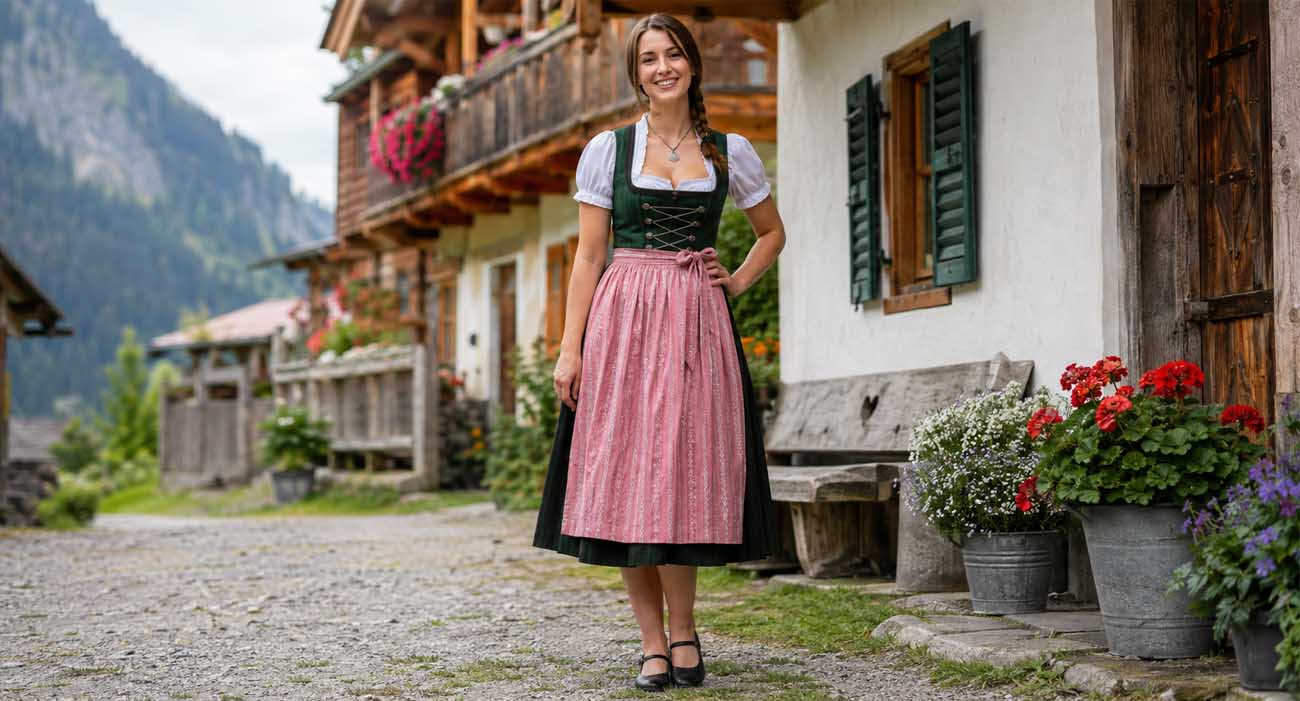
The dirndl originated as practical working attire for women in the rural Alpine regions of Bavaria and Austria. Early versions were made from sturdy, simple fabrics suited to farm labor, not fashion. By the late 19th and early 20th centuries, the dirndl shifted from workwear into a celebrated symbol of regional identity, eventually becoming the centerpiece of Oktoberfest and other Alpine folk festivals.
A traditional dirndl has three core parts: a fitted bodice that shapes the waist and torso, a full skirt often in bold florals, checks, or solid colors, and an apron tied at the front, which traditionally also signals relationship status (left bow = single, right bow = taken, center bow = child or virgin, back bow = widowed).
Footwear and legwear were never fixed by strict law — they evolved with class, climate, and region. Wealthier families historically wore fine, embroidered woolen stockings, while working women in the fields often went without socks entirely for practicality. That same regional flexibility is exactly why the “socks or no socks” question still doesn’t have one universal answer today.
Regional variation also shaped design details. Alpine mountain regions favored longer dirndl lengths with intricate lace trim and decorative buttons, often paired with heavier, warmer stockings to match the cooler climate. Lowland and urban areas, by contrast, tended toward lighter fabrics and shorter hemlines, which naturally lent themselves to bare legs or lighter hosiery. Understanding this history helps explain why two equally “correct” dirndl outfits can look completely different depending on the wearer’s family or regional tradition.
So, Do You Have to Wear Socks With a Dirndl?
No. There is no rule — cultural, religious, or fashion — that requires socks with a dirndl. Whether you wear socks really comes down to four things: the event you’re attending (a formal Tracht wedding calls for more traditional styling than a summer beer garden), the weather (cold Alpine autumns favor wool knee-highs while warm days favor bare legs), the region (rural Bavarian and Austrian Tracht culture leans more traditional, while international Oktoberfest events lean more casual), and simple personal style, since many wearers today treat legwear as a fashion accessory rather than a tradition to follow strictly.
If you’re attending Munich’s Oktoberfest, you’ll see all of these options — bare legs, tights, ankle socks, and knee-highs — worn side by side, which confirms there’s genuinely no single “correct” answer.
Traditional vs. Modern Styling
| Category | Traditional Practice | Modern Trend |
|---|---|---|
| Common choice | Knee-high or over-the-knee wool/cotton stockings | Bare legs or sheer tights, especially at large festivals |
| Color | Muted, natural tones (white, cream, grey) | Bold, matched, or contrasting colors |
| Pattern | Simple ribbing or lace trim | Playful prints, embroidery, statement patterns |
| Occasion driver | Social class and region | Personal style and weather |
| Material focus | Wool for warmth, durability | Breathable cotton blends, moisture-wicking fabrics |
The biggest shift in recent years is that legwear with a dirndl is now styled like any other fashion accessory — chosen to match the outfit and occasion rather than to follow a fixed regional custom. Sustainable and natural-fiber socks, such as organic cotton and responsibly sourced merino wool, have also become more popular as shoppers pay closer attention to fabric sourcing.
Types of Socks to Wear With a Dirndl
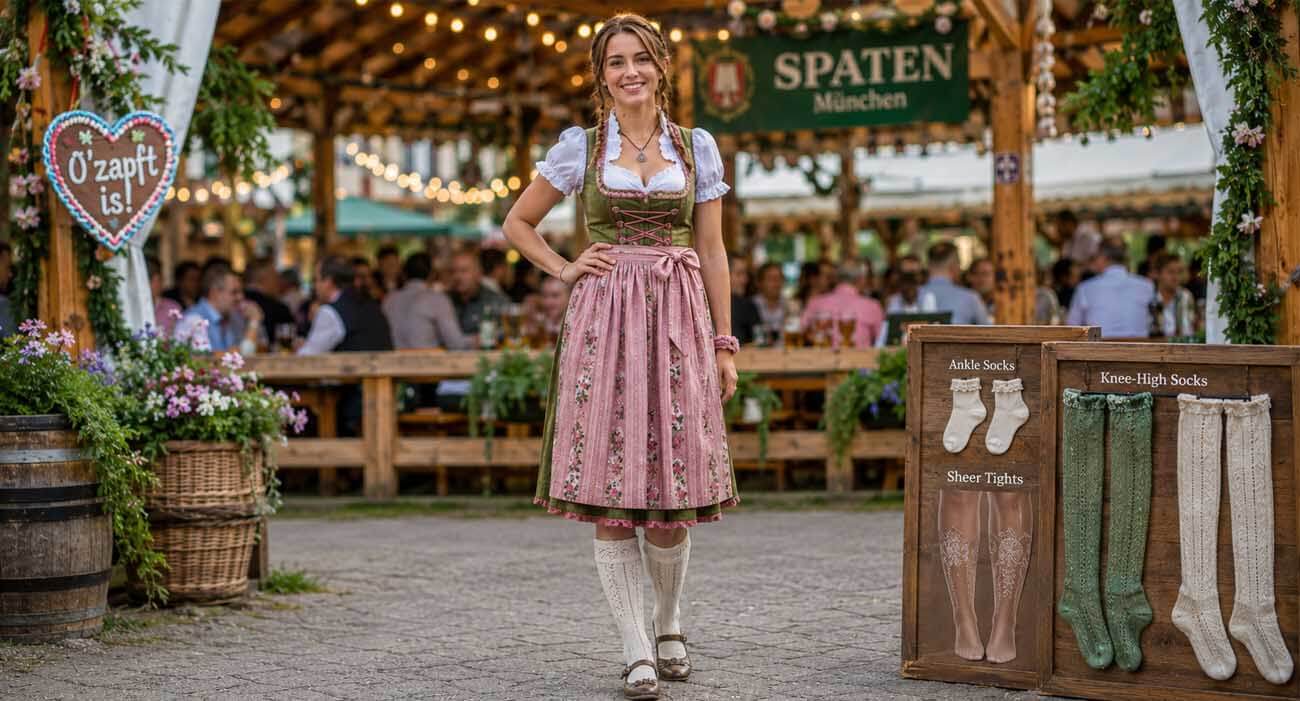
Bare legs (no socks) are best for warm-weather festivals, daytime events, and shorter dirndls. This is the most common choice at modern city Oktoberfest events and pairs well with flats, loafers, or low block-heel shoes.
Sheer tights or nylons offer a polished middle ground between bare legs and full stockings. They work for both casual and semi-formal occasions and flatter any dirndl length.
Ankle socks are casual, playful, and comfortable for long hours on your feet. They’re best with shorter or knee-length dirndls, and bright colors or small patterns give them a modern twist.
Knee-high socks are the most historically traditional option. They’re ideal for longer, classic-length dirndls and cooler weather, and ribbed, lace-trimmed, or embroidered styles add authenticity.
Over-the-knee or thigh-high socks are a bolder, more contemporary styling choice. They work best with mid-length dirndls rather than full-length traditional ones, and they’re common in fashion-forward and festival-influencer looks.
As a quick pairing rule: a longer dirndl in cooler weather calls for knee-highs, while a shorter dirndl in warm weather works best with bare legs or ankle socks.
Fabric choice matters as much as length. Cotton and cotton-blend socks are breathable and comfortable for long hours of standing, dancing, and walking between festival tents, making them the go-to choice for warm-weather events. Wool remains the preferred material for cooler autumn and winter Tracht occasions because it retains warmth even when temperatures drop sharply after sunset — a common feature of Alpine festival evenings. For more formal or evening events, lightweight silk-blend socks add a subtle sheen without sacrificing comfort. Whatever material you choose, make sure it complements the fabric of your dirndl itself; a heavy wool dirndl paired with delicate sheer tights can look mismatched, just as a light cotton dirndl paired with thick wool knee-highs can look overly bulky.
If you’d like to browse ready-made options, our Trachten socks collection includes a range of knee-high, ribbed, and patterned styles that work well with both traditional and modern dirndl looks.
Current Style Trends
Several shifts define how people are wearing (or not wearing) socks with a dirndl right now. Sustainable, natural-fiber socks are increasingly preferred over synthetic blends, reflecting broader demand for eco-conscious Trachten wear. Matching sock-and-apron color sets are trending among younger festival-goers seeking a curated, put-together look. Sheer, barely-there tights remain a popular middle-ground choice for people who want the polish of legwear without the bulk of a full sock, while bold, embroidered, or brightly colored over-the-knee styles are gaining traction as a fashion-forward statement piece. Rather than styling head-to-toe traditional or head-to-toe modern, many wearers now blend a classic dirndl with contemporary sock choices, or vice versa, for a more personalized result. These trends confirm that the “right” answer to socks with a dirndl is shaped far more by personal expression and comfort than by strict regional custom.
How to Choose Sock Color and Pattern
Start with your dirndl’s dominant color rather than its accent color, and either match it directly or choose a neutral tone like white, cream, or beige to let the dress lead. Use contrast sparingly — one bold sock color against a patterned dirndl is enough, since two competing patterns will clash. Keep prints simple, as small florals, stripes, or ribbing photograph better and read as more polished than busy patterns. Match your metals and accessories to your socks as well as your dress; gold jewelry pairs well with cream or blush tones, while silver suits cooler greys and whites. Finally, test the full outfit both standing and sitting, since sock visibility changes dramatically depending on your apron length and how you move.
For inspiration, our full Dirndl Dresses collection is organized by color palette, which makes it easier to picture how a specific sock tone will sit against a specific dress before you buy.
Socks by Occasion: A Quick Reference
- Oktoberfest (warm days): bare legs, sheer tights, or ankle socks
- Oktoberfest (evening/cooler nights): knee-high socks in neutral or matching tones
- Christmas markets/winter Tracht events: wool knee-high or over-the-knee socks for warmth
- Traditional Tracht weddings: knee-high socks in muted, classic tones for a formal, authentic look
- Summer folk festivals: ankle socks or bare legs with breathable, lightweight fabrics
- Costume parties / themed events: any length, with more room for bold colors and patterns
Completing Your Dirndl Look Beyond Socks
Socks are only one piece of a well-styled dirndl outfit, and getting the rest of the look right matters just as much. Shoes are usually the next question people ask after socks, and the general rule is similar: match formality and weather rather than following one fixed style. Our guide on what shoes to wear with a dirndl walks through flats, block heels, and traditional buckle shoes in more detail, including how shoe choice interacts with sock length.
Underneath the bodice, comfort and support matter as much as tradition, and it’s a question we get asked almost as often as the socks question. If you’re planning your full outfit, our article on whether you need to wear a bra with a dirndl covers support options that work with a fitted bodice.
If you’re shopping for the rest of the outfit, our Dirndl Blouses collection and Trachten Skirts collection are a good starting point for building a coordinated look, and a Dirndl handbag finishes the outfit for festivals and evening events alike.
For anyone building out a mixed Tracht wardrobe — for example, pairing a dirndl with a women’s lederhosen piece for a more contemporary festival look — the same sock logic applies: match length and material to the occasion, and let color coordination do the heavy lifting.
If you’re dressing a partner or family member in lederhosen for the same event, sock etiquette works a little differently on the men’s side. Our companion guide on wearing the right socks with lederhosen breaks down traditional Haferlschuh pairings and sock length rules for men’s Trachten outfits.
Common Mistakes to Avoid
- Mismatched patterns: Pairing a heavily patterned dirndl with heavily patterned socks overwhelms the outfit — pick one focal pattern and keep the other simple.
- Wrong sock length for dirndl length: Thigh-highs under a full-length traditional dirndl rarely show, wasting the styling effort; ankle socks under a very short dirndl can look disproportionate.
- Ignoring the weather: Wool socks in summer heat or bare legs in near-freezing beer tents both lead to discomfort that shows on your face by hour three.
- Overlooking comfort: Scratchy or non-breathable fabric will distract from the outfit during long festival days — prioritize cotton or soft wool blends.
- Forgetting shoe pairing: Socks and shoes should be styled together; lace-up boots read differently with knee-highs than with bare legs, so decide on shoes first.
Frequently Asked Questions
No. Socks are optional. Bare legs, tights, ankle socks, and knee-highs are all acceptable depending on the event, weather, and region.
Knee-high or over-the-knee socks in wool or cotton, often with ribbing or lace trim, are the most historically traditional choice in Bavarian and Austrian Tracht culture.
Yes. Bare legs are one of the most common choices at modern Oktoberfest events, especially in warm weather or during the day.
Yes. Ankle socks work well with shorter or knee-length dirndls and are a popular casual, comfortable choice for outdoor festivals.
They can be, especially with mid-length dirndls and a more fashion-forward styling approach. They are less traditional and best suited to casual or costume-style events rather than formal Tracht occasions.
Choose a neutral tone to let the dress lead, or match one accent color from the dirndl. Avoid combining two bold patterns.
Yes. Longer, traditional-length dirndls pair best with knee-high socks, while shorter or knee-length dirndls suit ankle socks, tights, or bare legs.
It varies by region and event type. Rural and formal Tracht events still favor traditional knee-high socks, while urban festivals and warm-weather Oktoberfest crowds increasingly go sockless or wear sheer tights.
Final Verdict
Wearing socks with a dirndl comes down to occasion, weather, and personal style — not a fixed rule. If you want a traditional, authentic Tracht look, choose knee-high wool or cotton socks in a color that complements your dirndl. If you’re dressing for a warm-weather festival or prefer a modern, minimal look, bare legs or sheer tights work just as well. Either choice honors the dirndl — the goal is comfort, coordination, and confidence in however you choose to wear it.
Explore our full collection of Dirndls and shop matching Trachten socks to complete your look.


