

Blog
History of Oktoberfest Lederhosen – A Detailed View of Authentic Bavarian Leather Attire


Lederhosen is far more than a piece of festive clothing. It’s a living thread connecting today’s wearers to centuries of Bavarian farming life, alpine craftsmanship, and community celebration. As the world gets ready for the 191st Munich Oktoberfest, running from September 19 to October 4, interest in this leather attire is once again on the rise, with a new generation of festival-goers, travelers, and fashion lovers rediscovering the garment.
Originally stitched together for alpine farmers and hunters who needed rugged, weather-resistant clothing, it has journeyed from muddy pastures to global runways without ever losing its Bavarian soul. Whether it’s a classic men’s style with bold embroidery or a contemporary women’s cut with a more modern silhouette, this outfit remains one of the most recognizable symbols of German culture anywhere in the world.
In this updated guide, we’ll walk through the full story — from its 18th-century origins to the newest styles being worn at festivals today — so you can understand exactly why it has never gone out of fashion.
The Historical Origins of Lederhosen
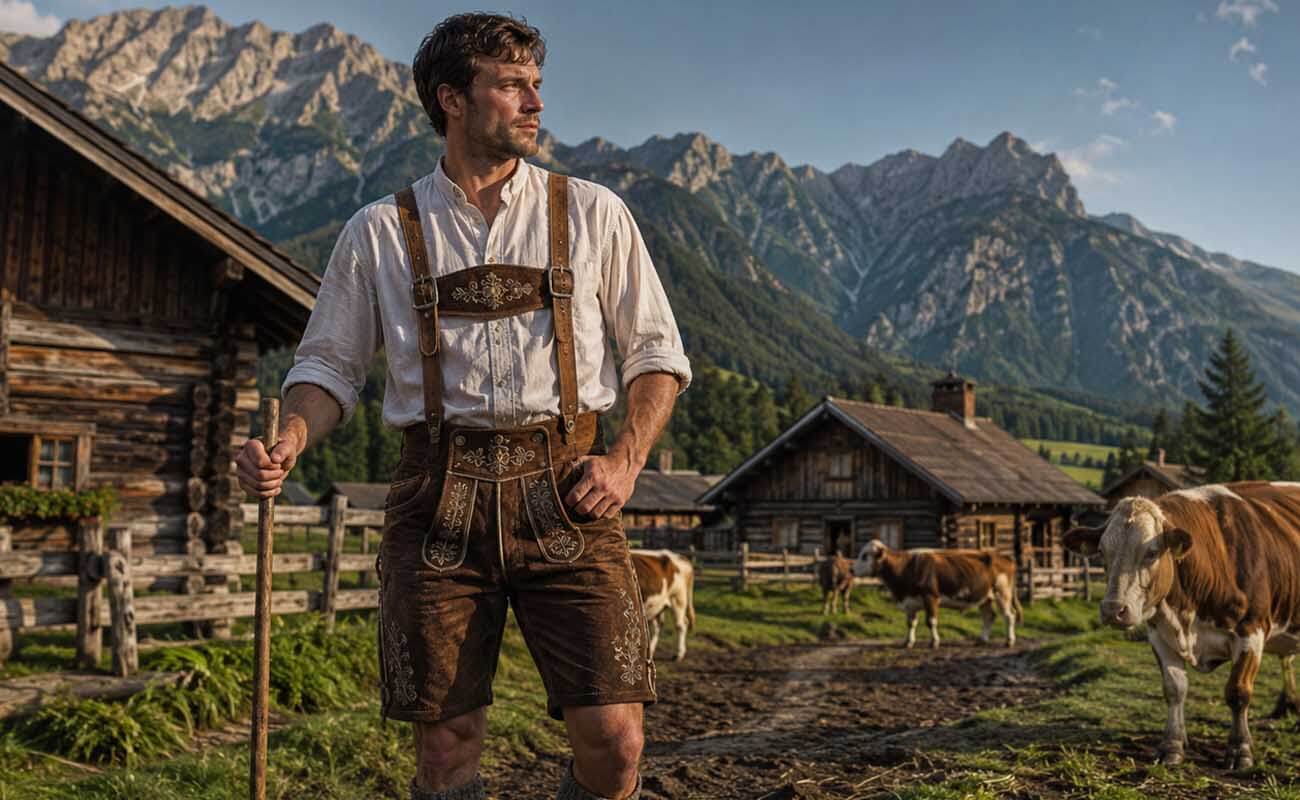
The story traces back to the 18th century, when Bavaria was still a largely agricultural society. Farmers, woodsmen, and laborers needed clothing tough enough to survive long days outdoors, and leather — usually cowhide or deer hide — proved to be the ideal material. It resisted tearing, held up against rough terrain, and only grew softer and more comfortable with wear.
As the garment spread across rural Bavaria, it slowly picked up decorative touches: cross-stitched suspenders, carved bone buttons, and embroidered motifs representing local villages or trades. By the 19th century, what had started as pure workwear was being worn with pride at festivals and gatherings.
Key milestones in that transformation include:
- 1700s – Farmers and hunters in the Bavarian Alps adopt leather breeches for their durability and flexibility during physical labor.
- 1810 – The first Oktoberfest is held in Munich to celebrate the wedding of Crown Prince Ludwig and Princess Therese, laying the groundwork for the outfit’s later association with the festival.
- Mid-1800s – Regional variations emerge, each with distinct stitching patterns tied to specific valleys and towns.
- Late 1800s – Embroidery, decorative buckles, and suspenders become more elaborate as the garment shifts from purely functional wear to a marker of regional identity.
- Early 1900s – Trachten (traditional dress) clubs form to formally preserve and promote authentic Bavarian clothing.
What began as practical farmwear had, within roughly a century, become a proud emblem of Bavarian heritage — a transition that still defines how it’s worn and understood today.
Bavarian Folklore and Symbolism
Few garments are as deeply woven into a region’s storytelling. In traditional folk tales passed down through generations, hardworking farmers, mischievous woodland spirits, and steadfast villagers are almost always pictured in leather shorts — a visual shorthand for resilience, honesty, and closeness to the land.
Within these stories, the different styles carry their own meaning. Shorter cuts, often worn by boys and younger men, represent youthful energy and the start of one’s connection to Bavarian tradition. The longer trouser version, typically worn by older men, signals maturity, respect, and a deeper tie to community customs. The suspenders themselves are frequently described as something that “holds a person together,” both literally and symbolically — steady, dependable, built to last.
This connection to folklore elevated the garment well beyond its practical origins. It became shorthand for:
- Hard work and self-reliance in rural Bavarian life
- Community bonds strengthened through shared festivals and harvest celebrations
- Craftsmanship passed from one generation of leatherworkers to the next
- A visual link between everyday people and the folk heroes of local legend
That same spirit of alpine tradition shows up at other regional celebrations too, such as Almfest, where Trachten and folklore are just as central to the festivities.
Wearing It at Oktoberfest
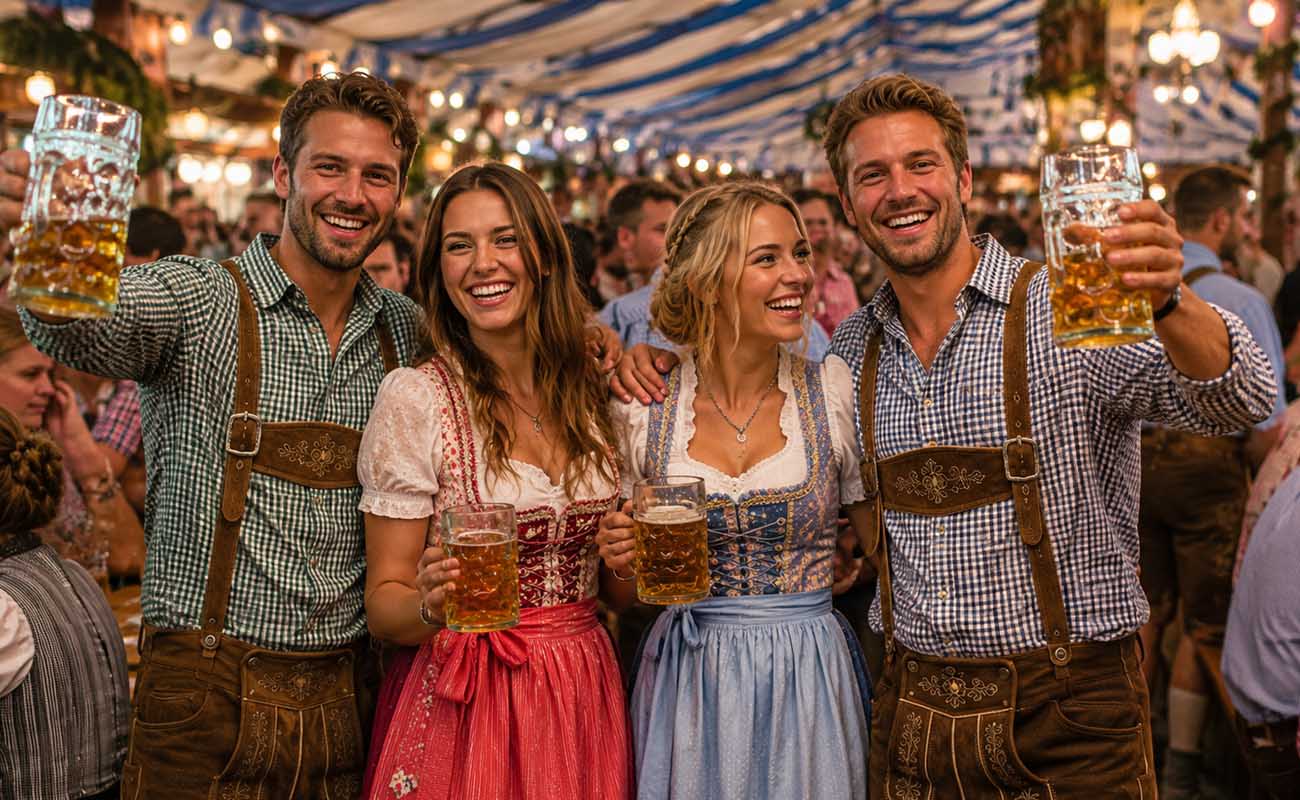
Nothing has done more for the garment’s global popularity than Oktoberfest itself. This year’s festival — the 191st edition — takes place on Munich’s Theresienwiese from September 19 through October 4, and is expected to draw millions of visitors from across the world, many dressed head-to-toe in traditional Trachten. If you’re planning your first trip, our Munich Oktoberfest visitor guide covers everything from tickets to tent reservations in more detail.
A few practical things worth knowing before you go:
- Opening ceremony: The festival officially begins at noon on September 19, when Munich’s Lord Mayor taps the first keg and declares “O’zapft is!” — the signal that beer service can begin across all tents.
- Costume parade: The Trachten and Riflemen’s Parade, with nearly 10,000 participants in traditional dress, is one of the best places to see authentic regional styles up close.
- Entry and access: Getting into the grounds and beer tents is free, though reserving a table in advance — especially for evenings and weekends — is strongly recommended given the crowds.
- Tent etiquette: Traditional dress is welcome in most of the 17 large and roughly 21 smaller tents, and is widely seen as a sign of respect for Bavarian culture rather than a costume choice. Not sure where to start? See our guide on the best Oktoberfest tents to pick the right one for your group.
- Weather planning: Late September in Munich can swing between warm afternoons and cool evenings, so many visitors pair leather shorts with a jacket or vest for the cooler hours.
The tradition has also spread well beyond Munich, showing up at festivals from the United States to Oktoberfest Paris to Australia — proof that this once-regional garment has genuinely gone global while keeping its Bavarian identity intact. And no outfit is complete without knowing what’s in the stein: see why Hofbräuhaus remains the festival’s most legendary beer hall, and which is the number one selling beer in Germany.
What’s Trending This Season
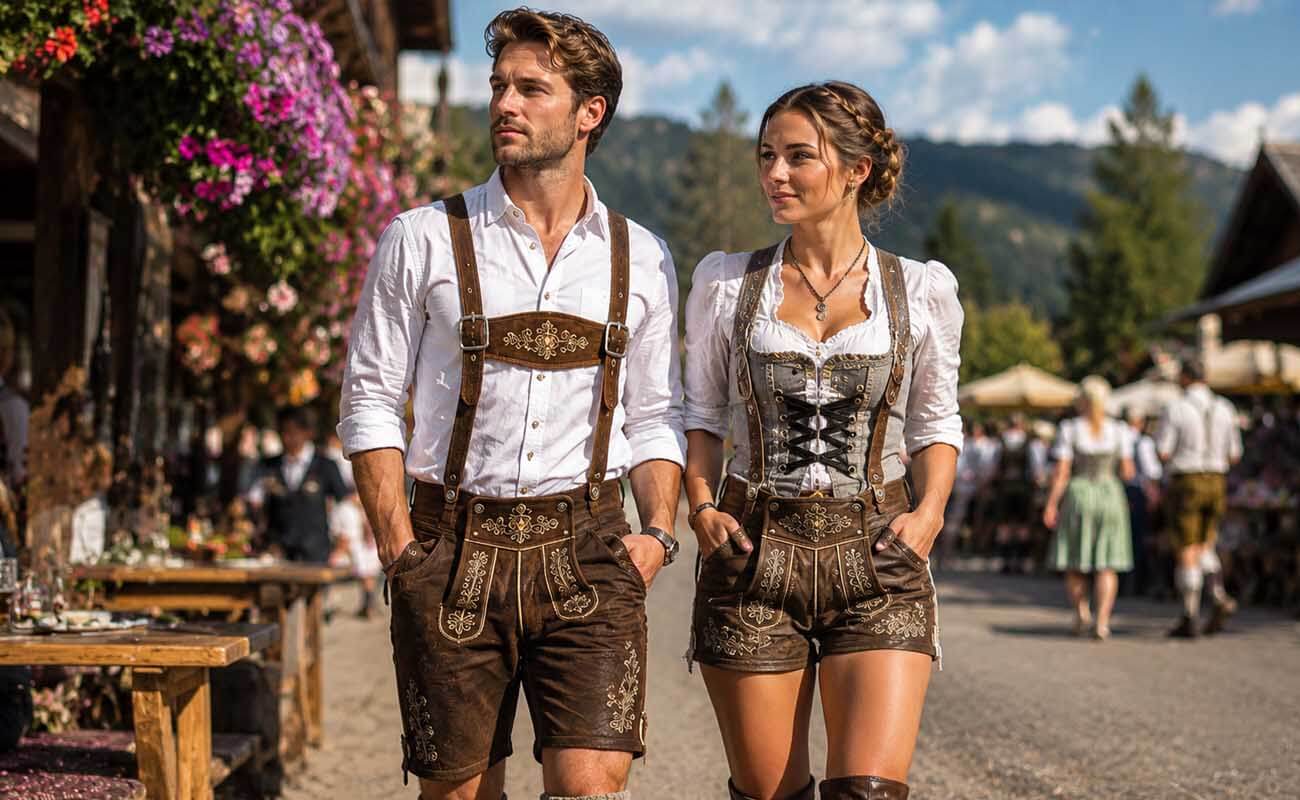
The style has evolved considerably in recent years, and this season is shaping up to be a strong one for both traditional craftsmanship and modern reinvention. Designers are increasingly blending heritage techniques with fabrics, cuts, and finishes that appeal to a younger, style-conscious audience, without sacrificing the authenticity that makes the garment special in the first place. For a closer look, check out our roundup of the latest Dirndl & Lederhosen trends.
If you’re shopping this season, here’s what’s worth knowing:
- Sustainable leather sourcing is becoming a bigger selling point, with more brands highlighting ethically tanned hides and transparent supply chains.
- Shorter, festival-friendly cuts are trending among younger wearers, often paired with graphic shirts for a more casual look.
- Embroidered detailing remains the biggest indicator of quality — hand-stitched floral or oak-leaf patterns still signal genuine Bavarian craftsmanship over mass-produced alternatives.
- Mix-and-match styling is on the rise, with cargo and longer-cut versions being paired with modern sneakers or boots rather than strictly traditional footwear.
- Personalization options, including monogrammed suspenders and custom embroidery, have become popular for group trips and wedding parties.
Whether you’re after a historically accurate pair or a modern reinterpretation, the core advice hasn’t changed: look for genuine leather, reinforced stitching, and details that reflect real regional craftsmanship rather than shortcuts.
Preserving the Legacy
Even as fashion trends shift year to year, the garment has held its place as a timeless symbol of Bavarian identity. Skilled artisans, family-run workshops, and cultural preservation groups continue to play a critical role in keeping traditional techniques alive, from hand-tanning leather to hand-stitching embroidery patterns that have barely changed in over a century.
This preservation work matters more than ever as demand grows globally. Buyers today have more access than at any point in history to both mass-market and heritage-crafted pieces, which makes understanding the difference — construction quality, leather type, stitching technique — genuinely useful for anyone wanting something that will last for decades rather than a single festival season.
Worn on the Theresienwiese in Munich or reimagined on fashion runways elsewhere, this attire continues to bridge Bavaria’s past and present, giving each new generation a tangible connection to the region’s history.
Frequently Asked Questions
Is it disrespectful for tourists to wear Lederhosen at Oktoberfest?
Not at all. Locals generally welcome visitors who dress in traditional attire as a sign of genuine enthusiasm for Bavarian culture, as long as it’s worn respectfully and not treated as a novelty costume. Choosing well-made pieces over cheap, flimsy alternatives is one simple way to show that respect.
What’s the difference between Lederhosen and Bundhosen?
The short, knee-length leather shorts most associated with Oktoberfest are typically called Lederhosen, while Bundhosen are the longer, trouser-length version traditionally worn for more formal or cooler-weather occasions. Both fall under the broader category of Bavarian Trachten.
How much should an authentic pair cost?
Prices vary widely depending on leather quality and craftsmanship. Mass-produced, machine-stitched pairs sit at the lower end of the market, while hand-embroidered, full-grain leather pieces from specialist workshops command a significantly higher price, reflecting the hours of skilled labor involved.
Can it be worn outside of Oktoberfest?
Yes. It’s worn at weddings, regional folk festivals, and other Trachten events throughout the year in Bavaria and Austria, and increasingly at Oktoberfest-style celebrations hosted internationally. Frühlingsfest München, often called Munich’s “Little Oktoberfest,” is a good example of a spring event where Trachten is just as popular.
Final Thoughts
Lederhosen remains one of the most enduring symbols of Bavarian culture — practical enough to have started as farm workwear, and meaningful enough to still be celebrated at the 191st Oktoberfest today. From its 18th-century origins in the Bavarian Alps to its role in modern festival fashion, it tells a story of resilience, craftsmanship, and regional pride that has never really faded, only evolved.
As the festival approaches, brands like Alpen Lederhosen continue working to keep that legacy alive, offering both historically inspired designs and modern takes for a new generation of festival-goers. Whatever style you choose, wearing it is still, at its heart, a way of honoring the same Bavarian spirit that has carried this garment for well over two hundred years.


