

Blog
Exploring Women’s Traditional Bavarian Clothing for Festivals.


Bavarian festival culture has always been about more than beer steins and brass bands — it’s a living celebration of heritage, and that heritage is more visible today than ever. Oktoberfest crowds keep growing every year, and alongside them, women’s traditional Bavarian fashion has entered a new era. Sustainable fabrics, size-inclusive tailoring, and a fresh wave of younger designers reworking old silhouettes have all reshaped what “traditional” looks like on the ground right now. The Dirndl and women’s Lederhosen remain at the heart of it, but how they’re made, styled, and worn has genuinely moved on in recent years.
Part of what’s driving this change is simply demand. Oktoberfest attendance figures have climbed steadily year over year, and Bavarian-style festivals have spread well beyond Germany, with organizers in North America, the UK, and Australia hosting their own versions and encouraging attendees to dress the part. That growth has pushed Trachten brands to modernize faster than they did a decade ago, updating everything from sizing to sourcing while still keeping the silhouettes recognizable.
This updated guide walks through everything women need to know about traditional Bavarian clothing for festivals today — from the classic Dirndl and the rise of women’s Lederhosen, to accessories, regional differences, and the modern trends now shaping Trachten fashion. Whether you’re putting together your first festival outfit or refreshing a wardrobe you haven’t updated in a while, this guide covers what’s actually changed and what’s stayed exactly the same. If you’re planning your trip as well, our Oktoberfest visitor guide covers everything else you’ll need to know.
The Dirndl Today: Still the Icon, Now More Versatile
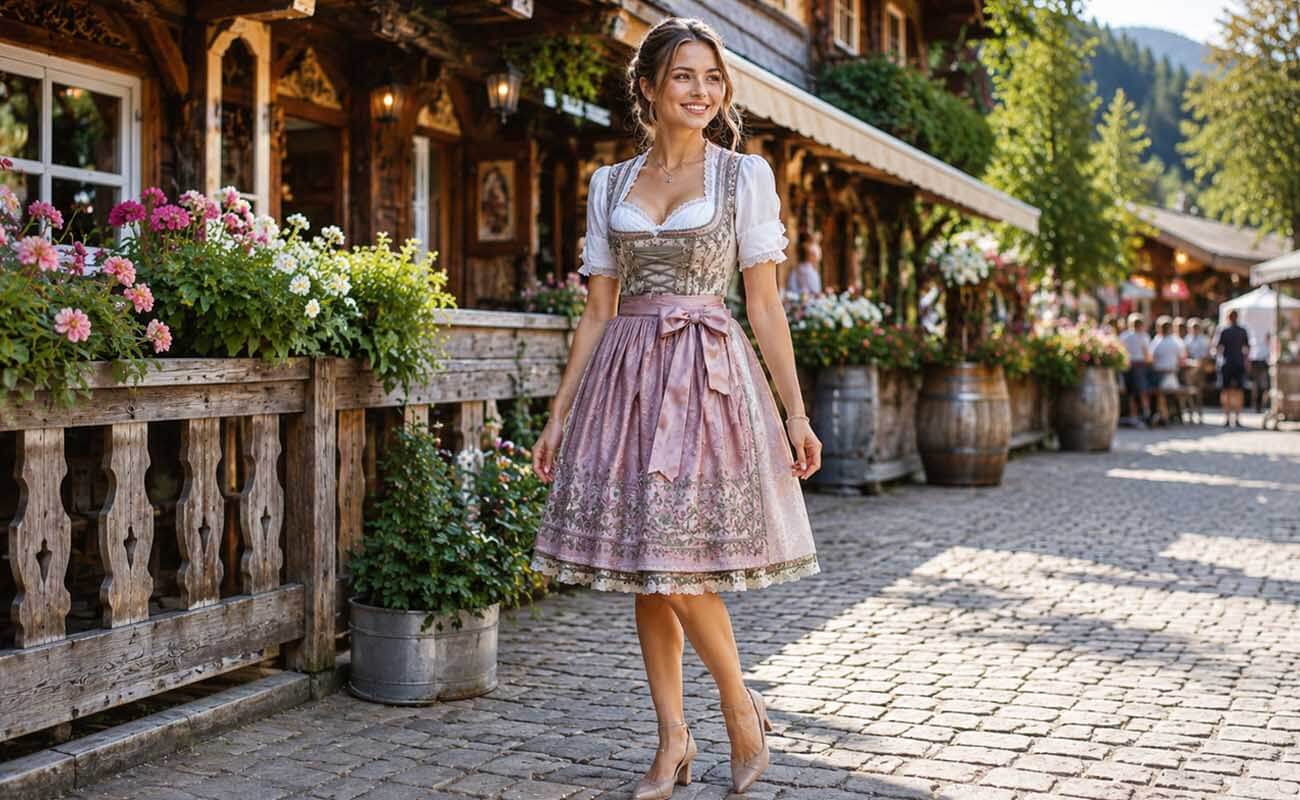
The Dirndl remains the definitive symbol of Bavarian womenswear, but today’s version of the dress has quietly modernized. The four core pieces — blouse, bodice, skirt, and apron — haven’t changed in structure, but the materials and fits have.
Where earlier collections leaned heavily on classic cotton and velvet, today’s festival-goers are seeing far more recycled and organic fabrics, adjustable lacing systems for a better fit across body types, and shorter hemlines paired with longer, more formal options side by side rather than one dominating trend. Brands have also responded to demand for extended sizing, meaning the Dirndl is no longer cut for one body shape.
What’s different about Dirndls this year:
- Eco-conscious fabrics (organic cotton, recycled linen blends) are now mainstream, not niche
- Adjustable bodice lacing and stretch panels for a more comfortable, custom fit
- A wider color palette, including sage green, terracotta, and muted pastels alongside traditional red and blue
- Mix-and-match separates — blouses and aprons sold independently so wearers can build their own combination
- Midi-length Dirndls (just below the knee) are the most popular length right now
The formality rule still applies: lighter cotton Dirndls suit casual daytime festivals, while silk, velvet, or brocade versions are reserved for evening events, weddings, or more formal Trachten gatherings. Layering has also become more common this year — a light cardigan or a fitted denim jacket thrown over the bodice for cooler evenings, without covering the apron or bodice detail that makes the Dirndl recognizable in the first place.
Blouse styles have diversified too. Alongside the classic puffed-sleeve white cotton blouse, current collections include sheer lace sleeves, off-shoulder cuts, and cropped versions designed to sit neatly under a higher-waisted skirt. None of these are radical departures from tradition, but together they give women noticeably more choice than they had a couple of years ago. For a closer look at what’s trending season to season, see our post on Dirndl and Lederhosen trends.
Women’s Lederhosen: From Niche Choice to Festival Staple
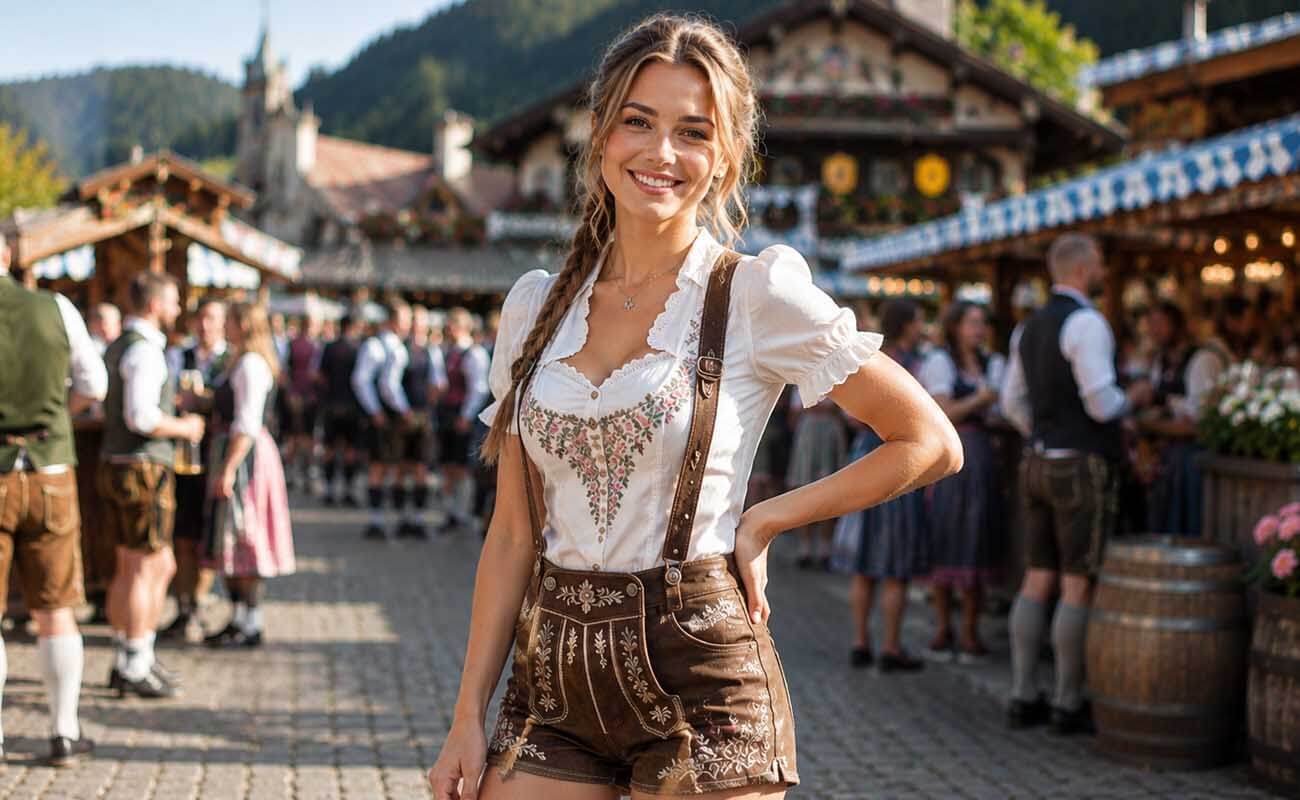
If there’s one shift that defines the current moment, it’s this: women’s Lederhosen has gone from an alternative statement piece to a genuinely mainstream festival option. What began a few years ago as a bold choice for a small group of trendsetters is now stocked by nearly every major Trachten retailer, in far more cuts and colors than before.
Modern women’s Lederhosen is tailored specifically for the female form rather than adapted from men’s patterns, with higher waists, shorter leg length, and softer leather finishes like suede or nubuck. Embroidery still leans on Alpine symbolism — edelweiss, oak leaves, deer — but current designs increasingly add subtle personalization, from initials to region-specific motifs.
The practical appeal hasn’t changed: Lederhosen is durable, comfortable for a long day of dancing and standing, and pairs easily with a simple blouse or even a fitted top for a more contemporary look. What has changed is acceptance — very few festival-goers today treat women’s Lederhosen as a novelty, and it’s just as common on the beer hall floor as the Dirndl.
Retailers have also expanded the range of cuts on offer, from mid-thigh shorts to slightly longer, more conservative styles, giving women the same range of formality choices that Dirndl wearers have always had. Vegan and synthetic leather alternatives have entered the market too, aimed at buyers who want the look without traditional animal leather, and the quality gap between these materials and genuine leather has narrowed considerably compared to a couple of years ago. For the full backstory on this garment, read our history of Oktoberfest Lederhosen.
Traditional Accessories: The Details That Still Matter
Accessories continue to carry as much cultural weight as the garments themselves, and they remain the easiest way to personalize an outfit without straying from tradition.
Edelweiss-themed jewelry is still the most recognizable accessory choice, appearing on pendants, earrings, and hair pins. Belts and sashes remain essential too — decorative waistbands over a Dirndl bodice, or sturdy leather belts with detailed buckles for Lederhosen. Headwear has diversified slightly, with floral crowns still popular among younger attendees, while more understated feathered or beaded hats appeal to those wanting a classic look.
Key accessories for today’s festival outfits:
- Edelweiss or Alpine-motif jewelry (pendants, earrings, hairpins)
- Decorative belts and sashes for both Dirndls and Lederhosen
- Floral crowns or feathered hats for headwear
- Knee-high stockings, typically white or beige, worn with Dirndls
- Haferlschuh or ankle boots as the standard traditional footwear
One small but noticeable shift this year is footwear — comfortable, cushioned soles built into traditional-style shoes have become common, since festivals often mean hours of standing and walking.
The Apron Knot: A Tradition That Hasn’t Faded
Despite all the modernization in fabric and fit, one tradition remains completely unchanged: the symbolic meaning of the Dirndl apron knot. Festival-goers, especially first-timers, still rely on this simple code to signal relationship status without saying a word.
- Knot tied on the left: single and open to being approached
- Knot tied on the right: married or in a committed relationship
- Knot tied at the front center: traditionally signifies a virgin, though this reading is less commonly emphasized today
- Knot tied at the back: widowed, or working as a server at the event
This small detail is still one of the most talked-about aspects of Dirndl etiquette, particularly for visitors attending Oktoberfest or a regional festival for the first time. Getting it right (or wrong, for fun) remains part of the experience.
Regional Variations Across Bavaria
Bavarian traditional clothing was never uniform, and regional identity is arguably more celebrated now than it was a few years ago, as smaller festivals promote their own local Trachten styles alongside the big Munich events.
Rural Alpine communities still favor heavier fabrics and longer hemlines suited to cooler mountain climates, while urban festival-goers in cities like Munich or Augsburg lean toward lighter materials and shorter, more fashion-forward cuts. Embroidery detail and color intensity also vary — some regions favor darker, more intricate patterns, while others embrace brighter florals. Even accessory choices, like the style of hat or the type of stocking, can hint at where someone is from.
For anyone shopping for a festival outfit, understanding these regional cues can help in choosing a look that feels authentic rather than generic. If Alpine regional festivals interest you, our Almfest visitor’s guide is a good starting point.
Modern Trends Shaping Bavarian Fashion Right Now
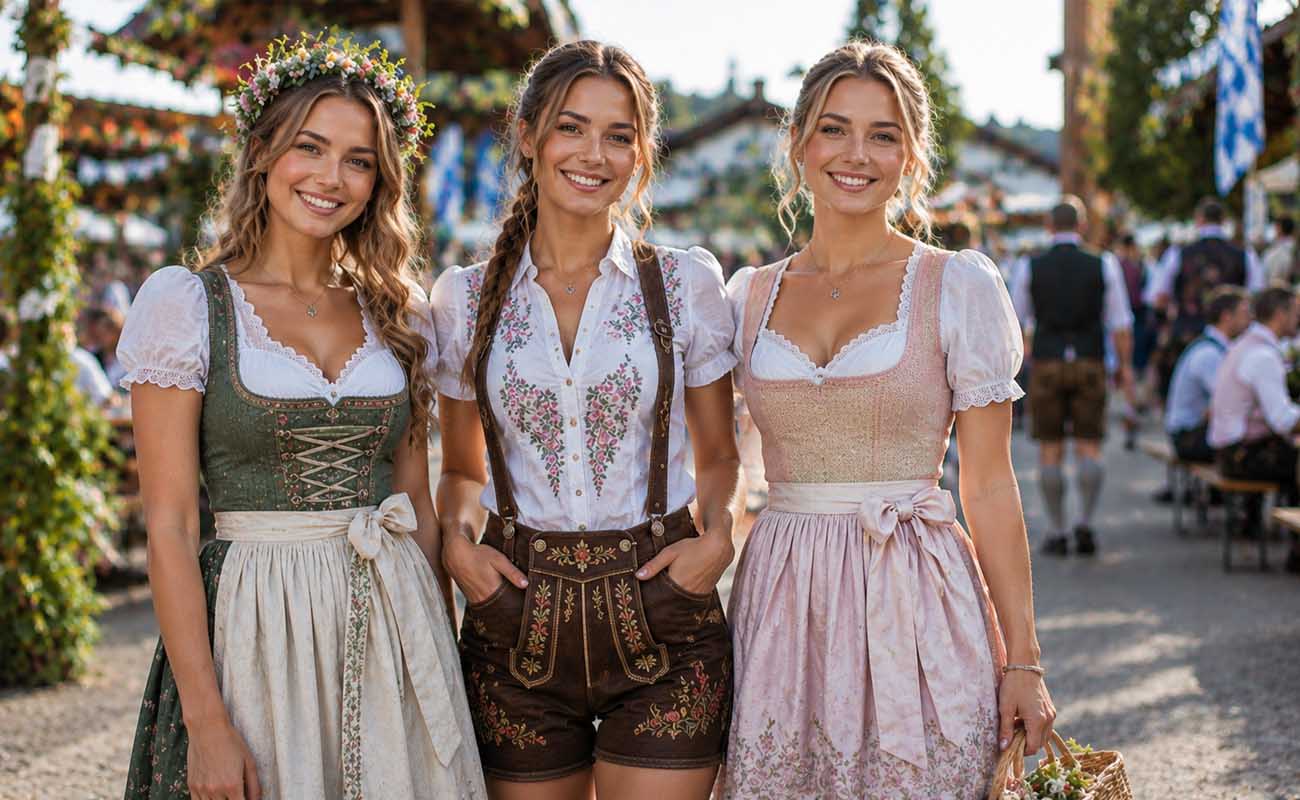
Sustainability continues to be the biggest driver of change. More brands now offer certified organic cotton, recycled leather alternatives, and made-to-order production to reduce waste — a shift that’s become far more mainstream in recent years rather than a small side trend.
Personalization is the second major trend right now:
- Custom embroidery with initials, dates, or personal symbols
- Mixed-and-matched separates instead of pre-set outfit bundles
- Vintage and secondhand Trachten pieces gaining popularity among younger festival-goers
- Unconventional colorways — metallics, pastels, and muted earth tones — worn alongside classic red and green
- Minimalist jewelry paired with traditional garments for a more modern silhouette
Comfort-driven design is the third clear direction: stretch panels, adjustable lacing, and cushioned footwear all point to a festival wardrobe built for long days rather than just photographs.
When and Where to Wear Traditional Bavarian Clothing
Oktoberfest remains the single biggest occasion for traditional Bavarian dress, but it’s far from the only one. Spring festivals like Maifest in Munich and the Frühlingsfest in Stuttgart, regional harvest celebrations, and cultural ceremonies throughout the year all call for Dirndls or Lederhosen — and increasingly, festivals outside Bavaria itself are embracing the same dress code, with events like Oktoberfest Paris growing every year.
Choosing the right outfit still comes down to the setting: casual, lightweight Dirndls or everyday Lederhosen suit smaller local festivals, while more elaborate, formal pieces are better suited to weddings or larger cultural events.
Conclusion
Traditional Bavarian clothing for women continues to evolve without losing what makes it meaningful. Today’s Dirndl and women’s Lederhosen reflect the same pride and heritage they always have, but now with better fits, more sustainable materials, and far more room for personal style. The apron knot tradition, regional variations, and classic accessories remain just as important as ever, proof that even as festival fashion modernizes, its cultural roots stay firmly in place.
Whether you’re heading to Oktoberfest or a smaller regional celebration, choosing an outfit that blends tradition with today’s trends is the best way to honor Bavarian culture while feeling comfortable and confident throughout the festivities.


