

Blog
What Is the Number One-Selling Beer In Germany?


If you’ve ever stood in a German supermarket aisle staring down forty different beer labels, you’ve probably asked yourself the same question millions of beer lovers ask every year: which one actually wins? The answer for 2026 is clear, and it might surprise anyone who still associates Germany’s beer crown with a big export brand — Krombacher Pilsner remains the country’s number one-selling beer, a title it has now held for well over a decade.
But the story behind that ranking is more interesting than a single name on a bottle. Germany’s beer market is going through real change: consumption is falling, non-alcoholic beer is booming, and regional favorites like Paulaner are gaining ground fast. Here’s what’s actually happening in 2026.
If you’re more interested in where to drink than what to buy off the shelf, it’s worth reading about why Hofbräuhaus is so famous — Munich’s most legendary beer hall, and a completely different experience from picking up a crate at the supermarket.
Krombacher Holds the Top Spot — But Sales Are Slipping
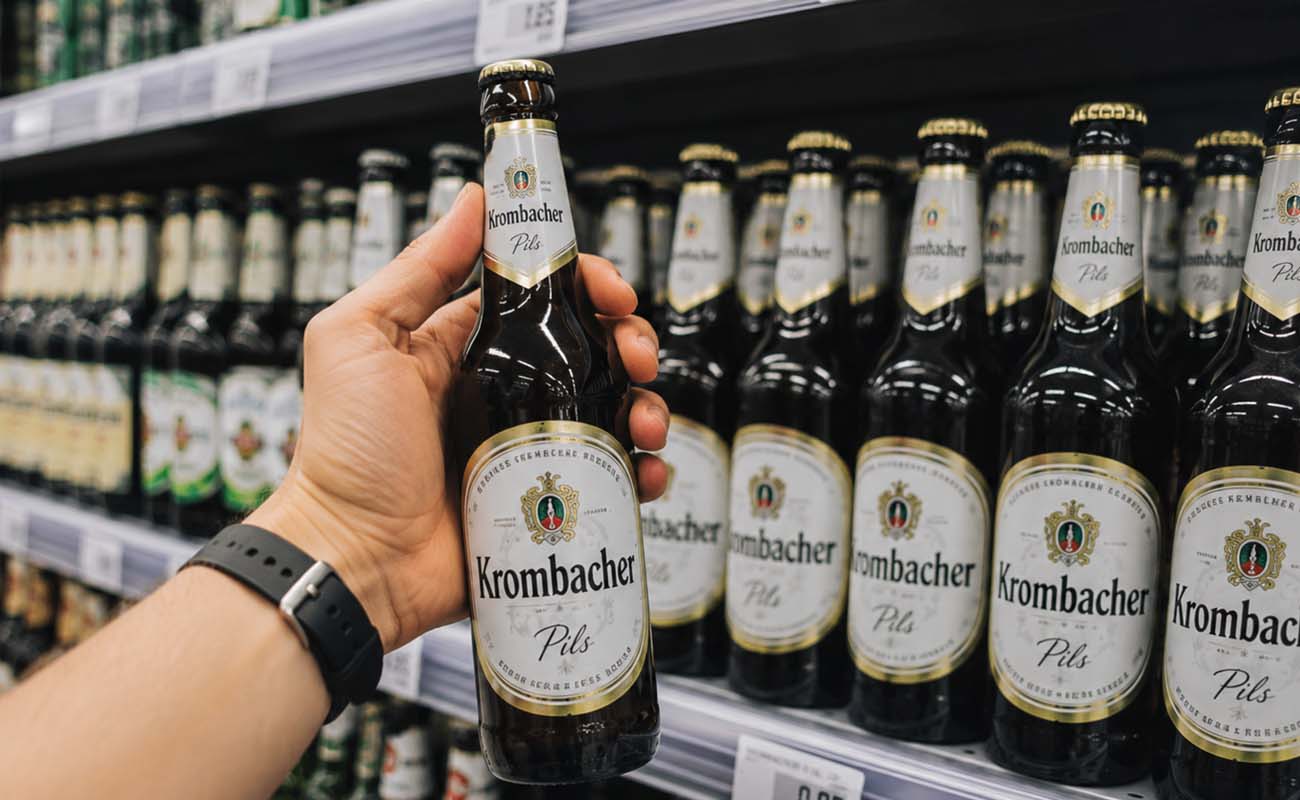
Krombacher, brewed in the small village of Krombach in North Rhine-Westphalia since 1803, is Germany’s largest-selling beer brand by volume. The brewery built its reputation on a straightforward Pilsner recipe — water drawn from a natural rock spring, Hallertau hops, malt, and yeast — brewed strictly under the 1516 Reinheitsgebot purity law.
Even as market leader, Krombacher hasn’t been immune to the broader slowdown. Industry data shows the brand’s volume dipped to roughly 5.6–5.9 million hectoliters, a decline of around 1.3–1.4% year over year. That’s a familiar pattern across the industry: German beer consumption fell to a record low of about 88 liters per capita in 2024, as younger drinkers increasingly reach for non-alcoholic options, seltzers, or simply drink less overall.
Krombacher has responded the way most legacy brewers do — by diversifying. Its 0.0% non-alcoholic line and mixed-beer drinks have become a meaningful part of the portfolio, helping offset losses in traditional Pilsner sales.
Who’s Chasing the Leader?
Krombacher’s lead is real, but it isn’t unchallenged.
- Bitburger sits solidly in second place, another Pilsner-focused private brewery with deep roots in gastronomy and supermarket shelf space across the country.
- Paulaner is the standout growth story. Its Munich-brewed “Münchner Hell” (Helles-style lager) has outperformed the market, losing far less volume than rivals while expanding its footprint beyond Bavaria. Paulaner now holds a meaningful national market share and continues to benefit from the broader shift toward traditional, “authentic” regional styles.
- Warsteiner, Veltins, and Beck’s round out the group of brands that remain household names, even if none currently challenge Krombacher for the top spot.
- Two of Germany’s largest beverage groups, Oetker-Gruppe and AB InBev, control significant chunks of the overall market through their various brand portfolios, giving them outsized influence even when no single label leads outright.
Why Pilsner Still Dominates
Ask any German what “beer” means and there’s a good chance they picture a Pilsner: pale gold, crisp, with a clean hop bitterness. The style still accounts for roughly half to two-thirds of everything sold in the country, which is exactly why brands like Krombacher and Bitburger — both built almost entirely around Pilsner — continue to dominate volume rankings.
That said, Pilsner’s grip is loosening slightly. Bavarian-style Helles, wheat beer (Weizenbier), and regional “Landbier” styles are all gaining share, particularly among drinkers who want something that feels more traditional or locally rooted than a mass-market lager.
The Big Shift: Non-Alcoholic Beer Is Now a Real Category
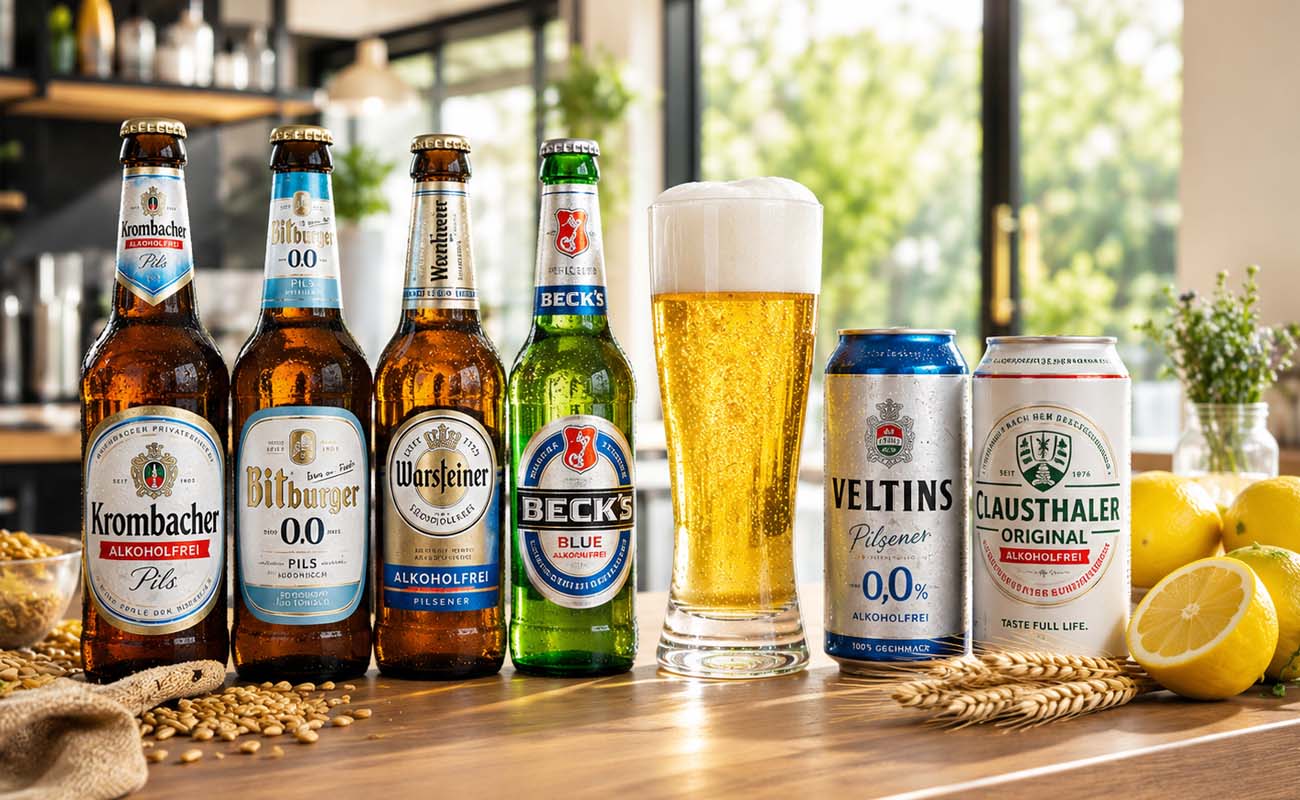
Perhaps the most notable change since 2025 isn’t which brand sells the most — it’s what people are choosing not to drink. Germany has become Europe’s largest market for non-alcoholic beer, with alcohol-free options now holding roughly a 10% share of total beer sales, more than double what they represented a decade ago. Brands like Clausthaler, Jever Fun, and the 0.0% versions of Bitburger and Krombacher are no longer niche products; they’re core parts of major brewers’ strategies.
This “flight to health” is running alongside a “flight to value,” with price-sensitive shoppers driving heavy demand for discounted crates at major retailers — even as premium and craft segments grow at the other end of the market.
Meet the Contenders: A Quick Style Guide
For anyone building their own mental map of German beer, here’s how the major styles break down:
Pilsner — Pale, crisp, and moderately bitter, this is still the everyday beer of choice for most Germans. Krombacher, Bitburger, and Warsteiner are the names to know.
Weizenbier (Wheat Beer) — Cloudy, fruity, and known for its banana-and-clove yeast character. Paulaner and Franziskaner are the standard-bearers, and it’s a fixture at Oktoberfest.
Helles — A malt-forward, easy-drinking Bavarian lager that’s currently one of the fastest-growing styles in the country, led by Paulaner and Augustiner.
Dunkel — A dark lager with caramel and toasty malt notes, popular in colder months and often paired with hearty German food.
Kölsch — A light, delicate ale native to Cologne, brewed like an ale but conditioned like a lager, best known through Gaffel and Reissdorf.
What Actually Drives a Beer to the Top?
Taste is only part of the equation. The brands that dominate German shelves tend to share three things: strict adherence to the Reinheitsgebot (which German drinkers genuinely care about), massive retail and gastronomy distribution, and pricing that holds up under pressure from discount-driven shoppers. Marketing and festival tie-ins — especially around Oktoberfest — still matter, but in a market this price-sensitive, availability and value often decide the winner more than a clever ad campaign does.
Interestingly, sales-leader status doesn’t always translate to festival dominance. The beer served inside Oktoberfest’s massive tents is decided separately, by tradition and licensing rather than national sales figures — which is exactly why brands like Paulaner and Augustiner, not Krombacher, control the taps at Munich’s most famous event. If you’re planning a visit, our guide to choosing the best Oktoberfest tent breaks down which tent pours what.
Now That You Know the Beer, Let’s Talk About What to Wear
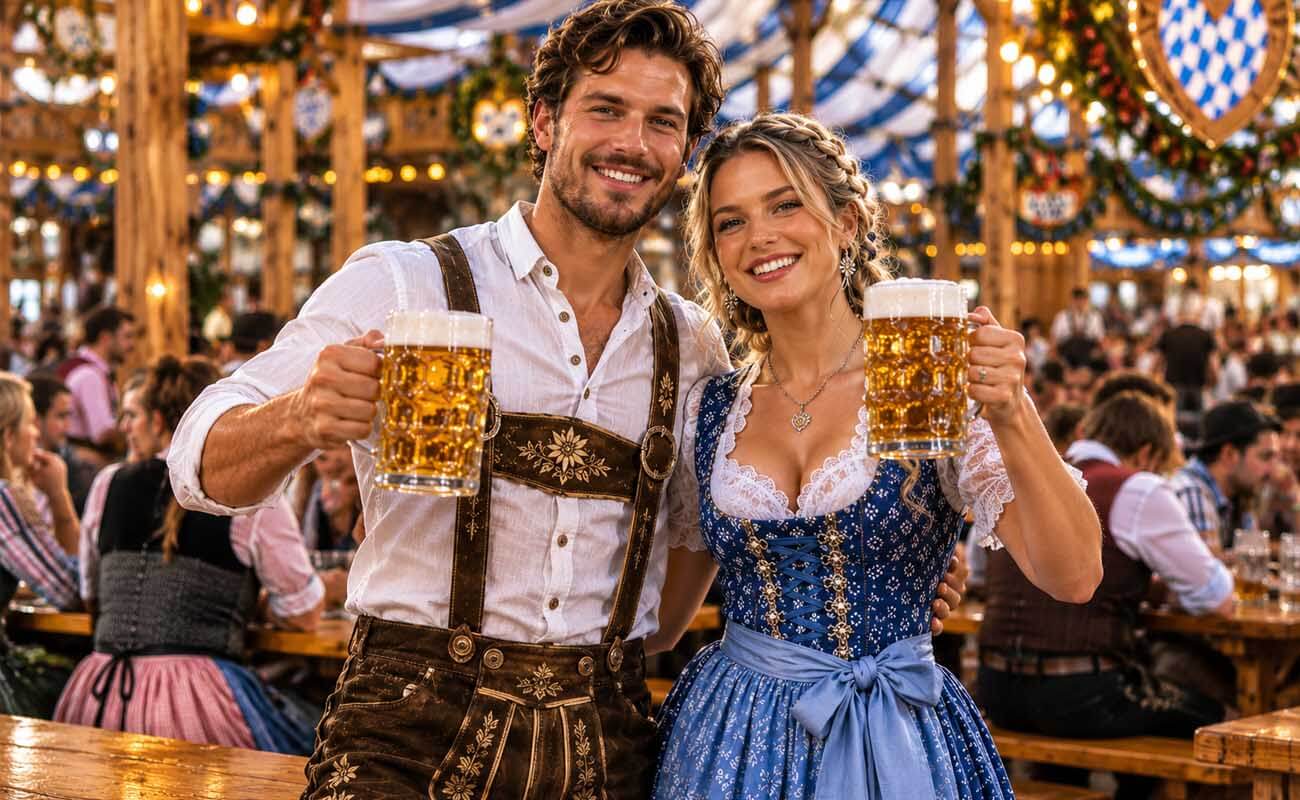
Here’s the thing nobody tells you before your first Oktoberfest: picking the right beer is easy compared to putting together an outfit that actually holds up through a long night of drinking, dancing, and standing in line for another Maß. If Krombacher is what’s in your stein, the rest of the look matters just as much.
Start with a good pair of Men’s Lederhosen — leather shorts or breeches that are genuinely built to survive beer spills, sitting on wooden benches, and whatever else the night throws at them. Underneath, a breathable German Trachten shirt keeps things comfortable once the tent starts filling up and the temperature rises. Hold everything together with a set of leather suspenders, and if you’d rather skip the suspenders altogether, a traditional lederhosen belt does the same job with a bit less flair.
Footwear gets overlooked more than it should. A proper pair of lederhosen shoes is far more forgiving than sneakers after eight hours on your feet, and a felt Bavarian hat finishes the look off in a way that photographs well too. Once the evening cools down — and Munich evenings cool down fast, even in late September — a wool Bavarian jacket thrown over the shoulders keeps you warm without you having to change out of the outfit entirely.
Women have just as many pieces to think through. A well-cut dirndl is still the obvious choice, and it pairs with everything from a crisp Pilsner to a wheat beer without looking out of place. It’s less about matching your beer to your outfit and more about being comfortable enough to actually enjoy both.
If you want the full backstory on why this outfit looks the way it does, we covered it in our piece on the history of Oktoberfest lederhosen. And if you’re shopping ahead of this year’s festival, our roundup of what’s trending in dirndl and lederhosen styles is a good place to start before you land on a final look. For everything else — dates, tents, getting there — our Oktoberfest visitor guide covers the rest.
If you’re shopping for any of this, Alpen Lederhosen carries the full range — lederhosen, dirndls, shirts, jackets, belts, and shoes — and ships to customers across the United States and the United Kingdom. It’s worth mentioning here because half the reason people search “what’s the number one selling beer in Germany” in the first place is that they’re already planning a trip, a party, or an Oktoberfest outfit — and the beer question usually comes with an outfit question right behind it.
Final Pour: Where German Beer Is Headed
The headline hasn’t changed since last year: Krombacher is still Germany’s best-selling beer, and Pilsner is still the country’s default pour. But look one layer deeper and the market is clearly in motion — falling per-capita consumption, a booming non-alcoholic category, and regional styles like Paulaner’s Helles picking up exactly the volume that mass-market lagers are losing.
Whether you’re a Pilsner loyalist, a Weizenbier fan, or someone exploring the growing world of alcohol-free options, there’s never been a more interesting time to explore what’s actually in a German beer glass. So next time you’re deciding what to pour — at home, at a beer garden, or under a tent at Oktoberfest — you’ll know exactly which brand is quietly outselling everyone else.
FAQs: Germany’s Beer Market, Answered Quickly
Krombacher, a Pilsner brewed since 1803, remains Germany’s best-selling beer by volume.
No. Beck’s is a well-known export brand, but it doesn’t lead domestic sales — Krombacher, Bitburger, and Paulaner all outsell it inside Germany.
Only six breweries are licensed to pour at Munich’s Oktoberfest tents: Paulaner, Augustiner, Hacker-Pschorr, Hofbräu, Löwenbräu, and Spaten. Krombacher isn’t one of them, despite being the national sales leader.
Health-conscious drinking habits and a wider selection of quality 0.0% options have pushed alcohol-free beer to roughly 10% of total sales — double what it was ten years ago.
Pilsner, by a wide margin. It still makes up roughly half to two-thirds of everything Germans drink, though Helles and wheat beer are gaining ground.


