

Blog
What’s Behind the Dirndl Controversy? Unpacking Its Symbolism


Quick Answer: The dirndl controversy centers on one core tension: is wearing a dirndl outside Alpine culture cultural appreciation or cultural appropriation? The short answer is — it depends on intent, context, and respect for origin. A dirndl worn with knowledge of its history, sourced from ethical or Alpine-linked makers, and worn respectfully at Oktoberfest or similar events is widely considered appreciation. A dirndl used as a sexualized costume, a stereotype prop, or a fast-fashion knockoff stripped of context is where most critics draw the line into appropriation.
The Dirndl Controversy in One Glance
At its core, this is a debate over the traditional Alpine dress of Germany, Austria, and Switzerland, and how global fashion, Oktoberfest tourism, and social media have reshaped its meaning. It has been trending strongly in recent years because Oktoberfest tourism has expanded worldwide, from the UK to the US, while AI-generated “dirndl aesthetic” content on social platforms and renewed scrutiny of fast-fashion knockoffs have reignited the conversation. On one side sits cultural pride and heritage preservation; on the other, concerns about commodification, sexualization, and appropriation. Most experts land on the same conclusion: context, sourcing, and respect matter more than who is wearing the dirndl.
1. Introduction: Why the Dirndl Controversy Still Matters
The dirndl remains one of the most recognizable traditional garments in the world, and it is more visible today than ever before. Oktoberfest-style events have expanded far beyond Munich — from Oktoberfest Newcastle and Colchester Oktoberfest in the UK to Oktoberfest Manchester, Oktoberfest Southend, and celebrations across North America — and each new festival brings fresh questions about who gets to wear a dirndl, how it should be styled, and what it actually represents. What began as simple 19th-century Alpine workwear has become a global fashion statement, a viral aesthetic on short-form video platforms, and, increasingly, a flashpoint in conversations about cultural ownership. If you’re planning a festival outfit of your own, our guide to conquering Oktoberfest covers the practical essentials alongside this deeper look at the dirndl’s cultural story.
This updated guide unpacks the dirndl controversy from the ground up: its historical roots, its symbolism, the difference between appreciation and appropriation, and how the debate has shifted with the rise of AI-driven fashion trends, global Oktoberfest tourism, and a new generation of shoppers who want to wear traditional clothing the right way. If you are asking “is it okay to wear a dirndl if I’m not German or Austrian,” this article gives you a clear, evidence-based answer.
2. The Historical Context of the Dirndl
Origin and Evolution of the Dirndl in Alpine Culture
The dirndl originated in the 19th century as practical clothing for working women in the rural Alpine regions of Austria, Bavaria, and Switzerland. Made from durable cotton and linen, the earliest dirndl dresses consisted of a fitted bodice, blouse, full skirt, and apron — designed for function, not fashion. As Romantic nationalism swept across Europe in the late 1800s, regional dress like the dirndl was reclaimed by the upper classes as a symbol of cultural pride, and its design became more elaborate, with finer fabrics signaling social status.
By the 20th century, particularly after World War I, the dirndl had become a powerful marker of national and regional identity in Bavaria and Austria. This transformation — from peasant workwear to a cultural emblem — is the foundation of today’s debate: a garment that once signaled humility and hard work now carries centuries of political, social, and gender symbolism.
The Role of the Dirndl in Regional Identity
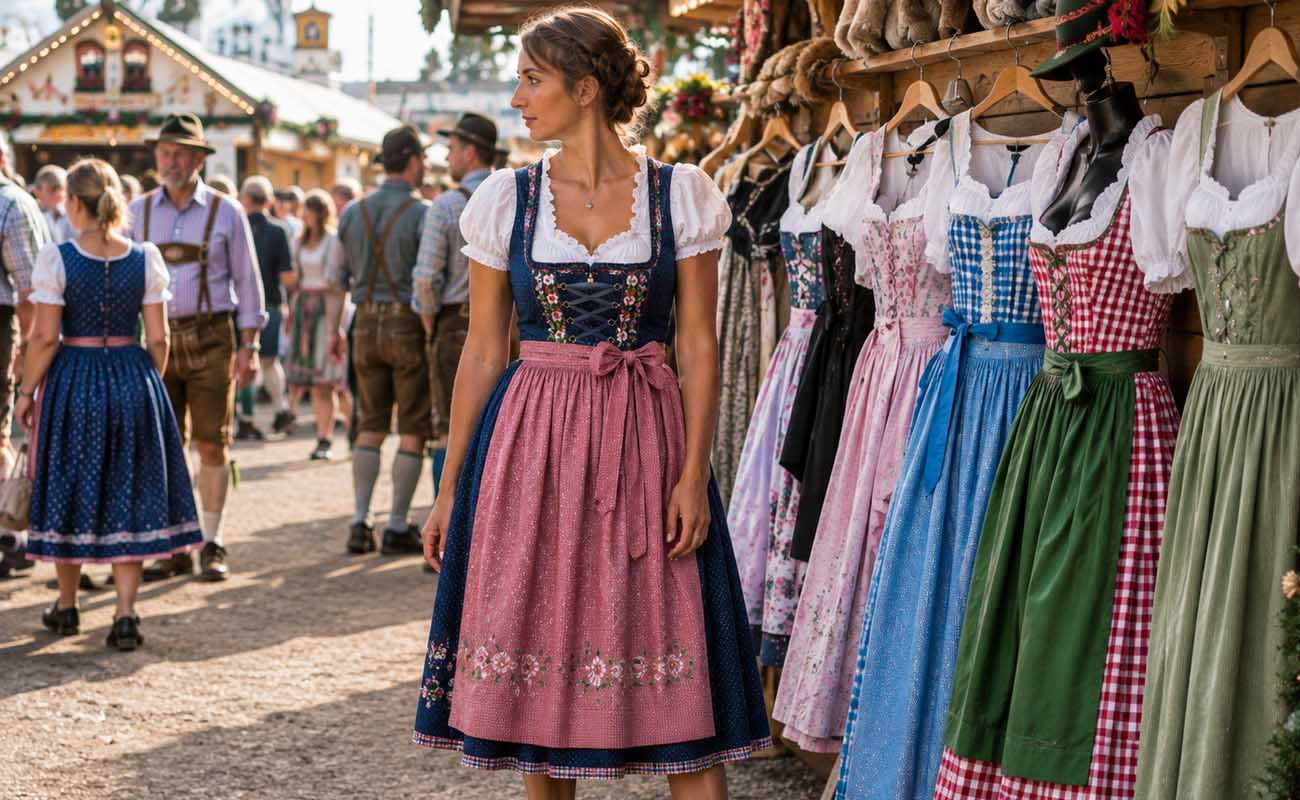
- The dirndl connects wearers to Alpine heritage, family history, and community belonging.
- It plays a central role at Oktoberfest and other Trachten (traditional costume) festivals, where wearing it is an active statement of cultural continuity.
- Its growing global presence has raised questions about whether commercialization dilutes or celebrates that heritage.
- Regional variations still exist today — a dirndl from Salzburg, Munich, or Tyrol can differ in cut, apron length, and embroidery, reflecting local identity within the broader Alpine tradition.
3. Cultural Significance and Symbolism
Traditional Representations: Femininity, Modesty, and Social Class
The dirndl’s silhouette — a fitted bodice, full skirt, and tied apron — has long communicated more than fashion. Traditionally, the side on which the apron bow is tied on the dirndl blouse signals marital status: a knot on the right typically means a woman is married or in a relationship, while a knot on the left signals she is single (a knot in the back traditionally signals a widow, and centered can mean a child or server). This coded communication is one of the clearest examples of how deeply symbolic the garment is, and why casual or uninformed use of the dirndl can strike Alpine communities as disrespectful.
Historically, fabric quality also signaled class: silk and velvet dirndls with intricate embroidery belonged to wealthier women, while cotton and linen versions were worn by working-class women. That class-coded history still informs debates today about “authentic” versus “costume” dirndls.
How the Dirndl Embodies Cultural Pride and Heritage
The dirndl is worn at Oktoberfest and Trachten festivals as an active expression of belonging, not just decoration, which is why modern designers have taken care to revive it with new fabrics, cuts, and colors while keeping its traditional silhouette intact. The garment has since appeared on international runways in Paris, New York, and Tokyo, extending its reach far beyond the Alps. This resurgence reflects a broader fashion trend: a return to “heritage dressing” and slow, meaningful fashion over disposable trends.
4. The Dirndl in Global Fashion
Crossing Borders: How the Dirndl Became a Global Fashion Statement
Oktoberfest-style celebrations now happen worldwide, and the dirndl has followed — often alongside its menswear counterpart, lederhosen. Designers outside Austria and Germany have reinterpreted the dress using silk, velvet, and even denim, and expanded its color palette well beyond traditional florals and muted tones. This global spread has made the dirndl a recognizable fashion statement on red carpets, in influencer content, and at festivals with no direct Alpine connection at all.
This same global spread is exactly what fuels the controversy: critics argue that mass reproduction — especially cheap, festival-only “costume” versions sold online — reduces a culturally significant garment to a novelty item, while supporters see it as a natural and positive spread of appreciation for Alpine culture.
The Dirndl’s Role in Contemporary Fashion Trends
- High fashion crossover: Corseted bodices, apron-inspired details, and full skirts now appear in mainstream designer collections, a trend often called “folk chic.”
- Everyday “dirndl chic”: Pairing a dirndl blouse with jeans or a pair of trachten skirts with a simple top has become a casual styling trend well beyond festival season.
- Fast-fashion knockoffs: Cheap, synthetic “Oktoberfest costumes” sold seasonally are the single biggest driver of appropriation criticism, since they strip away craftsmanship and cultural context entirely.
- AI and social media influence: AI-generated “dirndl aesthetic” images and short-form video trends have introduced the garment to audiences who may never have encountered Alpine tradition directly — amplifying both interest and misunderstanding.
5. Cultural Appropriation vs. Appreciation: Where Is the Line Today?
When Does Wearing a Dirndl Become Problematic?
Cultural appropriation happens when a garment is adopted without understanding or respecting its origin — often reducing it to a costume, especially when styled in exaggerated or sexualized ways for shock value or attention. Cultural appreciation, by contrast, involves genuine interest: learning the dirndl’s history, choosing authentic or ethically made pieces, and wearing it in a way that honors its meaning rather than mocking it.
The most consistent answer from cultural commentators, fashion historians, and Alpine communities themselves is that intent and sourcing matter more than nationality. A tourist who buys a well-made dirndl, wears it respectfully to Oktoberfest, and understands its basic etiquette (like the apron-knot tradition) is generally welcomed. A costume marketed with stereotypes — exaggerated cleavage, “sexy Bavarian girl” branding, or mock-German accents — is where the criticism becomes sharp and consistent.
Examples of Controversial Dirndl Use in Media and Fashion
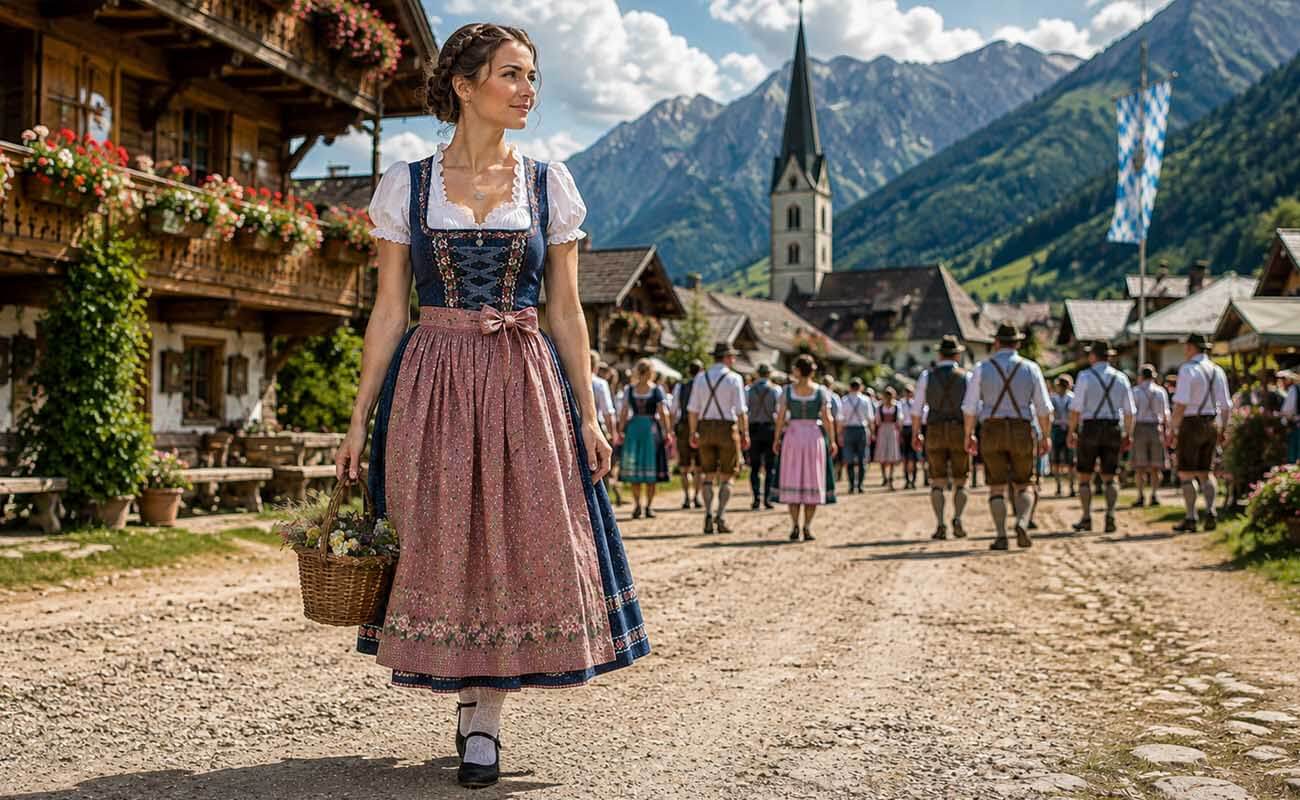
- Advertising campaigns that depict the dirndl in exaggerated, sexualized “costume” form rather than as traditional dress.
- Fashion editorials that strip the dirndl of its traditional silhouette entirely while still marketing it under the name, disconnecting the design from its cultural roots.
- Mass-market Halloween or festival costumes labeled “Bavarian girl” that lean on stereotypes rather than authentic design.
- In contrast, collaborations between international designers and Austrian or German artisans — which keep traditional construction intact while updating fabric or fit — are widely cited as respectful, positive examples of cultural exchange.
6. The Dirndl’s Influence on Identity and Self-Expression
Empowerment Through Tradition
For many women with Alpine heritage, the dirndl remains a source of pride, connecting them to family history and community memory. Wearing it can be an intentional act of preserving cultural identity, especially for those living outside the region who want to stay connected to their roots. Costume debates aren’t unique to the dirndl either — the same tension between tradition and stereotype shows up in how Halloween is celebrated in Bavaria, where regional dress and costume culture often overlap. At the same time, some younger wearers push back against the dirndl’s traditional gender associations, reinterpreting it as a canvas for modern self-expression — often finishing the look with a classic dirndl handbag — rather than strict adherence to convention. This tension keeps the garment culturally relevant rather than frozen in the past.
The Dirndl as a Symbol of Feminism and Female Empowerment
A growing number of women describe the dirndl as an empowering garment: it celebrates the female form on the wearer’s own terms, and modern reinterpretations — bold colors, unconventional fabrics, updated cuts — let women reclaim the dress from purely domestic or rural stereotypes. Critics counter that its historical ties to traditional gender roles can still feel regressive. Ultimately, most fashion writers agree the dirndl’s meaning today is shaped individually — it can represent heritage, rebellion, or both at once, depending on who is wearing it and why.
7. The Dirndl’s Place in the Future of Fashion
Sustainability and the Dirndl: Craftsmanship in the Age of Fast Fashion
A well-made dirndl, handcrafted with quality materials, can last for decades — the opposite of disposable fast fashion. Many families treat dirndls as heirlooms, passing them down across generations, and locally sourced fabrics and artisan production help support Alpine economies while preserving traditional craft skills. The main ongoing risk is fast-fashion brands mass-producing cheap dirndl-style costumes, which undercuts artisans and dilutes the garment’s cultural value.
Designers continue to experiment with sustainable and eco-friendly fabrics, updated silhouettes (shorter skirts, asymmetrical hems, more fitted bodices), and bolder colors and prints — all while keeping the dirndl’s essential structure recognizable. This balance between innovation and respect for tradition is what most experts point to as the sustainable path forward: the dirndl can evolve stylistically without losing the craftsmanship and meaning that make it culturally significant.
Innovations in Dirndl Design: Bridging Tradition and Modernity
Designers continue to experiment with sustainable and eco-friendly fabrics, updated silhouettes (shorter skirts, asymmetrical hems, more fitted bodices), and bolder colors and prints — all while keeping the dirndl’s essential structure recognizable. This balance between innovation and respect for tradition is what most experts point to as the sustainable path forward: the dirndl can evolve stylistically without losing the craftsmanship and meaning that make it culturally significant.
Frequently Asked Questions About the Dirndl Controversy
Not inherently. Most cultural commentators agree that wearing a dirndl respectfully — understanding its history, choosing quality over stereotype-driven costumes, and avoiding sexualized “Bavarian girl” tropes — is appreciation, not appropriation. Problems arise when the dirndl is reduced to a mocking costume.
Traditionally, a bow tied on the right indicates the wearer is married or taken, a bow on the left indicates she is single, a bow in the back suggests she is a widow, and a bow tied in the center/front can indicate a child or a server at an event. This tradition varies by region and is not universally followed today.
Global Oktoberfest tourism has expanded rapidly, and social media and AI-generated content have introduced the dirndl to new audiences faster than ever, increasing both its popularity and the volume of uninformed or stereotype-driven use — which is why the appropriation debate has intensified.
Authentic dirndls use quality fabrics, traditional tailoring (fitted bodice, full skirt, structured apron), and are often made by artisans with ties to Alpine craft traditions. Costume versions are typically mass-produced from cheap synthetic materials, shortened or altered for shock value, and marketed around stereotypes rather than heritage.
It can be, depending on the wearer. Some women see it as empowering — celebrating the female form on their own terms and reclaiming a historically rural, domestic garment as a modern fashion choice. Others view its traditional gender coding as restrictive. Both interpretations coexist in today’s fashion conversation.
Conclusion
The dirndl controversy isn’t really about the dress — it’s about how the world engages with cultural heritage in an era of global tourism, fast fashion, and AI-amplified trends. As Oktoberfest celebrations continue to spread from Munich to Newcastle, Colchester, and beyond, the dirndl remains a living symbol: of regional pride, craftsmanship, femininity, and the ongoing negotiation between tradition and modern reinvention. Worn with knowledge, respect, and quality craftsmanship, the dirndl continues to do what it has always done — connect people to a story bigger than the garment itself.
Also Read on the Alpen Lederhosen Blog:
- Do You Wear Socks With a Dirndl?
- What Do German Girls Wear to Oktoberfest?
- Dirndl vs. Lederhosen: Which is Best for Women?
- What Shoes to Wear with Dirndl?
- What Color Shirt to Wear With Lederhosen?
- Your Guide to Conquering Oktoberfest
Shop the Look:


