

Blog
How is Halloween Celebrated in Bavaria?


Quick answer: Today, Bavarians celebrate Halloween on October 31st with costume parties, trick-or-treating in cities like Munich and Nuremberg, haunted tours of castles such as Neuschwanstein, and Krampus-inspired costumes. Because Halloween falls just before All Saints’ Day (Allerheiligen) on November 1st, Bavaria’s version blends playful American-style Halloween with older German traditions of honoring the dead, making it noticeably different from Halloween in the US or UK.
Halloween is no longer a niche import in southern Germany — it has become a fixture on the Bavarian autumn calendar, sitting right after Oktoberfest season and just before the solemn observance of All Saints’ Day. What makes Bavaria’s version distinct isn’t the plastic pumpkins or store-bought costumes; it’s the way centuries-old Alpine folklore, medieval castles, and regional food culture reshape an imported holiday into something unmistakably Bavarian.
Halloween’s roots trace back to the ancient Celtic festival of Samhain, later absorbed into the Christian calendar as All Hallows’ Eve. It became a commercial and cultural juggernaut in the United States, the United Kingdom, and increasingly across continental Europe. Bavaria, however, didn’t simply import the American version wholesale. Instead, the region — already famous for Oktoberfest, its dense Alpine folklore, and religious observances like All Saints’ Day — absorbed Halloween into an existing framework of seasonal, supernatural, and community-based traditions.
This guide breaks down exactly how Halloween is celebrated in Bavaria today — the traditions, the food, the events, and the folklore that give it a distinct regional identity, along with practical answers to the questions travelers and locals search for most often heading into the season.
How Bavarian Culture Shapes Its Halloween Traditions
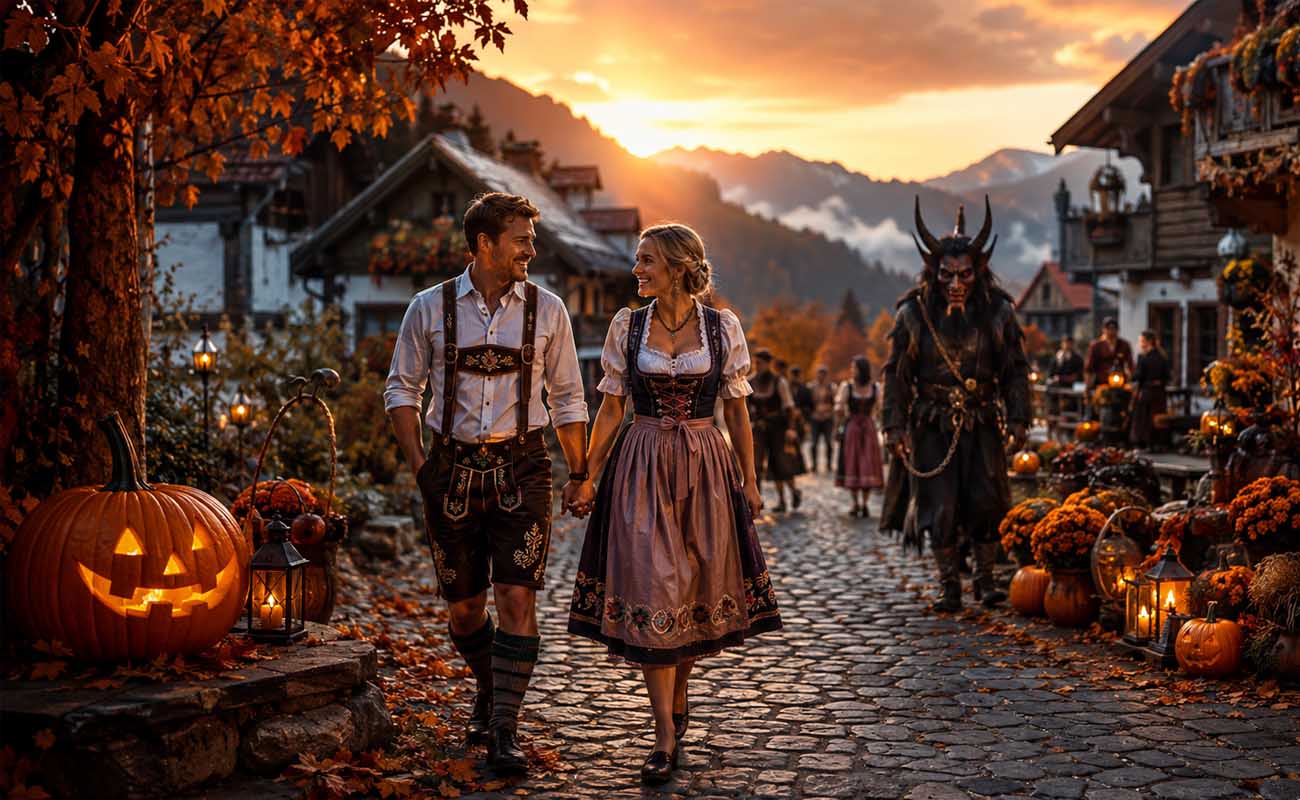
Bavaria already has a full calendar of festivals rooted in folklore and the supernatural, which is exactly why Halloween found such fertile ground here. Locals didn’t need to invent spooky traditions — they already had them.
- Krampusnacht overlap: Although Krampusnacht traditionally falls in early December, the horned, devil-like figure of Krampus has become a recurring Halloween costume theme, since he already represents Bavarian folklore’s dark, punishing spirit.
- All Saints’ Day proximity: November 1st (Allerheiligen) is a public holiday in Bavaria, when families visit graves, light candles, and reflect quietly — creating a striking contrast to Halloween’s playful chaos just 24 hours earlier.
- Existing folklore figures: Characters like Perchten (masked winter spirits) and tales of the Wild Hunt give Bavarians a homegrown “monster mythology” that blends naturally into Halloween costume culture.
- Oktoberfest afterglow: Because Oktoberfest typically wraps up in early October, Halloween arrives as a second seasonal celebration, keeping the festive momentum going into autumn.
- Rural vs. urban divide: Smaller Alpine villages tend to keep Halloween low-key and folklore-driven, while cities like Munich, Nuremberg, and Augsburg lean into larger commercial-style parties and parades.
This overlap between imported Halloween customs and existing Bavarian traditions is the single biggest reason the holiday feels different here than anywhere else in Europe.
Bavarian Halloween Costumes, Food, and Events Today
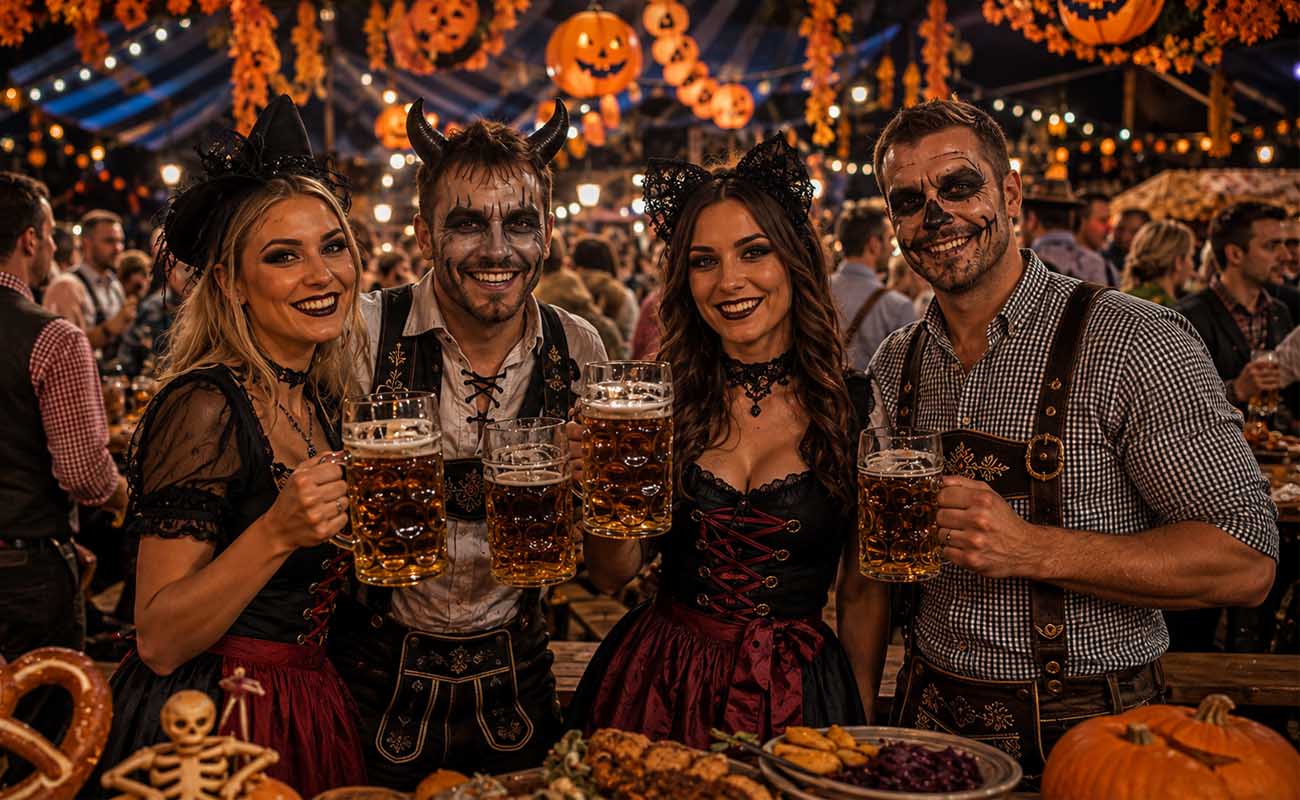
Bavarians don’t just copy American Halloween — they adapt it using regional clothing, food, and settings that already carry symbolic weight.
- Costumes with a local twist: Traditional Lederhosen and Dirndl outfits get reimagined for the season — think “zombie Lederhosen” or a Dirndl styled as a vampire’s gown — blending Bavarian heritage with Halloween’s spooky aesthetic rather than replacing it.
- Folklore-inspired characters: Krampus, Perchten, and Wild Hunt figures remain popular costume choices, especially at themed parties in Munich and Nuremberg.
- Haunted castle tours: Castles including Neuschwanstein, Hohenzollern, and Schloss Nymphenburg run seasonal evening tours with candle-lit corridors and local ghost legends — one of the most searched Bavarian Halloween activities among tourists.
- Ghost walks in the Alps: Guided night tours through forests and old town centers in the Bavarian Alps feature local actors and folklore-based storytelling, offering a more authentic alternative to commercial haunted houses.
- Spooky Bavarian food: Pretzels shaped like skeletons, “ghost sausage” Weißwurst, and Krapfen doughnuts with blood-red filling show up at markets and bakeries every October.
- Seasonal beer and drinks: Bavarian breweries release pumpkin ales and dark stouts with Halloween-themed labels, while bars serve schnapps-based cocktails like witch’s brew mulled wine.
- Family and school events: Pumpkin carving contests, costume parades, and storytelling nights are common in schools and community centers throughout Bavaria in the lead-up to October 31st.
Best Places and Times to Experience Bavarian Halloween
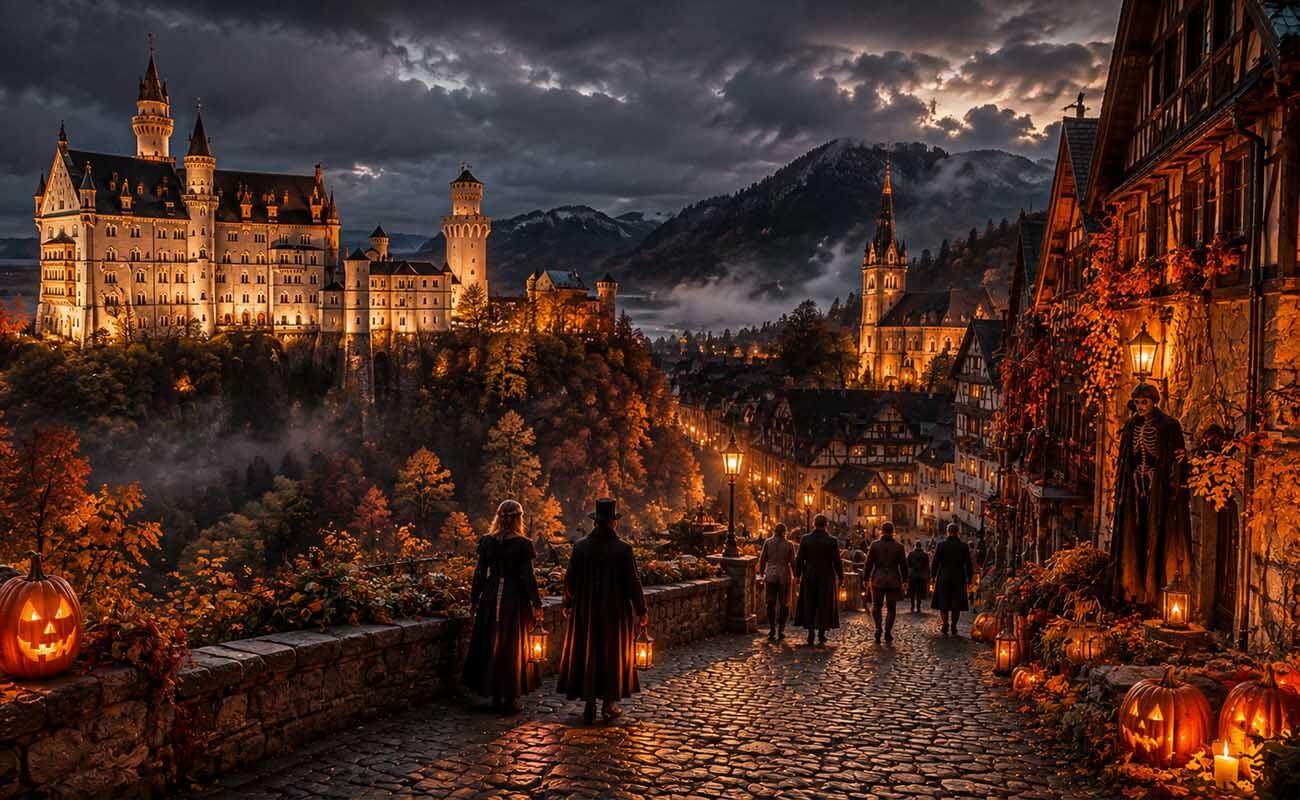
Not every Bavarian town celebrates Halloween the same way, and knowing where to go can make the difference between a generic costume party and an authentic regional experience.
- Munich: The largest city in Bavaria hosts the widest range of events — from nightclub costume parties in the city center to family-friendly pumpkin festivals in outer districts like Trudering and Pasing.
- Nuremberg: Known for its medieval old town, Nuremberg leans into atmospheric Halloween experiences, including torch-lit walking tours through cobblestone streets and folklore-themed markets.
- Füssen and the Neuschwanstein area: This is the go-to region for castle-based Halloween tourism, with evening tours that combine the fairy-tale architecture of Neuschwanstein with ghost stories tied to the Bavarian royal family.
- Bavarian Forest and Alpine villages: Smaller communities near the Bavarian Forest and the Alps host low-key but immersive ghost walks, often led by local guides who weave in centuries-old regional legends rather than generic scare tactics.
- Best timing: Most events run during the final week of October, with the peak falling on the weekend closest to October 31st; castle tours and ghost walks often sell out in advance, so booking a week or two ahead is recommended.
- Weather consideration: Late October in Bavaria is cold and often damp, so outdoor ghost tours and parades are best enjoyed with warm layering — traditional wool or leather outerwear is a practical and on-theme choice for evening events.
Travelers who want the full experience often pair a Halloween weekend with a stop at a Bavarian Christmas market preview or an early-season beer hall visit, since much of Bavaria’s late-October and November calendar flows directly from one seasonal celebration into the next.
Frequently Asked Questions About Halloween in Bavaria
No. Halloween itself is not an official public holiday in Bavaria. However, November 1st (All Saints’ Day) is a recognized public holiday, which is why many Bavarian Halloween events are scheduled around, rather than on, October 31st.
Yes, trick-or-treating (locally called “Süßes oder Saures,” meaning “sweet or sour”) happens in most Bavarian towns and cities, particularly in urban neighborhoods, though participation is generally lower than in the US or UK.
Krampusnacht is a distinct Bavarian and Alpine tradition held around December 5th, centered on the folklore figure Krampus punishing misbehaving children. Halloween is a separate, more recently adopted holiday on October 31st, though Krampus imagery is often borrowed for Halloween costumes because both share a supernatural, folklore-driven tone.
Munich, Nuremberg, and Augsburg host the largest Halloween parades and parties, while castle tours near Füssen (Neuschwanstein) and the Bavarian Alps offer more folklore-focused, atmospheric experiences for visitors seeking something beyond typical costume parties.
Yes, particularly in larger cities and tourist areas. Bakeries display skeleton-shaped pretzels and blood-red Krapfen, beer halls put up pumpkin displays alongside their usual Oktoberfest décor, and clothing retailers often market Halloween-twist versions of traditional Lederhosen and Dirndl outfits in the weeks leading up to October 31st. Smaller village shops tend to decorate more modestly, if at all, keeping their focus on the more established local festivals.
Yes, and it’s actually a popular local trend. Bavarians frequently give traditional Trachten clothing — Lederhosen, Dirndl, and Bavarian shirts — a spooky makeover for Halloween rather than treating the outfits purely as Oktoberfest wear, which locals see as a playful, respectful nod to regional identity rather than a costume gimmick.
Bavaria has centuries of existing supernatural folklore — Krampus, Perchten, the Wild Hunt, and countless castle ghost legends — so rather than importing Halloween wholesale, communities layer it onto traditions that were already part of regional identity, which is why the region’s Halloween looks and feels distinctly Bavarian rather than a copy of the American version.
What to Wear: Choosing a Bavarian-Style Halloween Costume
For anyone wanting to celebrate Halloween the Bavarian way rather than just wearing a generic store-bought costume, the trick is starting with authentic regional pieces and adding a spooky twist rather than the other way around.
- Start with real Trachten: A genuine leather Lederhosen or a well-made Dirndl gives a costume far more texture and authenticity than a synthetic costume-shop version, and it doubles as wearable clothing long after Halloween is over.
- Add dark, folklore-inspired accessories: Horned masks, faux fur, and antler-style headpieces evoke Krampus and Perchten without requiring elaborate makeup or prosthetics.
- Layer for the weather: Late-October evenings in Bavaria are cold, so a wool waistcoat, leather jacket, or heavier winter-weight Dirndl fabric worn over a costume is both practical and stylistically on-theme.
- Mix modern and traditional: Pairing a classic Dirndl blouse with modern gothic-style accessories (dark lace, black boots, statement jewelry) is a popular styling approach at Munich and Nuremberg Halloween parties.
- Get the fit right: A well-fitted Lederhosen makes the difference between a costume that looks authentic and one that looks like a cheap imitation — checking how Lederhosen should properly fit before Halloween night is worth the extra few minutes.
- Consider the venue: A castle tour calls for warm, comfortable clothing that can handle stone floors and drafty corridors, while an urban costume party allows for more elaborate, less weather-practical outfits.
- Rent or buy versatile pieces: Because Trachten clothing is also worn at Oktoberfest and other Bavarian festivals throughout the year, investing in quality leather Lederhosen, Dirndl, or accessories tends to be more cost-effective than a single-use Halloween costume.
This approach — building a costume around authentic regional clothing rather than mass-produced Halloween costumes — is one of the clearest ways Bavarians have made the holiday their own.
Conclusion: Bavaria’s Modern Halloween Identity
Halloween in Bavaria continues to grow each year, but it hasn’t lost its regional character in the process. Instead of replacing local customs, the holiday has folded into them — Krampus-style costumes, haunted castle evenings, folklore-based ghost tours, and Alpine food traditions all give Bavaria’s Halloween a flavor you won’t find anywhere else in Europe.
For visitors planning an October trip, the takeaway is simple: skip the generic costume party and look for the castle tour, the village ghost walk, or the folklore-themed parade instead. That’s where Bavaria’s real Halloween identity shows up — rooted in centuries-old stories, not imported plastic decorations. Locals themselves increasingly see Halloween not as a competitor to Oktoberfest or All Saints’ Day, but as a natural bridge between the two — a lighthearted, costumed send-off to autumn before the more reflective, candle-lit atmosphere of November 1st sets in.
Whether you’re dressing up in a Halloween-twist Lederhosen or Dirndl, joining a candle-lit tour of Neuschwanstein, or simply enjoying a pumpkin ale at a Munich beer hall, Halloween in Bavaria remains what it has always been becoming: a genuine cultural fusion, not a copy-paste import. As more travelers discover this Alpine take on the holiday, expect Bavaria’s blend of folklore, food, and festivity to keep drawing visitors well beyond its traditional Oktoberfest crowd.


