

Blog
Dirndl vs. Lederhosen: Which is Best for Women?


A Dirndl is the better choice for women who want a classic, feminine silhouette for Oktoberfest, weddings, or formal Bavarian events. Lederhosen for women is the better choice for anyone who wants comfort, freedom of movement, and a bold, modern look for beer gardens, festivals, or all-day wear. Many women now own both and choose based on the occasion rather than picking just one.
There is no single “correct” answer — the right outfit depends on the event, the weather, your comfort priorities, and the silhouette you want to wear. Below, we break down every factor so you can decide with confidence, updated for the current Oktoberfest and festival season.
What Is a Dirndl?
A Dirndl is a traditional Bavarian dress made up of four pieces: a fitted bodice, a blouse, a full skirt, and an apron. It originated as farm workwear in the Alpine regions of Austria and Bavaria in the 19th century, when women needed durable, functional clothing for daily labor. Over time, decorative details — embroidery, lace, vibrant colors — were added, and the garment shifted from purely practical traditional Bavarian clothing into a symbol of regional pride and femininity. Today it’s worn at Oktoberfest, weddings, christenings, and folk festivals across the German-speaking world and beyond.
The apron bow position is a well-known tradition that still holds today. Tied on the left, it signals a woman is single; tied on the right, it signals she’s taken or married; tied in the center front, it’s sometimes used by young girls or to signal “it’s complicated”; and a bow at the back is typically worn by widows or by staff working the event. Dirndl skirt lengths also carry meaning — mini and midi styles read as casual and festival-ready, while ankle-length styles are considered more formal or traditional.
What Is Lederhosen for Women?
Lederhosen, German for “leather trousers,” were originally 18th-century workwear for Alpine men who needed tough, durable clothing for hunting, farming, and hiking. For most of their history they were considered a men’s garment, tied closely to ideas of ruggedness and outdoor labor. Women’s Lederhosen is a more recent adaptation — leather shorts or knee-length breeches tailored specifically for the female body, made from deerskin, goatskin, or cowhide, and featuring suspenders, floral or hunting-motif embroidery, and a slimmer, more feminine cut than the traditional men’s version.
Because genuine leather softens and molds to the body with wear, Lederhosen tends to get more comfortable the more it’s used, eventually developing a unique patina that many wearers consider part of its charm. Modern women’s Lederhosen is built for movement, making it a favorite for dancing, hiking, and long, active festival days rather than sit-down formal occasions.
Dirndl vs. Lederhosen at a Glance
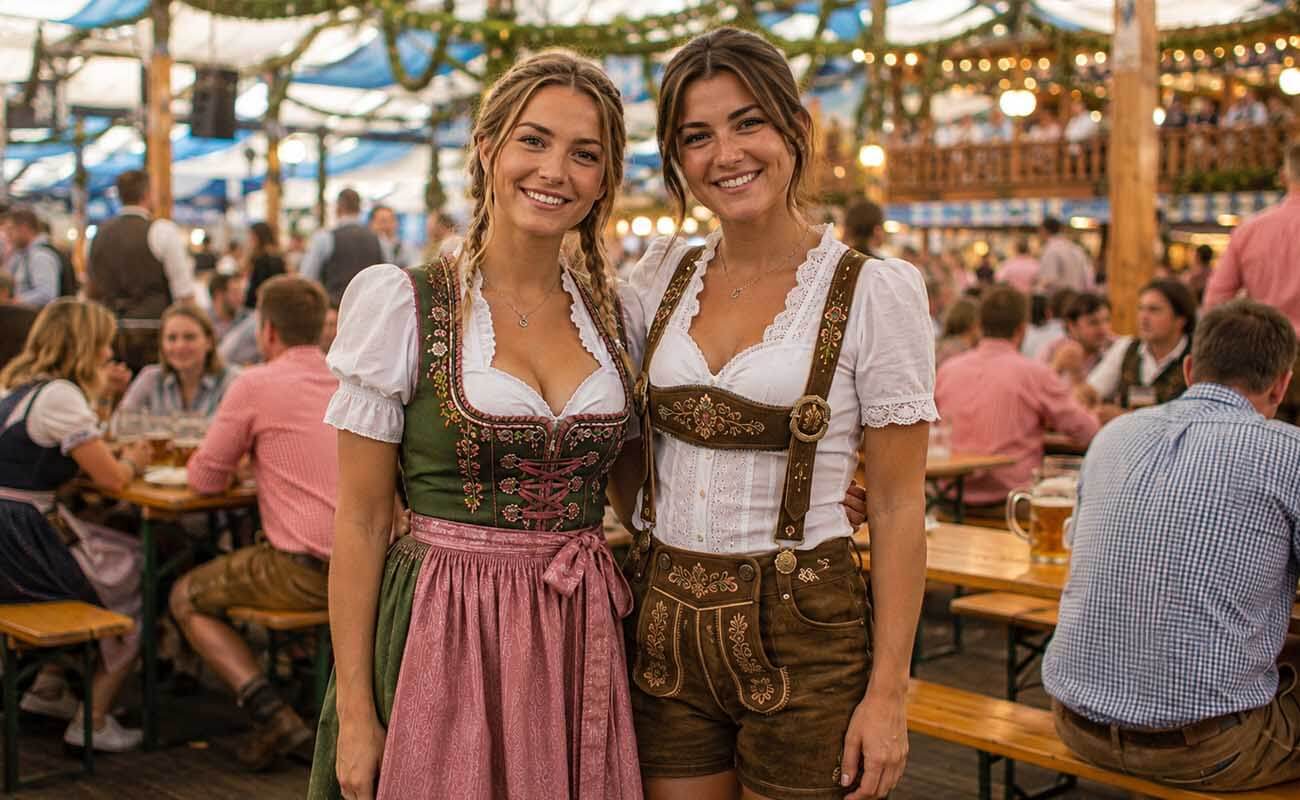
| Factor | Dirndl | Lederhosen (Women’s) |
|---|---|---|
| Best for | Weddings, formal events, classic Oktoberfest looks | Festivals, beer gardens, active or all-day wear |
| Comfort style | Breathable, flowing, adjustable lacing | Durable leather that molds to the body over time |
| Silhouette | Fitted waist, flared skirt, hourglass shape | Slim-fit shorts, accentuates legs and hips |
| Typical price | $100–$400+ | $60–$300+ |
| Material | Cotton, linen, silk, wool blends | Deerskin, goatskin, cowhide |
| Seasonality | Easy to layer for any season | Naturally warm; pairs with light tops in summer |
| Ease of movement | Good, especially with shorter or A-line cuts | Excellent — built for dancing and standing |
Comfort and Fit: What Actually Feels Better?
A Dirndl made from natural fabrics like cotton or linen breathes well, and the laced bodice adjusts to your shape while the skirt allows easy movement without sacrificing the fitted waistline. Lederhosen, by contrast, tends to feel stiff on the first wear but softens quickly, with adjustable suspenders and side-lacing giving a customized fit and no risk of a skirt catching in a crowded beer tent.
Which one wins usually comes down to what you’re doing in it. For long days spent standing at festivals, Lederhosen is generally more forgiving on the body, while a Dirndl tends to look and feel more appropriate for sit-down events like dinners, ceremonies, or formal photos. Weather plays a role too — a lightweight cotton or linen Dirndl breathes better in the heat, while leather Lederhosen holds warmth naturally in cooler months, whereas a Dirndl needs a shawl, jacket, or long-sleeved blouse layered on top to stay warm.
Fabric quality also matters more than most first-time buyers expect. A polyester Dirndl will trap heat and feel stiff by the end of a long day, while a cotton or linen one moves with your body. Similarly, bonded or synthetic “leather-look” Lederhosen never softens the way real deerskin or cowhide does, so it stays stiffer through the day — worth knowing if comfort is your top priority.
Quick comfort checklist:
- Long, active day standing → Lederhosen
- Formal, sit-down event → Dirndl
- Hot weather → cotton or linen Dirndl
- Cold weather → leather Lederhosen or a layered Dirndl
How to Style Each Look
A Dirndl pairs naturally with Haferlschuhe (traditional Bavarian shoes) for an authentic look, or with ballet flats and ankle boots for something more modern. Underneath, a well-fitted Dirndl blouse makes as much difference to the overall look as the dress itself, and a Dirndl handbag, a shawl, or an embroidered apron can elevate an otherwise simple design. Hairstyle sets the tone too — braids or a low bun read as traditional, while loose waves or a sleek updo feel more contemporary.
Lederhosen styles just as easily. Sturdy boots or loafers keep the look classic, while sneakers or flats give it a casual, modern edge. A belt with a decorative buckle, a scarf, or floral accessories add a feminine touch against the rugged leather, and pairing your Lederhosen with a fitted Trachten skirt style top or blouse can soften the overall silhouette. Hair is usually kept simple — a ponytail or loose waves let the outfit do the talking, with a floral headband added for extra festival flair.
Which One Suits Your Occasion?
For Oktoberfest or a beer tent, either outfit works, though the Dirndl remains the more traditional and widely worn choice. For a wedding guest appearance or a formal celebration, a Dirndl in silk or a richer fabric is the safer, more elegant pick, while Lederhosen is the stronger option for hiking, dancing, or an outdoor festival where durability and freedom of movement matter most. Themed parties and costume events suit both equally well, so the choice there really comes down to which silhouette you prefer, and for photoshoots or brand shoots, a Dirndl tends to photograph as more classically feminine while Lederhosen reads as bolder and more editorial.
Which One Suits Your Body Type and Style?
If you want an hourglass shape, a Dirndl’s fitted bodice and flared skirt create that silhouette naturally, while Lederhosen shorts highlight the legs in a way a skirt simply can’t. Women who lean toward flowing, romantic fabrics tend to gravitate toward a Dirndl in cotton, linen, or silk, while those who prefer a rugged, statement look often choose leather Lederhosen with embroidery and suspenders instead — often paired with one of the women’s Oktoberfest shirts for a more relaxed, everyday feel. For maximum versatility, many women now keep a simple Dirndl for formal days and Lederhosen for casual or active ones, mixing and matching blouses and accessories between the two rather than committing to just one wardrobe. Checking a retailer’s new arrivals regularly is also a good way to catch fresh cuts and colors before they sell out each season.
What’s New: Updated Trends
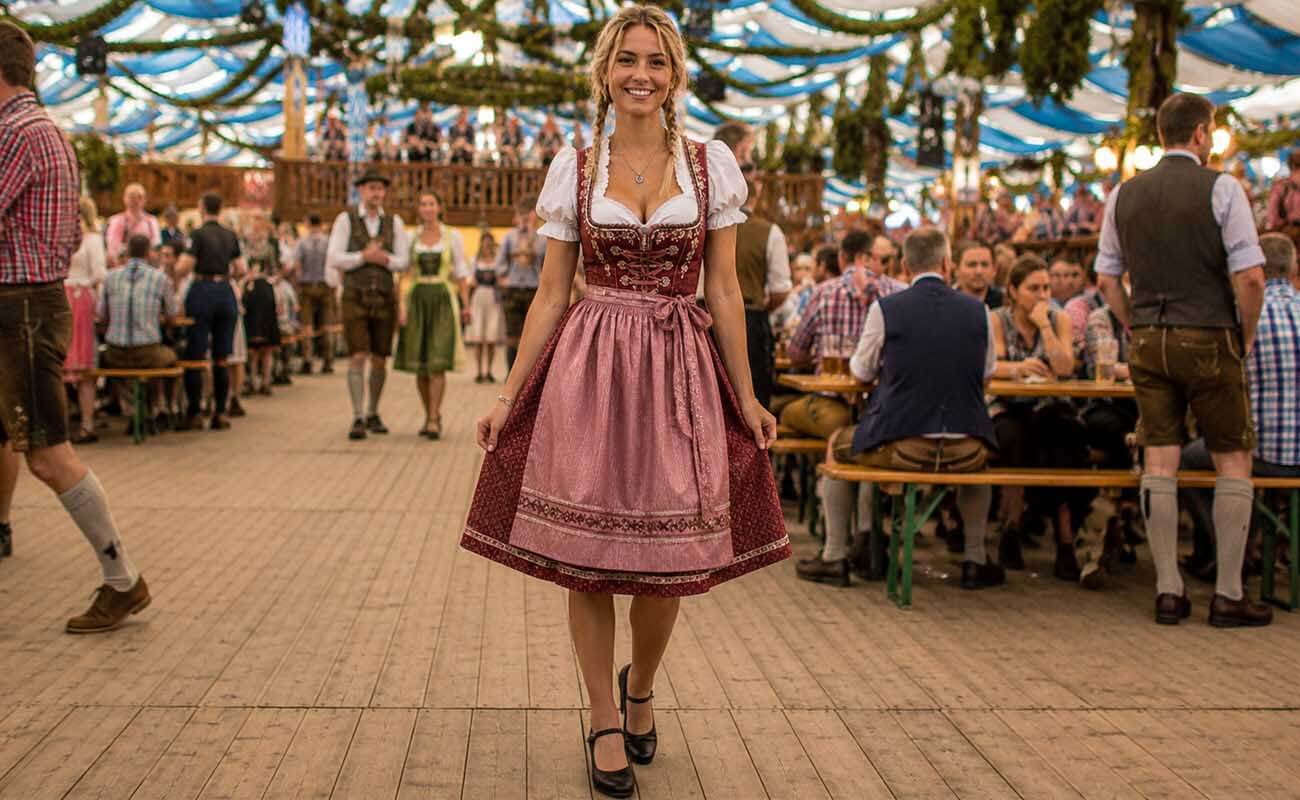
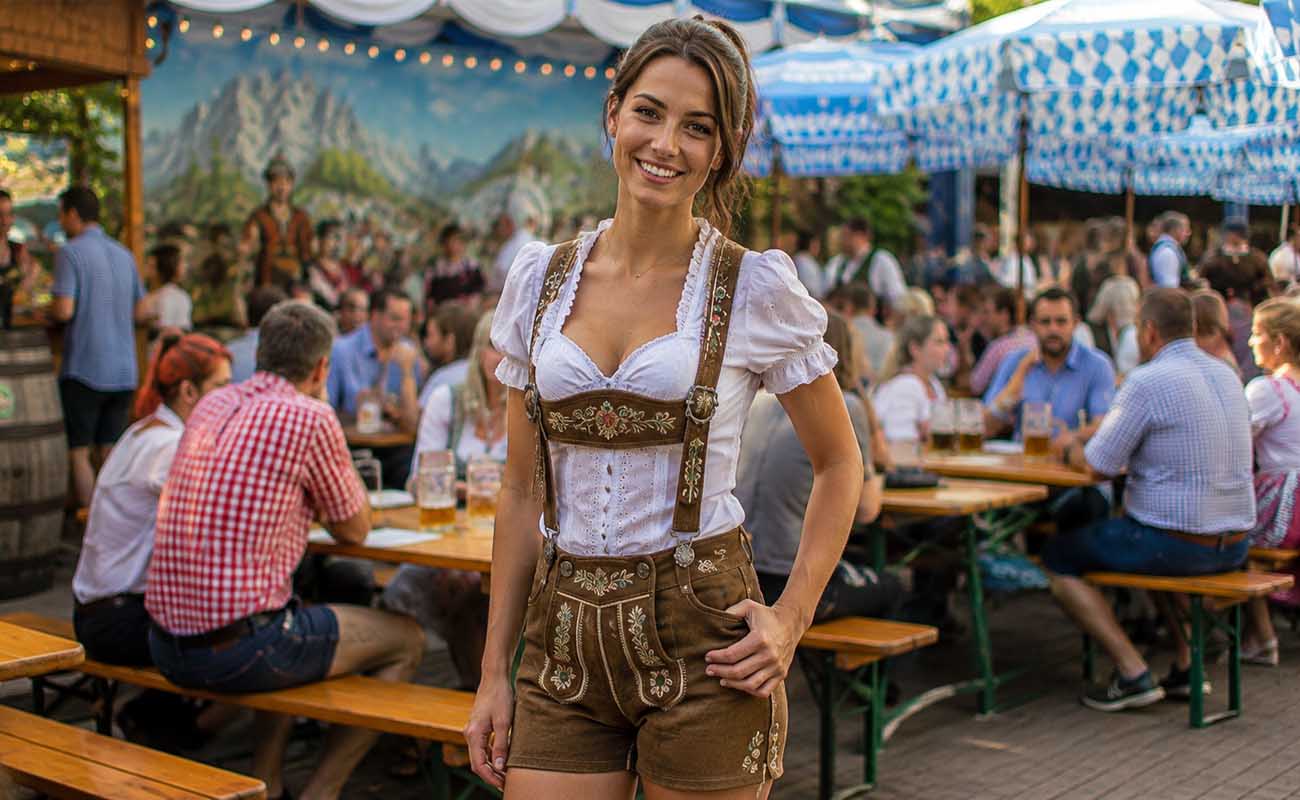
Both garments have moved further from “costume” territory and further into everyday festival fashion in recent seasons. Shorter, structured Dirndl hemlines — mini and midi styles — are now mainstream rather than niche, especially among younger festival-goers, while sustainable and vegan leather Lederhosen has grown significantly as a cruelty-free alternative that offers a similar look at a lower price point. Color has expanded too: beyond classic brown and black, the newest Lederhosen collections now include olive, tan, black-on-black stitching, and even muted pastel tones for women.
Mix-and-match dressing has also become common, with shoppers pairing a Dirndl bodice with Lederhosen-style boots, or a Lederhosen top with a Dirndl-style apron skirt, to create a hybrid look. This has fed into a broader shift toward capsule Trachten wardrobes, where instead of buying one complete outfit, shoppers invest in interchangeable blouses, aprons, and accessories that work across both a Dirndl and a Lederhosen base. On the retail side, AI-assisted sizing tools now let shoppers enter their measurements online to get fit recommendations before buying, cutting down on returns, while short-form video from Oktoberfest and Alpine festivals continues to shape which cuts, colors, and accessory pairings sell out first each season.
What’s trending right now:
- Mini and midi Dirndl hemlines are now mainstream
- Vegan leather Lederhosen has grown in popularity
- More color options beyond brown and black
- Hybrid Dirndl-Lederhosen styling is trending
How to Tell Quality From a Cheap Imitation
Both garments are sold at wildly different price points, and quality varies just as widely, so it’s worth checking a few things before you buy. Look for genuine cotton, linen, or silk in a Dirndl, and real deerskin, goatskin, or cowhide (or clearly labeled vegan leather) in Lederhosen — vague listings that just say “leather-look” are usually a sign of lower quality. Dense, even stitching signals real handwork, while loose threads or printed-on “embroidery” patterns point to a cheaper, mass-produced piece. Reputable Trachten retailers also tend to list fabric composition, country of manufacture, and sizing charts clearly, and they’re confident enough in their product to offer an easy returns policy — the absence of either is worth noting before you buy, especially online.
Investing in a genuine, well-made piece pays off twice: it looks and feels better on the day you wear it, and it holds up for years of repeat wear at future festivals, rather than needing to be replaced after one season.
Price and Where to Buy
Prices vary based on material and craftsmanship, but here’s what the current ranges generally look like. A budget Dirndl in a polyester or cotton blend typically runs $80–$120, a mid-range cotton Dirndl with embroidery detail runs $150–$250, and premium or custom silk pieces with handmade detailing start around $300. On the Lederhosen side, budget synthetic or vegan leather options run $50–$90, mid-range genuine leather with standard stitching runs $150–$220, and premium deerskin pieces with custom embroidery start around $250.
Both garments are available through specialty Trachten retailers online, general marketplaces, and local shops in Bavaria and Austria that offer custom fitting. Buying from a specialist retailer typically gets you better sizing guidance, authentic materials, and easier returns than a generic marketplace listing — and checking a retailer’s Oktoberfest sale section before the season starts can also help you find quality pieces at a lower price.
Building a Wardrobe That Works for Both
If you attend Bavarian-style events regularly, it’s worth thinking of a Dirndl and Lederhosen as two parts of one wardrobe rather than a single either/or purchase. A neutral cotton blouse, a well-fitted pair of shoes in a versatile color, and simple accessories like a belt or shawl can often be reused across both outfits, which cuts down on cost while giving you flexibility for whatever the occasion calls for. Many women now start with one core piece — usually a mid-range Dirndl — and add Lederhosen later once they know how often they’ll wear it for more casual or active events.
Frequently Asked Questions
The Dirndl is historically the more traditional choice for women at Oktoberfest, though women’s Lederhosen has become widely accepted and increasingly common, especially among younger attendees.
Yes. Women’s Lederhosen is fully accepted at Oktoberfest, beer gardens, and Bavarian festivals. It’s tailored specifically for the female body with a slimmer cut than the men’s version.
No. Lederhosen for women is a well-established, modern tradition, not a men’s-only garment being borrowed. It’s sold, marketed, and worn specifically as women’s Trachten attire.
A good quality Dirndl typically costs between $150 and $300, and quality women’s Lederhosen typically costs between $150 and $250, depending on material and craftsmanship.
Bring both if possible — a Dirndl for the formal portion and Lederhosen for the casual, active portion — or choose a mid-length, simpler Dirndl that works for both settings.
Most Trachten retailers recommend sizing up for a Dirndl bodice, since it laces snug and can be adjusted, and sizing to your true measurement for Lederhosen, since leather stretches slightly with wear.
Conclusion
Neither the Dirndl nor Lederhosen is objectively “better” for women — they serve different purposes. Choose a Dirndl when you want a classic, feminine silhouette for formal or traditional occasions. Choose Lederhosen when comfort, movement, and a bold statement matter more than convention. Heading into the next festival season, the biggest shift is that women no longer have to pick one identity — mixing pieces from both wardrobes, in sustainable materials and updated colors, has become the most practical and stylish approach.
For more styling tips, fit guides, and Oktoberfest inspiration, browse the rest of our Trachten journal.


