

Blog
What To Wear With Lederhosen: Ultimate Style Guide


Lederhosen are traditionally paired with a checkered or plain button-up shirt, knee-high or ankle socks, sturdy leather Haferlschuhe shoes, a leather belt or embroidered suspenders, and a felt Tyrolean hat. For 2026, most stylists still recommend this classic base but suggest lighter fabrics, slimmer tailoring, and one modern accent piece — a minimalist watch, a denim jacket, or matte-finish shoes — to keep the outfit from feeling costume-like.
In short, a complete lederhosen outfit has five layers: the shirt, whether checkered or solid, cotton or linen; the legwear, meaning the lederhosen itself plus knee or ankle socks; the footwear, from Haferlschuhe to loafers or clean sneakers; a single waist accessory, either a leather belt or suspenders but never both together; and an outerwear or topper layer, such as a hat, vest, or jacket depending on the season.
The sections below break down each layer in detail, along with seasonal advice, common mistakes, and answers to the most frequently asked questions about styling lederhosen in 2026.
1. Choosing the Right Shirt for Lederhosen in 2026
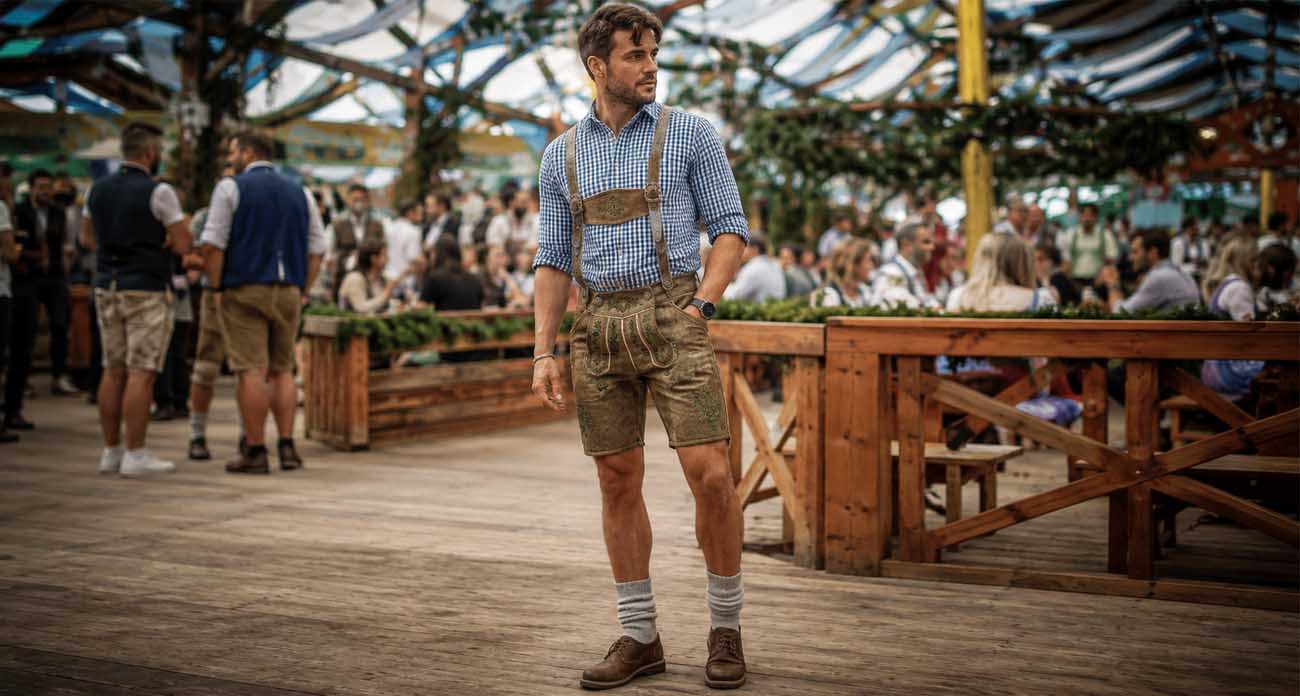
The shirt is the first thing people notice, and it sets the tone for the whole outfit — traditional, modern, or somewhere in between. Browse the full range of Trachten shirts to compare checkered and solid styles side by side.
Classic checkered shirts in blue, red, or green remain the most recognizable choice for Oktoberfest and folk festivals. They signal authenticity instantly and photograph well in group settings. For 2026, brands have shifted toward softer, muted checks (sage, rust, and slate blue) instead of the bright primary colors that dominated a decade ago, giving the look a slightly more refined, less “costume” feel.
Modern alternatives are increasingly common outside of Oktoberfest itself: solid linen or cotton button-ups in white, cream, or olive; light chambray or denim shirts for a rugged-casual pairing; fine-knit polos for daytime, non-festival wear; and minimalist collarless shirts for a cleaner, Scandinavian-influenced silhouette.
Fabric and fit matter more than pattern. A shirt that’s too tight across the shoulders or bunches at the waistband will fight against the structured leather of the lederhosen — and if you’re unsure how snug the lederhosen itself should sit, our guide on how tight lederhosen should fit covers it in detail. The current 2026 trend favors a tailored, slightly relaxed fit — fitted through the chest and shoulders, roomy enough through the body to tuck cleanly and move freely while dancing or sitting at long beer-tent tables.
Layering the shirt opens up more options: a fine-gauge wool or cotton sweater over the shirt adds warmth for cooler evenings without hiding the collar, a lightweight bomber or denim jacket keeps things casual for pre-parties or daytime events, and a traditional Trachten jacket (short wool vest-jacket) is the go-to if you want to stay culturally authentic while adding a layer.
2. Best Shoes and Socks to Wear With Lederhosen
Footwear is where comfort and tradition intersect most directly — you’ll likely be standing, dancing, or walking for hours, so this is not the place to cut corners.
Traditional footwear: Haferlschuhe are the definitive lederhosen shoe — sturdy, laced, leather shoes with a slight heel that originated in the Bavarian Alps. They’re built for durability and long wear, which is exactly what a full day of festival standing requires.
Modern footwear options that still work well with lederhosen:
- Clean leather loafers or derbies for a smart-casual look
- Minimalist leather sneakers (avoid anything with heavy branding or bright colors)
- Suede desert boots for cooler, outdoor autumn events
Trachten socks: quick comparison
| Sock Style | Best For | Look |
|---|---|---|
| Knee-high wool socks | Traditional Oktoberfest, cold weather | Classic, formal |
| Patterned knee socks | Photos, group outfits, festive events | Playful, eye-catching |
| Ankle socks | Casual daytime wear, warm weather | Modern, understated |
| No-show socks with loafers | Smart-casual, non-festival settings | Contemporary |
A few quick rules of thumb for socks and shoes:
- Knee-length socks are still the most authentic choice for Oktoberfest itself.
- Ankle socks work best when paired with modern shoes like loafers or sneakers, not Haferlschuhe.
- Break in new shoes before the event — festival days often mean 6–8 hours on your feet.
- Cushioned insoles are worth the investment if your footwear has a hard leather sole.
3. Accessories: Hats, Belts, and Suspenders
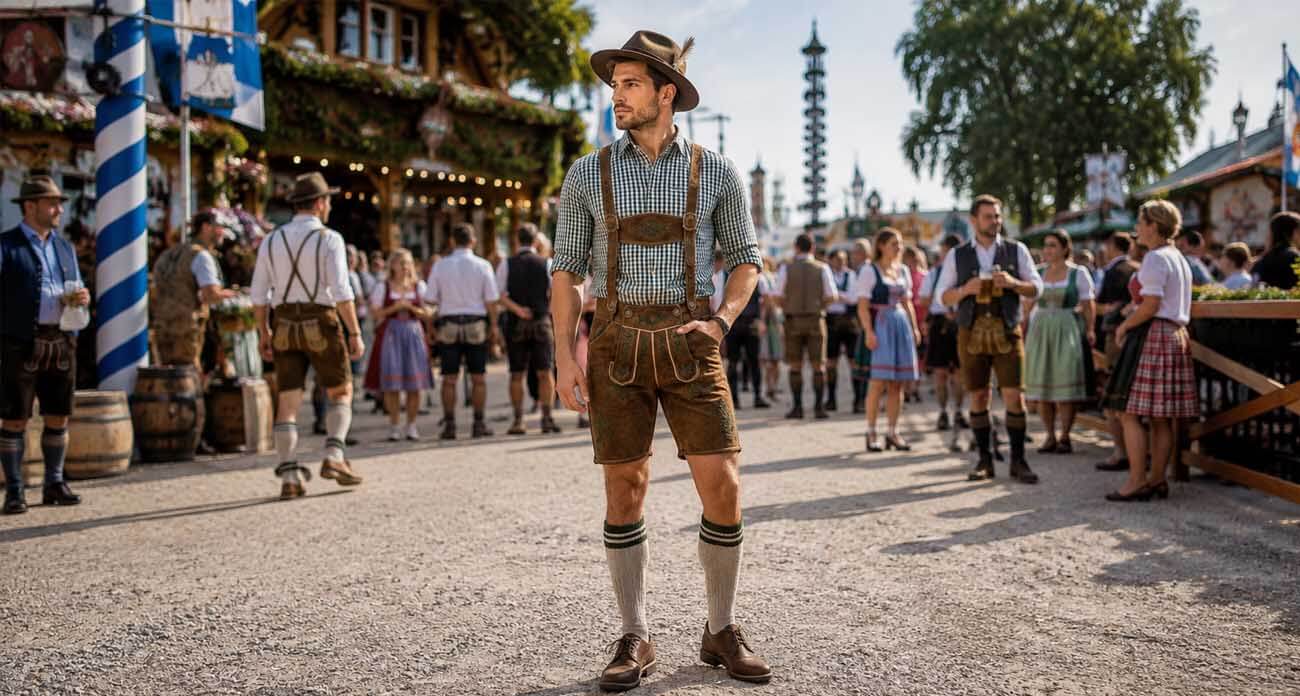
Accessories are what separate a generic outfit from one that reads as genuinely well-styled. Three pieces matter most: the hat, the belt or suspenders, and the color palette that ties them together.
Hats: The Tyrolean (felt) hat is the traditional topper, often finished with a small feather, brush, or pin, while a plain wool flat cap works as a lower-key, modern substitute. Hats are optional for casual wear but generally expected for full Oktoberfest dress.
Belt vs. suspenders — pick one, not both. A wide leather belt with a decorative or engraved buckle is the go-to for lederhosen with belt loops, while embroidered leather suspenders (Hosenträger) are the traditional choice for bib-style lederhosen and are almost always worn instead of a belt, not alongside it — wearing both is one of the most common styling mistakes. For a deeper look at why this rule exists, see why you can’t wear a belt with suspenders. If you go with suspenders, make sure they sit flat against the chest without twisting, and adjust the length before heading out rather than after arriving.
Color coordination ties the whole look together — and since brown remains the most popular lederhosen color, it’s worth planning accessories around it first. Dark brown lederhosen pair well with cream, soft blue, or muted green accessories, while black lederhosen look sharp with burgundy or forest green accents. As a general rule, keep no more than two accent colors in the full outfit — across the hat, socks, or embroidery — to avoid visual clutter.
4. Seasonal Styling: Summer, Autumn, and Winter Lederhosen Outfits
Oktoberfest weather can swing from warm afternoons to genuinely cold nights, so seasonal adjustments matter more than most people expect.
Warm weather (early autumn, daytime) calls for a lightweight cotton or linen shirt with sleeves rolled up, ankle socks with breathable loafers or sneakers, and no jacket at all — a light vest is enough if the evening cools down.
Cool weather (evening events, late autumn) works best with a flannel or heavier cotton shirt, knee-length wool socks, and a Trachtenjacke, wool sweater, or leather jacket layered on top, or a waistcoat if you want extra structure without full sleeves. A scarf is a simple addition that brings both warmth and a pop of color.
Cold weather (winter folk events) calls for a thermal or wool base layer under the shirt, a full leather jacket or heavy wool coat over the Trachtenjacke, thick wool socks with lined leather shoes, and a wool-lined hat in place of a light felt one.
Day-to-night transition: Many 2026 Oktoberfest guides recommend packing a lightweight jacket or blazer specifically for the evening switch, swapping a canvas belt for leather and a playful pin for a more understated buckle as the day turns into night.
5. Common Mistakes to Avoid When Styling Lederhosen
Even well-intentioned outfits can go wrong. The most common one is wearing a belt and suspenders together instead of picking one based on the lederhosen’s design — belt loops call for a belt, a bib front calls for suspenders. Choosing shoes that are too casual or too flashy, such as bright sneakers or sandals, is another quick way to break the outfit’s cohesion, as is ignoring fit altogether: lederhosen that are too loose lose their shape, and shirts that are too tight fight against the leather’s structure (see our complete sizing guide if you’re unsure). Overloading on accessories is a subtler mistake — one statement piece, whether it’s a hat, a pin, or embroidered suspenders, is usually enough. Finally, skipping a trial run is easy to regret, since both new leather shoes and stiff lederhosen need breaking in before a full day of wear.
6. Lederhosen Trends for 2026
Oktoberfest style shifts a little every year, and a few clear patterns have emerged for 2026 — and no, this style of dress isn’t just a Bavarian thing anymore, which is part of why the trends keep evolving:
- Sustainable and vegetable-tanned leather lederhosen are gaining ground over chrome-tanned leather, driven by demand for lower-impact production.
- Slimmer, shorter cuts are replacing the boxier lederhosen that were popular in the early 2020s, giving a more tailored silhouette — and for those who want function alongside tradition, cargo lederhosen vs. traditional lederhosen is worth a read before you buy.
- Neutral and earth-tone shirts — sage, rust, stone, and off-white — are increasingly worn alongside or instead of the classic bright checks.
- Mixed-material accessories, like belts with fabric or canvas panels next to leather, are showing up more often as a modern twist on traditional buckles.
- Gender-neutral styling is more visible, with shorter lederhosen and looser-fit shirts crossing over between men’s and women’s Oktoberfest fashion.
None of these trends replace the fundamentals in this guide — they simply give you more room to personalize the shirt, cut, and color palette while keeping the shoes, socks, and belt-or-suspenders rule the same.
7. Building a Capsule Lederhosen Wardrobe
If you plan to wear lederhosen more than once a year — for Oktoberfest, folk festivals, or themed events — it’s worth thinking of the outfit as a small capsule wardrobe rather than a one-time costume. A practical starting set includes:
- One pair of well-fitted lederhosen in a versatile shade like mid-brown or black, since both pair easily with almost any shirt color.
- Two shirts — one classic checkered option for full traditional dress, and one solid neutral shirt for a more modern or casual take.
- One pair of Haferlschuhe for authenticity, plus a backup pair of clean leather sneakers or loafers for warmer days or less formal settings.
- Two sock options — knee-high wool for cold, traditional events and ankle socks for warm, casual ones.
- One belt and one set of suspenders, chosen to match the style of lederhosen you own, so you’re never stuck without the right waist accessory.
- One layering piece for cold weather, such as a Trachten jacket or leather jacket, that can be reused across multiple outfits and seasons.
Building the wardrobe this way means you can put together a complete, well-coordinated lederhosen outfit for almost any weather or occasion without buying something new every time.
FAQs: Your Top Questions Answered
A checkered cotton shirt in blue, red, or green is the most traditional pairing, closely tied to classic Bavarian and Oktoberfest dress.
Yes. Clean, minimalist leather sneakers are an accepted modern substitute for Haferlschuhe, especially for casual or non-festival occasions. Avoid bright colors or heavy branding.
Choose one, not both. Lederhosen with belt loops are meant for a leather belt; bib-style lederhosen are designed for suspenders (Hosenträger).
No, but they’re the traditional choice for full Oktoberfest looks. Ankle socks are an accepted, more casual alternative, especially with modern shoes like loafers.
A traditional Trachtenjacke, a wool sweater, or a leather jacket all work well. Leather jackets add an edgier, modern contrast; Trachtenjackes keep the outfit fully traditional.
A felt Tyrolean hat is the classic choice, often finished with a small feather or pin. A plain wool flat cap is a simpler, modern alternative.
Yes — this is actually the dominant approach in 2026. Most stylists recommend keeping the lederhosen, shoes, and one accessory traditional, then modernizing the shirt, jacket, or color palette.
Keep it to two or three: a hat, a belt or suspenders, and one accent piece such as a pin or patterned socks. Adding more than that tends to make the outfit look cluttered rather than intentional.
Swap Haferlschuhe for a water-resistant leather boot, add a packable rain shell over your Trachtenjacke or shirt, and choose wool socks, which stay warmer than cotton even when damp.
Final Thoughts: Make Lederhosen Your Own
Lederhosen work best when they’re treated as a base layer for personal style rather than a fixed costume. Start with the essentials — a well-fitted shirt, sturdy shoes, and one standout accessory — then adjust for the season and the occasion. Whether you’re heading to Oktoberfest, a folk festival, or just leaning into Bavarian style for a themed event, the goal in 2026 is the same as it’s always been: comfort, authenticity, and a little bit of personality.
Group and couple outfits are also worth planning ahead of time, especially for Oktoberfest, where photos matter as much as comfort. Coordinating around a shared color palette — blue and white, or brown and cream, for example — gives a group a cohesive look without forcing everyone into identical outfits. Couples can achieve the same effect by matching a dirndl’s color to the accents in a partner’s lederhosen outfit, such as the embroidery on suspenders or the trim on a hat — if you’re weighing which piece suits your partner best, Dirndl vs. lederhosen for women and how to style women’s Oktoberfest shirts are both worth a look.
Ultimately, the most important styling rule is comfort. Festival days are long, involve a lot of standing, sitting, and dancing, and often swing between warm afternoons and cold evenings. An outfit that looks perfect in photos but pinches at the waistband or blisters your feet by hour three isn’t successful. Prioritize fit and broken-in footwear first, then layer in the traditional and modern details covered in this guide. Done well, a lederhosen outfit should feel less like a costume and more like a natural extension of the occasion — polished, comfortable, and unmistakably festive.
For more Bavarian styling tips, tradition explainers, and Oktoberfest guides, browse the rest of our Alpen Lederhosen blog.


