

Blog
What Does the Apron Tie Mean at Oktoberfest? The Complete Guide


At Oktoberfest, the way a woman ties her dirndl apron bow signals her relationship status. A bow tied on the left side traditionally means she is single, a bow on the right side means she is taken or married, a bow tied in the front/center means she is a virgin or very young, and a bow tied in the back usually signals she is a widow — or, more commonly today, simply a server or staff member working the festival. It’s a fun, unofficial Bavarian custom rather than a strict rule, but it’s still one of the most talked-about traditions at every beer tent.
If you’ve ever wandered through a beer tent at Oktoberfest and noticed a woman glance down to check where her apron bow is sitting before glancing back up with a smile, you’ve witnessed this tradition in action. It looks like a simple fashion detail, but the apron tie is actually one of Bavaria’s most charming pieces of unspoken communication. Whether you’re planning your own dirndl outfit or just want to understand what’s happening around you at the festival, here’s everything you need to know about the apron tie tradition — updated with the latest etiquette, myths, and styling tips for this Oktoberfest season. For the full festival prep list, check our complete Oktoberfest guide as well.
Apron Tie Meaning at a Glance
Before we go deeper, here’s the short version people search for most:
- Left side bow → Single and open to being approached
- Right side bow → In a relationship, engaged, or married
- Front/center bow → Virgin, very young girl, or someone who wants to keep her status private
- Back bow → Widow, or (much more commonly) a waitress/server whose apron is simply tied for practicality
- No apron at all → No hidden meaning — usually just a style or comfort choice, especially with modern lederhosen-inspired outfits
Keep in mind: this custom is a light-hearted social game, not an official rule enforced anywhere. Locals treat it more like a wink-and-nod tradition than a strict dress code, so don’t be shocked if you meet plenty of exceptions.
The History and Origin of the Oktoberfest Apron
The apron’s story starts long before Oktoberfest existed. In rural Bavarian and Alpine communities, the apron was purely functional — a tough layer of fabric worn over work clothes to protect them from dirt, grease, and daily farm labor. Servants and farm workers wore plain, undyed aprons, while the fabric quality and embroidery on an apron gradually became a way to show off a family’s wealth and status.
As Bavaria’s folk costume, the Tracht, evolved into festive wear, the apron became a core part of the dirndl ensemble rather than just a protective garment. By the time Oktoberfest grew from a royal wedding celebration in 1810 into the massive beer festival it is today, dirndl aprons had already become richly decorated with silk, lace, and intricate patterns.
The relationship-status bow tradition itself is a much newer, informal addition — most historians and Bavarian tourism guides trace it to the 20th century, likely growing out of playful courtship customs at village dances and festivals, where a subtle signal was more polite than asking someone directly. Back then, villages were small and close-knit, so a young woman openly announcing her availability could invite gossip; a discreet knot solved that problem without a single word being spoken.
As Oktoberfest transformed from a local Munich celebration into a global tourist event drawing millions of international visitors each year, the apron-tie custom spread along with it. Travel bloggers, dirndl retailers, and word-of-mouth stories from returning festival-goers turned a once-local wink into one of the most searched Oktoberfest questions online. Today it’s less a rigid tradition and more a piece of festival folklore that tourists and locals both enjoy testing out — part fashion statement, part inside joke shared across generations of beer-tent regulars.
Where You Tie the Bow: A Closer Look at Each Position
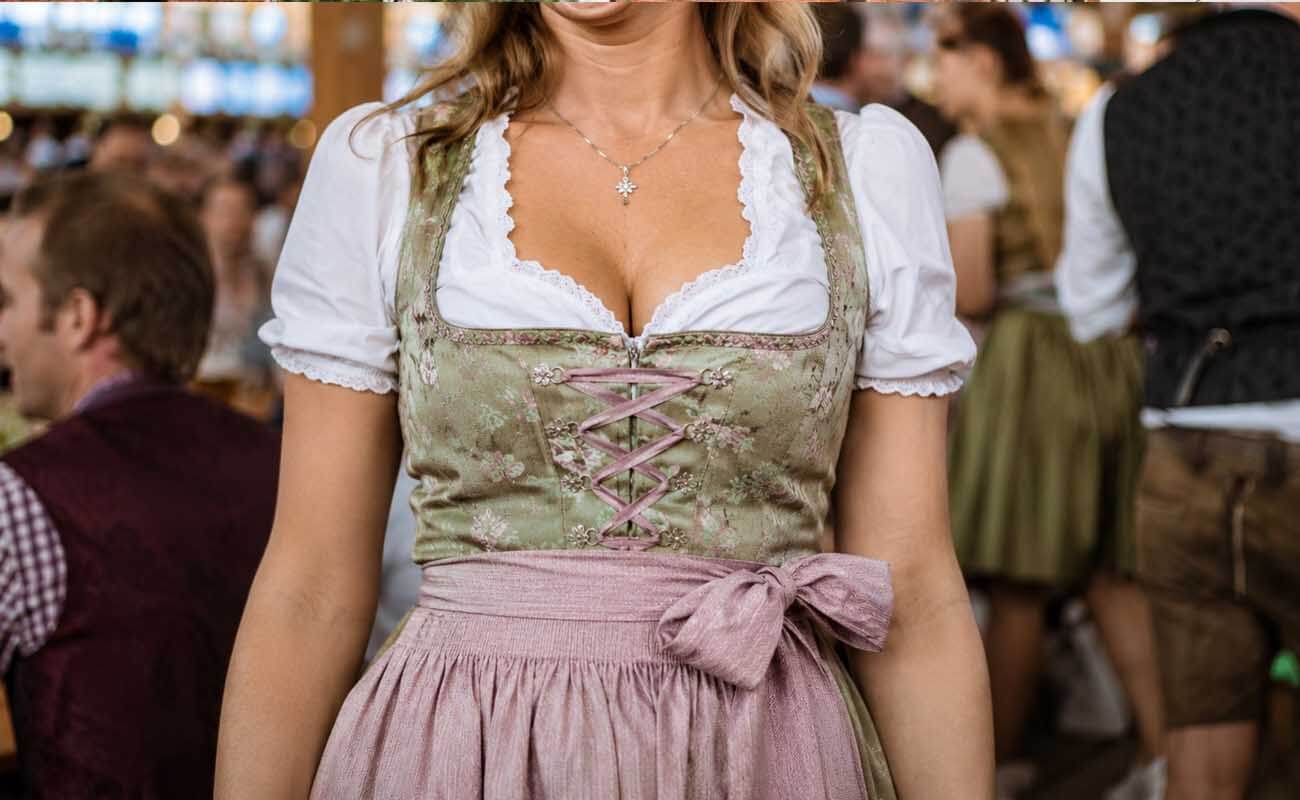
Left Side: “I’m Single”
A bow knotted on the wearer’s left hip is the internationally known signal for “I’m available.” It’s the most talked-about version of this tradition and the one most first-time Oktoberfest visitors ask about. If you’re single and want to be approached, tying it on the left is the classic, low-effort way to let people know without saying a word.
Right Side: “I’m Taken”
Flip it to the right side, and the message changes completely: the wearer is in a relationship, engaged, or married. It’s the Bavarian equivalent of a wedding ring — a quiet, visual cue that tells admirers to hold off.
Center/Front: “I’m Young” or “Ask Me”
A bow tied dead center at the front is traditionally associated with very young girls or women who are not yet interested in romantic attention — historically linked to virginity, though today it’s more often read simply as “not looking” or “figure it out yourself.” Some modern wearers use the front position deliberately to keep people guessing.
Back: “Widow” — or Simply “I’m Working”
Historically, a back-tied bow signaled widowhood. In modern festival tents, however, this position is far more commonly seen on waitresses and serving staff, who tie their apron behind them purely for practicality while carrying trays of steins. Context matters here — a busy server with a back bow almost certainly isn’t broadcasting her marital status; she’s just working.
Common Myths and Mistakes People Make
This tradition gets exaggerated online, so it’s worth clearing up a few misconceptions:
- Myth: Every woman at Oktoberfest is deliberately signaling her status. Reality — many visitors, especially tourists, have no idea the tradition exists and tie their bow wherever it looks best.
- Myth: The rule is strict and universal across Germany. Reality — it’s mainly a Bavarian and Munich-area custom, and interpretations shift slightly from village to village.
- Myth: A front-tied apron always means “flirt with me.” Reality — it more often simply means the wearer hasn’t thought about the tradition at all, or is working and tied it for comfort.
- Myth: Men have an equivalent lederhosen signal. Reality — there’s no widely recognized male version of this custom; lederhosen styling is about regional identity and personal taste rather than relationship status.
- Myth: Getting it “wrong” is embarrassing. Reality — locals know most visitors aren’t familiar with the tradition, so nobody expects tourists to get it perfect.
What Apron Colors and Patterns Say About You
Beyond the knot position, the apron’s color and pattern carry their own quiet symbolism in Bavarian folk-costume culture:
- Blue — often linked with loyalty, trust, and calm confidence
- Red — associated with passion, romance, and boldness
- Green — tied to nature, the Alpine landscape, and Bavarian pride
- Black — traditionally more formal or elegant, sometimes worn by older generations or for more solemn occasions
- Floral prints — popular in rural and Alpine regions, echoing local flora
- Checkered patterns — common in and around Munich, often paired with classic dirndl silhouettes
None of these color meanings are as widely recognized as the bow-position tradition, but they add another layer of personal expression for anyone dressing up for the festival — especially when paired with a matching dirndl blouse or a coordinating dirndl handbag to complete the look.
How to Tie a Dirndl Apron Bow (Step-by-Step)
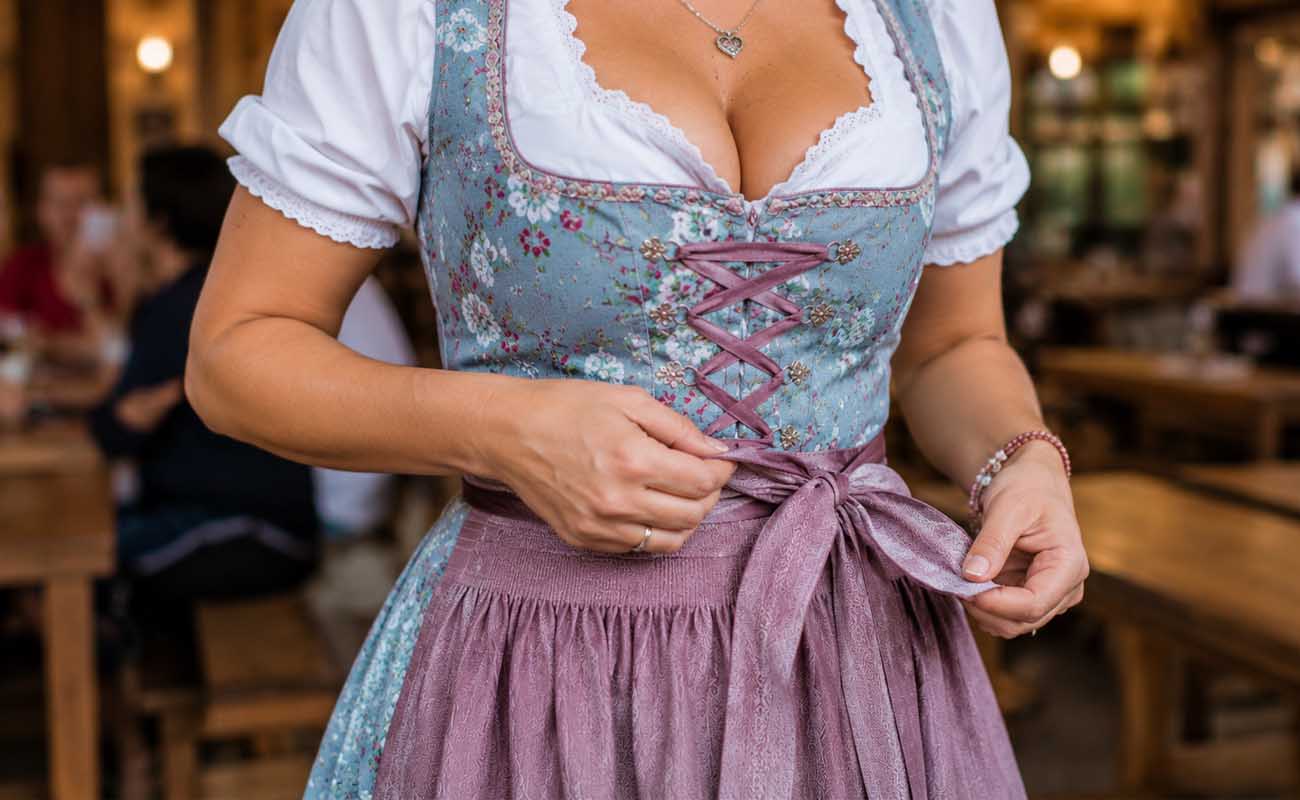
If you’re wearing a dirndl for the first time and want to try the tradition yourself, here’s a simple method:
- Wrap the apron around your waist over the dirndl skirt, making sure it sits evenly at the front.
- Cross the ties behind your back, pulling them snug but comfortable.
- Bring the ties back around to whichever side matches the message you want to send (left, right, front, or back).
- Form a simple bow, keeping the loops roughly equal in size for a balanced look.
- Adjust the tails so they hang neatly and don’t drag on the ground while dancing or walking.
- Check a mirror or ask a friend to confirm the bow is secure — Oktoberfest involves a lot of movement, so a loose knot won’t last through a polka.
Most dirndl dresses sold today, including ready-made sets, come with an apron sash long enough to tie comfortably in any of the four positions, so you can choose your own signal on the day. Once your apron bow is sorted, round out the outfit — see our guides on what shoes to wear with a dirndl and whether you should wear socks with a dirndl for the rest of the look.
Regional and Modern Variations
While Munich’s Oktoberfest popularized the bow tradition worldwide, apron styles and tying customs still vary across Bavaria and other German-speaking regions. Some villages favor different bow shapes altogether — a looser, floppier knot versus a tight, structured bow — as a form of local identity. In more rural Alpine areas, older generations sometimes stick to plainer, undecorated aprons that skip the symbolic bow entirely, favoring pure tradition over the newer courtship game.
Modern festival-goers, especially at Oktoberfest celebrations outside Germany, have also put their own spin on things — mixing bold, non-traditional colors, adding pins or patches, and treating the bow position as a playful accessory choice rather than a strict signal. The core idea remains the same, though: a small knot that turns an outfit into a conversation starter. Curious how far this kind of styling debate can go? Read our piece on what’s behind the dirndl controversy for more on how Bavarian dress codes are evolving, or compare the two most iconic outfits in our dirndl vs. lederhosen guide.
Apron Tie Etiquette: What to Do If You Misread the Signal
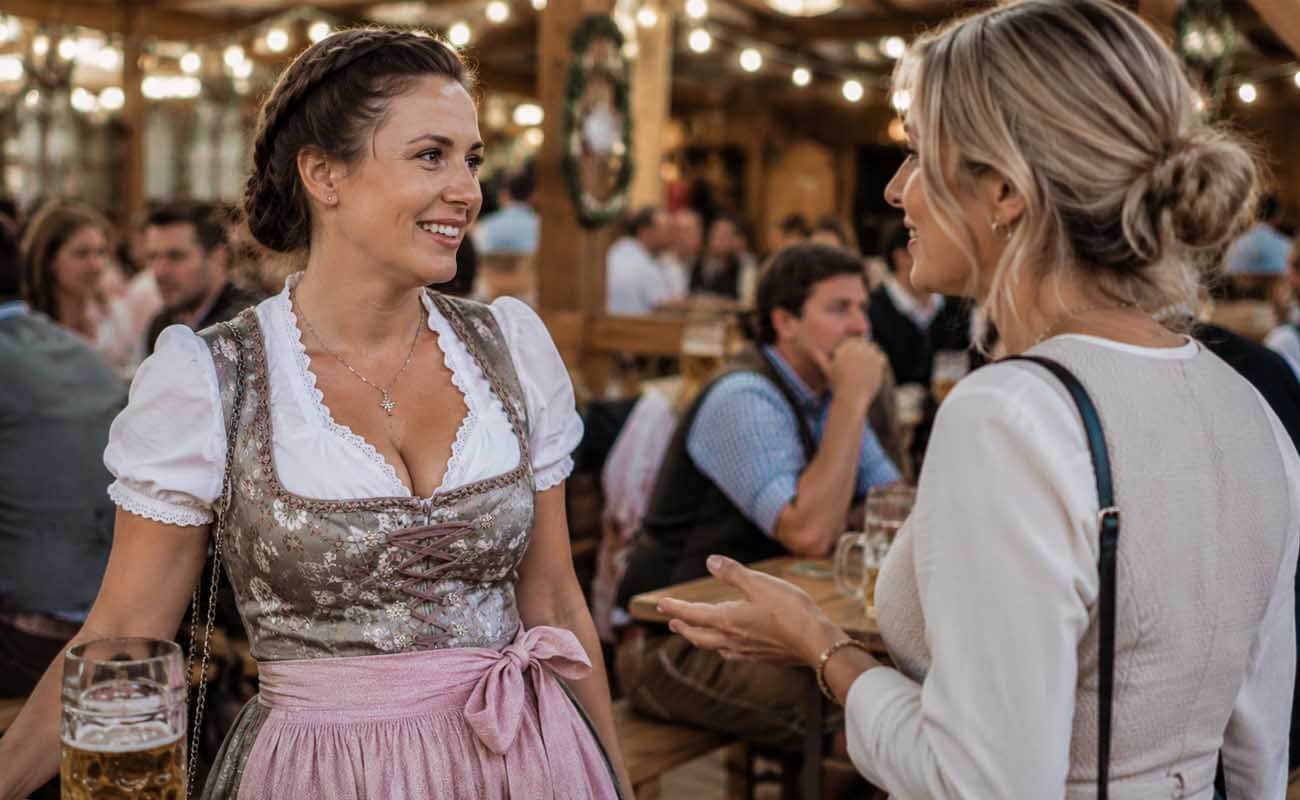
Because the tradition isn’t universally known or consistently followed, misreadings happen constantly — and that’s completely fine. Here’s how to handle it gracefully if you approach someone based on their apron bow and things don’t go as expected:
- Stay light-hearted. Most locals find the mix-up charming rather than awkward, since they know most visitors are still learning the custom.
- Don’t assume every bow is intentional. Many wearers simply tied their apron for comfort or style, with zero symbolism attached.
- Read the whole picture, not just the knot. Body language, whether someone is working, and the overall context tell you far more than a bow position alone.
- Use it as a conversation starter, not a guarantee. The safest way to enjoy this tradition is to treat it as an icebreaker rather than a certainty — ask, don’t assume.
- Respect a “no” gracefully. If someone explains their bow doesn’t mean what you thought, take it in stride; it’s part of the fun of a tradition that isn’t formally standardized.
Understanding this etiquette is exactly why the apron-tie custom keeps circulating year after year — it rewards curiosity and conversation rather than strict rule-following, which fits perfectly with the relaxed, communal spirit of Oktoberfest itself.
Frequently Asked Questions
No. There’s no widely recognized apron-tie equivalent for men. Lederhosen styling reflects regional identity and personal taste rather than relationship status — though if you’re putting together a men’s outfit, our guide on what color shirt to wear with lederhosen is a good next stop.
No. It’s an informal, well-known Bavarian custom, not an enforced rule. Plenty of attendees, especially first-timers and tourists, tie their apron without knowing the tradition at all.
Usually nothing symbolic — it often just means the bow came loose during dancing, or the wearer chose not to follow the tradition at all.
Yes. Many festival-goers retie their bow throughout the day depending on their mood, comfort, or who they’ve met — it’s meant to be flexible and fun, not permanent.
Mainly for practicality. Serving staff carry heavy trays and steins all day, so a back-tied bow stays out of the way rather than sending a relationship signal.
It grew out of Bavarian folk-costume culture and village courtship customs, becoming closely associated with Oktoberfest and the dirndl as the festival grew in popularity.
Yes — it remains one of the most recognized pieces of Oktoberfest trivia, frequently shared by first-time visitors, travel guides, and dirndl retailers as a fun cultural detail to know before attending.
Not at all. Wearing a dirndl and skipping the bow-position symbolism entirely is completely normal, especially for visitors who simply want to enjoy the outfit’s style and comfort.
Many wearers deliberately choose the front/center position, since it’s traditionally read as ambiguous — a simple way to enjoy the tradition without giving a clear answer either way.
Final Thoughts: The Tie That Still Sparks Conversation
The apron tie at Oktoberfest is proof that even the smallest details of a traditional outfit can carry big cultural meaning. It’s not a strict rulebook — it’s a playful, centuries-rooted piece of Bavarian folklore that turns a simple bow into an icebreaker. Whether you’re tying yours on the left to signal you’re single, on the right to show you’re taken, or you simply don’t think about it at all, understanding the tradition adds a fun layer of context the next time you’re raising a stein under the festival tent.
So next time you get dressed for Oktoberfest, take a second before you tie that bow — you might just be sending a message without saying a word. Prost!
Looking to shop your outfit before the festival? Browse our current Oktoberfest sale for dirndls and lederhosen, or head to the Alpen Lederhosen blog for more Bavarian traditions, styling tips, and Oktoberfest guides.


