

Blog
Oktoberfest 2026 – Your All-In-One Visitor Guide for Munich’s Oktoberfest


What Makes Oktoberfest Extraordinary
Oktoberfest is not just a beer festival—it’s a deep-rooted cultural tradition that dates back to October 12, 1810, when Crown Prince Ludwig of Bavaria married Princess Therese of Saxony-Hildburghausen. The citizens of Munich were invited to join the celebration, held on the fields in front of the city gates. These fields were later named Theresienwiese (“Theresa’s Meadow”) in honor of the princess—and thus, the tradition was born.
Today, Oktoberfest is the world’s largest folk festival, drawing around 6 to 7 million people from all corners of the globe. It spans over two weeks, filled with flowing beer, Bavarian music, traditional outfits, parades, thrilling rides, and a celebration of community and heritage. For Oktoberfest 2026, this is the 191st edition of the festival, and the festivities will run from Saturday, September 19 to Sunday, October 4. Entry to the fairgrounds and tents is completely free, making it a uniquely open and welcoming event.
Best & Worst Days to Visit
Best Times to Attend
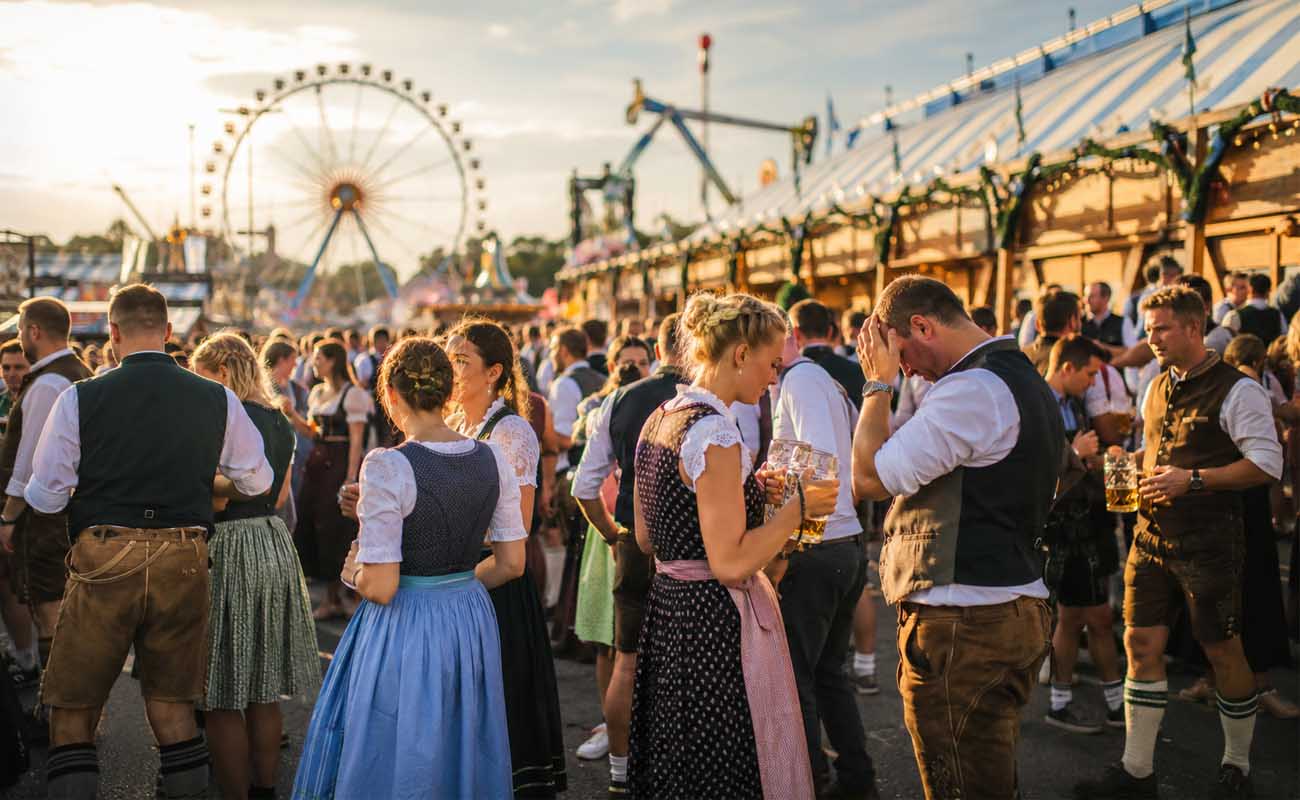
- Opening Day – Saturday, September 19: The Mayor of Munich taps the first keg at noon in the Schottenhamel tent with the traditional exclamation, “O’zapft is!” (“It’s tapped!”). Although it’s crowded, the energy is infectious.
- First Sunday – September 20: Features the traditional costume and riflemen’s parade (Trachten- und Schützenzug) with almost 10,000 participants, led by the Münchner Kindl. A must-see for lovers of Bavarian culture.
- Second Sunday – September 27: Hosts the big brass band concert, with hundreds of musicians from various tents performing together near the Bavaria statue.
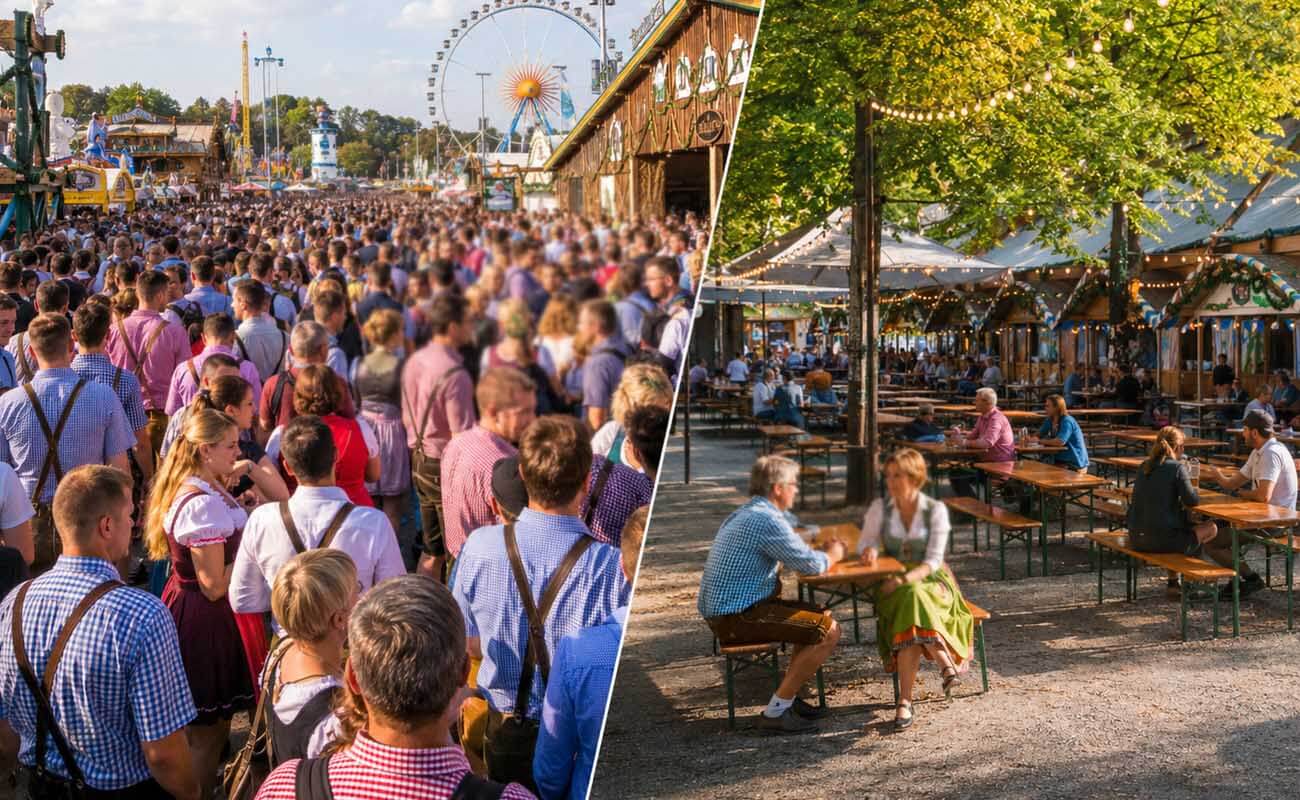
- Weekdays (Monday to Thursday): Mornings and early afternoons offer a more relaxed experience. You’re more likely to find seats and shorter lines for food and rides.
Days to Avoid
- Saturdays and Friday evenings are the most crowded days, with tents filling up quickly—sometimes before noon.
- Saturday, October 3 – German Unity Day: A national holiday in Germany, landing on the closing weekend in 2026. Combined with the final Saturday of the festival, expect the heaviest crowds of the whole run.
Pro Tip: If you must go on a busy day, arrive by 9:00–10:00 AM to claim a non-reserved table, especially if you’re in a group.
Where to Stay in Munich
Most Convenient Areas
- Theresienwiese & Ludwigsvorstadt: Walking distance to Oktoberfest grounds. Great for partygoers.
- Altstadt (Old Town): Perfect for sightseeing and close to major transport hubs. You’ll find historic buildings, beer halls, and vibrant energy.
- Schwabing or Glockenbachviertel: Trendy districts with bars, restaurants, and a more local experience.
Budget Alternatives
- Outer boroughs & commuter towns: Areas like Freising, Erding, Dachau, or Starnberg offer more availability and cheaper rates, with S-Bahn connections getting you to the festival in under an hour.
Booking Tips
- Book 6 to 9 months in advance—hotels for the 2026 dates are already filling fast given the closing weekend overlaps with a public holiday.
- Consider hostels, vacation rentals, or group accommodations.
- Always verify S-Bahn or U-Bahn access to Theresienwiese before confirming a location.
Getting There — Leave the Car at Home
From Munich Airport (MUC)
- S1 or S8 trains run every 10–20 minutes to Munich Central Station (Hauptbahnhof). Journey time: 45–50 minutes.
From Memmingen Airport (FMM)
- Shuttle bus to Munich Central Station takes about 75 minutes.
U-Bahn (Subway)
- U4/U5 → Theresienwiese (most direct but busiest)
- U3/U6 → Goetheplatz (short walk, less congested)
- U4/U5 → Schwanthalerhöhe (enter via the back of the Wiesn)
Walking
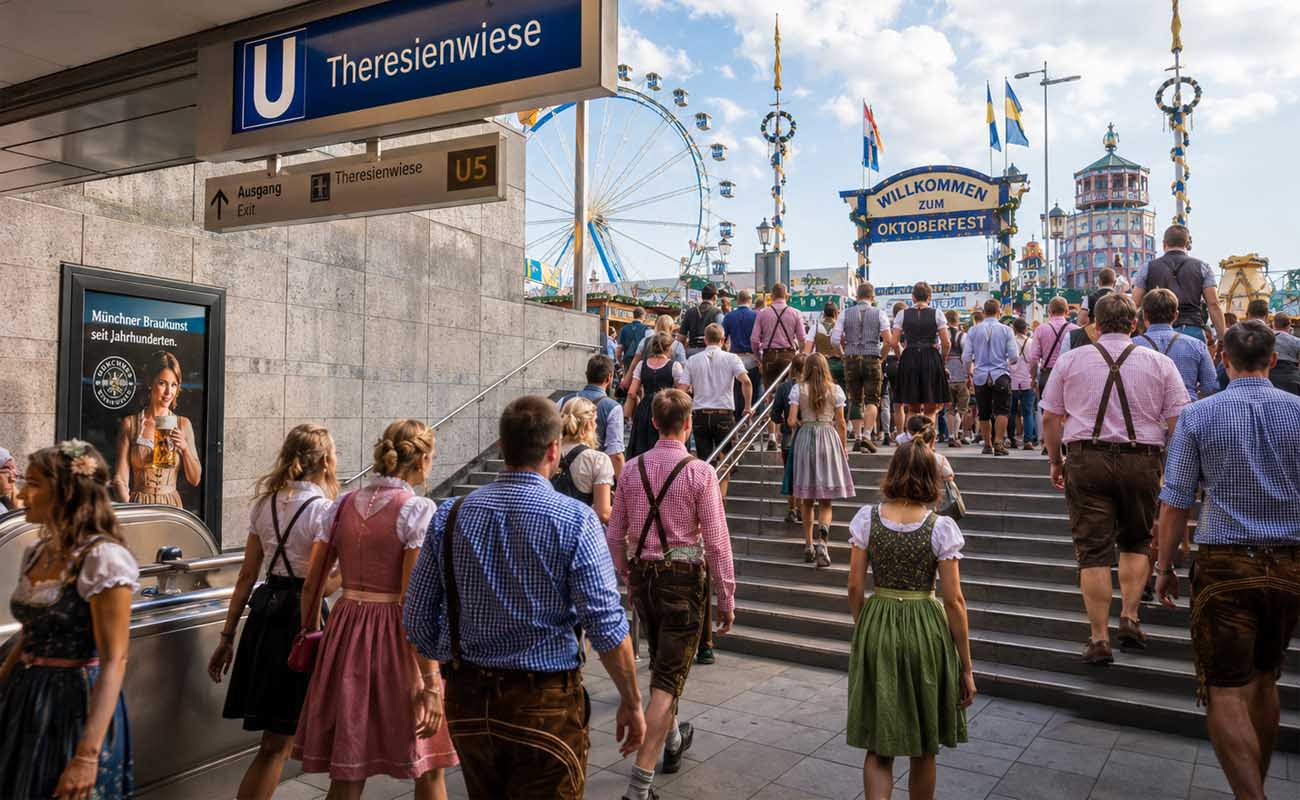
- If you’re near Hauptbahnhof or Sendlinger Tor, it’s only a 10–15 minute walk.
Tip: Public transportation runs frequently during the festival and often includes extra late-night trains.
Beer Tents & Table Reservations
Large Tents to Know
There are 17 large beer tents, each with seating for thousands, and picking the right one can make or break your day—if you’re still torn between them, our deeper breakdown of which Oktoberfest tent is best for you walks through the differences tent by tent.
- Schottenhamel: The youngest crowd, official opening site.
- Hofbräu-Festzelt: Most international visitors, lively party vibe.
- Augustiner-Festhalle: Locals’ favorite—uses traditional wooden barrels, and consistently the most affordable Maß.
- Bräurosl: LGBTQ+-friendly, home to “Gay Sunday.”
- Winzerer Fähndl: Known for Spaten beer and traditional decor.
Do You Need a Reservation?
- No—you can walk in and find a spot, especially on weekdays.
- Yes—if you’re in a group or want evening/weekend seating.
- Reservations typically open between March and July, depending on the tent, and for 2026 many popular tents filled within days of opening.
- Minimum order per person usually includes 2 beers + food (~€38–€48 total, reflecting 2026 pricing).
Walk-In Tips
- Look for tables marked “Nicht reserviert” (not reserved).
- Be polite, ask to join others if you’re in a small group.
- Arrive early (before 2 PM) on weekdays or before 10 AM on weekends.
Which Beer Should You Actually Drink?
Only six breweries are allowed to serve inside the festival grounds, brewing a special stronger Märzen-style beer just for the Wiesn: Augustiner, Hacker-Pschorr, Hofbräu, Löwenbräu, Paulaner, and Spaten. Each pours in its own tent, so the beer you drink depends entirely on which tent you sit in.
- Augustiner is the local favorite and the best-seller among Munich residents—it’s the only brewery still served from traditional wooden kegs, and it also happens to be one of the cheapest options on the price list.
- Paulaner and Hofbräu are the two names most international visitors already know, and their tents (Hofbräu-Festzelt especially) tend to be the loudest and busiest on the grounds—we’ve written before about why Hofbräuhaus is so famous if you want the full story behind the name.
- Löwenbräu and Hacker-Pschorr have a strong following of their own, especially among repeat visitors who’ve picked a “home tent” over the years.
- Spaten, poured at Schottenhamel, has the honor of being the very first keg tapped every year at the opening ceremony.
If you only get to try one, go with whichever tent you can actually get a seat in—but if you have the choice, Augustiner is the one most locals will point you toward first. Curious how these Wiesn favorites stack up against Germany’s everyday best-sellers? Check out what the number one selling beer in Germany actually is—the answer might surprise you.
Budget Breakdown – What to Expect (2026 Prices)
| Item | Estimated Cost |
|---|---|
| 1 Maß (1 liter of beer) | €14.80 – €15.90 |
| Traditional meal (chicken, etc) | €16 – €19 |
| Pork knuckle (Schweinshaxe) | €24 – €28 |
| Pretzel (Breze) | €5 – €6 |
| Rides (Ferris wheel, etc.) | €4 – €12 |
| Entry to Oide Wiesn | €4 |
| Public Transport Day Ticket | €9.20 (Inner Zone) |
Beer prices at the 2026 Oktoberfest rose an average of about 2.4% over 2025, with a Maß ranging from €14.80 in the more budget-friendly tents (like Augustiner) up to €15.90 in tents such as Löwenbräu and Bräurosl. Weißbier at the Weinzelt runs notably higher, around €17.80.
Tips:
- Most tents are cash-only.
- ATMs on site often charge high fees.
- Budget €55–€110 per person per day, depending on how much you drink and ride.
Discover the Oide Wiesn
A hidden gem inside Oktoberfest, the Oide Wiesn (“Old Oktoberfest”) is a nostalgic section that features:
- Traditional beer tents with brass bands and wooden steins
- Historic fairground rides from the 19th and early 20th centuries
- Folk dancing, puppet shows, and cultural exhibits
It’s family-friendly, quieter, and costs around €4 to enter. Rides and games are much cheaper—perfect for kids and anyone seeking a more authentic experience.
What to Wear & Etiquette
Dress the Part
Getting the outfit right is half the fun of Oktoberfest—and it’s the fastest way to blend in with locals instead of looking like a tourist in a cheap costume. If you want to know why this outfit looks the way it does, we’ve covered the history of Oktoberfest Lederhosen in detail—and for what’s changed for this year, see what’s new for Oktoberfest: Dirndl & Lederhosen trends.
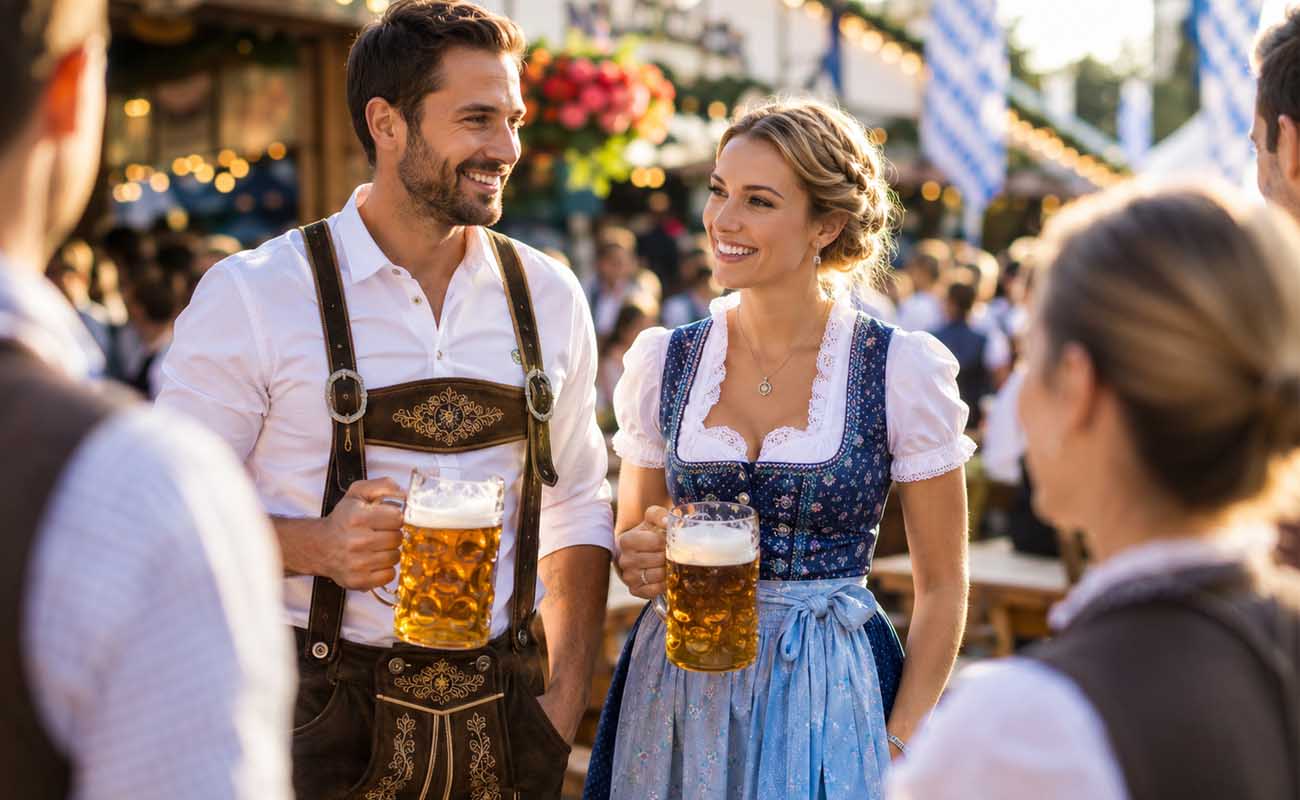
- Women: Wear a Dirndl—a dress with bodice, blouse, and apron. Tie the apron left (single), right (taken), middle (virgin), or back (widow or waitress).
- Men: Wear Men’s Lederhosen with a checked or embroidered shirt, Loferl socks, and Haferlschuhe.
Building a Complete Men’s Outfit
A proper Oktoberfest look for men goes well beyond the leather shorts. Here’s how to put it together piece by piece:
- Lederhosen: The foundation of the outfit. Traditional knee-length or shorter styles both work—shorter is more common among younger festival-goers, while knee-length is the classic, dressier choice.
- Suspenders (Hosenträger): Genuine Lederhosen are worn with an H-back or crossed-back suspender, often embroidered or decorated with edelweiss motifs. Suspenders aren’t just decorative—they’re what makes the outfit sit and look right, so don’t skip them.
- German Trachten Shirts: A checked or plain linen shirt worn underneath, usually in white, blue, or red. Roll the sleeves up for the classic beer-tent look.
- Bavarian Jackets: For cooler evenings—Oktoberfest nights in Munich can get chilly even in September—a wool or loden Trachten jacket over the shirt keeps you warm without breaking the traditional aesthetic. Leather jackets are another popular alternative for a more modern, rugged look.
- Lederhosen Belts: Many Lederhosen sit on the hip rather than the waist, so a wide leather belt with an engraved or antler-style buckle isn’t just for looks—it keeps everything in place through a long day of standing on benches.
- Lederhosen Shoes: Haferlschuhe (the traditional lace-up shoe) are worth investing in over sneakers—you’ll be on your feet for hours, and they hold up far better once the tents get muddy toward the end of the festival.
- Loferl socks & Tyrolean hat: Finish the look with knee-high wool socks and, if you want the full picture, a felt Tyrolean hat with a feather or pin. It’s a small detail, but it’s the one that photos best.
Pro Tip: Buy your Lederhosen, suspenders, and shirt as a coordinated set rather than mixing and matching last-minute—it saves you from a rushed, ill-fitting look on the day. Alpen Lederhosen stocks the full outfit in one place—lederhosen, suspenders, shirts, jackets, belts, shoes—so you’re not chasing down five different sellers for one outfit.
Avoid cheap Halloween costumes—authentic outfits are appreciated by locals.
Oktoberfest Etiquette
- Don’t steal mugs—it’s illegal and heavily fined.
- Always tip your server—10–15% per round.
- Stand on benches, not tables.
- Greet with “Servus” or “Grüß Gott” and toast “Prost!”
- Respect fellow guests, staff, and the traditions.
Stay Safe While Having Fun
- Alcohol content in Wiesn beer is stronger (~6.3%). Eat before drinking and stay hydrated.
- Avoid the infamous “Kotzhügel” (puke hill)” near the entrance.
- Watch your belongings—pickpockets are active.
- Police, medics, and helpers are on-site and clearly marked.
Bring essentials: ID, cash, metro ticket, a small power bank, and possibly a rain jacket.
Final Insider Tips for Oktoberfest 2026
- Book flights and accommodations early—given the closing weekend coincides with German Unity Day, rooms for the final days go first.
- Use the official MVV and DB apps for train schedules and real-time updates.
- Don’t just drink—explore Munich! Visit Englischer Garten, Marienplatz, and the Deutsches Museum.
- Try local delicacies like Obatzda, Schweinshaxe, and Kaiserschmarrn.
Other Bavarian Festivals Worth Knowing About
Oktoberfest isn’t the only reason to plan a trip around Bavarian festival season. If your travel dates don’t line up, or you just want more excuses to wear the outfit, a few other celebrations are worth bookmarking:
- Frühlingsfest München—often called Munich’s “Little Oktoberfest,” held in spring with smaller crowds and the same festive spirit.
- Frühlingsfest in Stuttgart—Stuttgart’s own spring folk festival, a good warm-up if you’re planning your outfit ahead of the main event.
- Almfest—a more alpine, small-town take on the tradition, worth a visit if you want something quieter than the Theresienwiese crowds.
- Oktoberfest Paris—if Munich isn’t on your calendar this year, Paris now runs its own Bavarian-style celebration in the same season.
Prost to the Experience of a Lifetime!
Oktoberfest 2026 promises unforgettable memories: steins of cold beer, the aroma of roast chicken, laughter in every tent, and the warmth of Bavarian hospitality. With the right preparation, you’ll experience not just a party—but a deep cultural tradition that’s been thriving for over 200 years.
Need help booking a tent, creating a packing checklist, or translating a German email? Just ask—I’m here to make your Oktoberfest 2026 journey smooth, fun, and unforgettable.


