

Blog
What Patterns Are Typical for Authentic Dirndls?

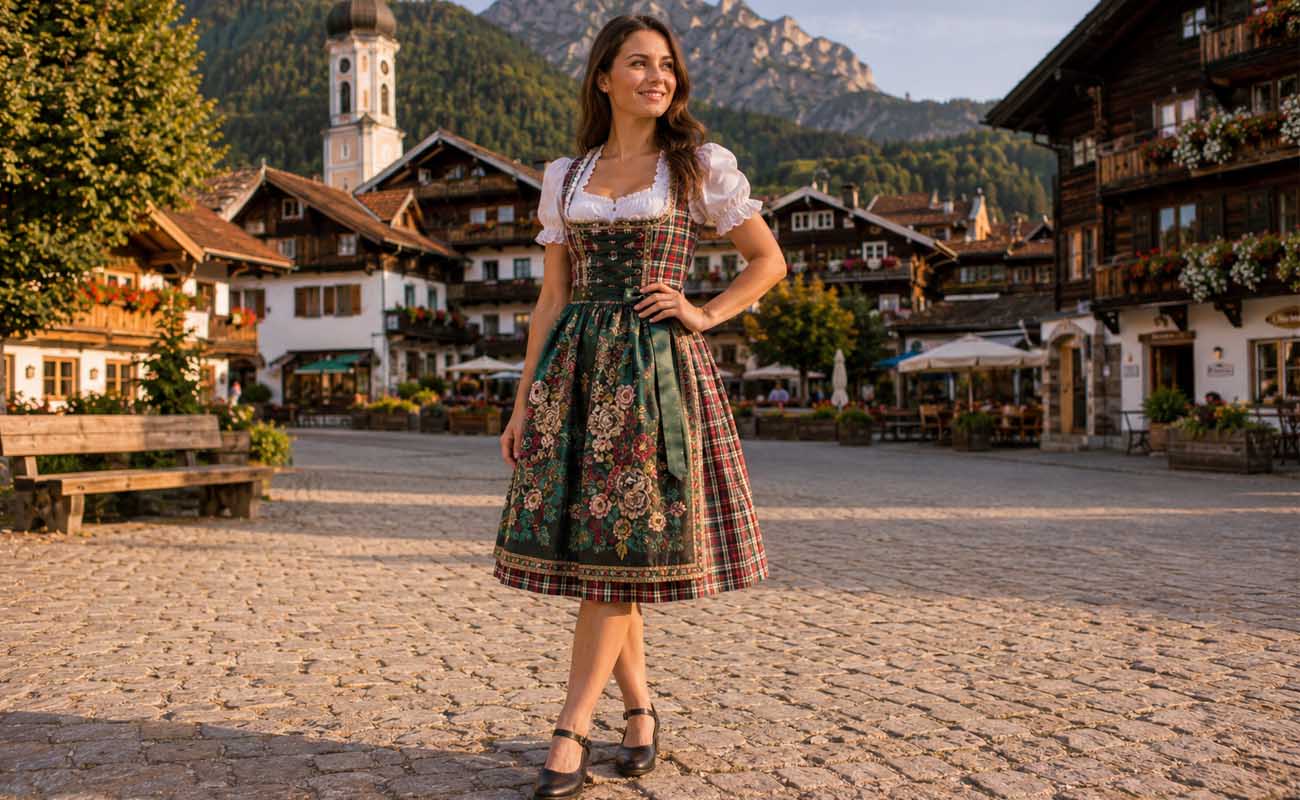
The dirndl, a traditional dress rooted in Bavaria and Austria, remains one of the most recognizable symbols of Alpine heritage and continues to be a staple of Oktoberfest, religious festivals, and weddings. It’s far more than a garment — it’s a living piece of cultural history that reflects centuries of craftsmanship, regional pride, and evolving fashion sensibility. While the dirndl’s silhouette has stayed largely timeless, the patterns worn on it have always told a deeper story, one shaped by geography, occasion, and personal identity.
This updated guide walks through the classic patterns that define an authentic dirndl, how regional styles differ across Bavaria and Austria, and what’s currently trending in dirndl fashion — including a growing shift toward sustainable fabrics, personalized prints, and subtler color palettes. At Alpen Lederhosen, we work with skilled artisans to bring these authentic patterns and traditions to life in every piece we offer.
Classic Patterns That Define an Authentic Dirndl
Plaid
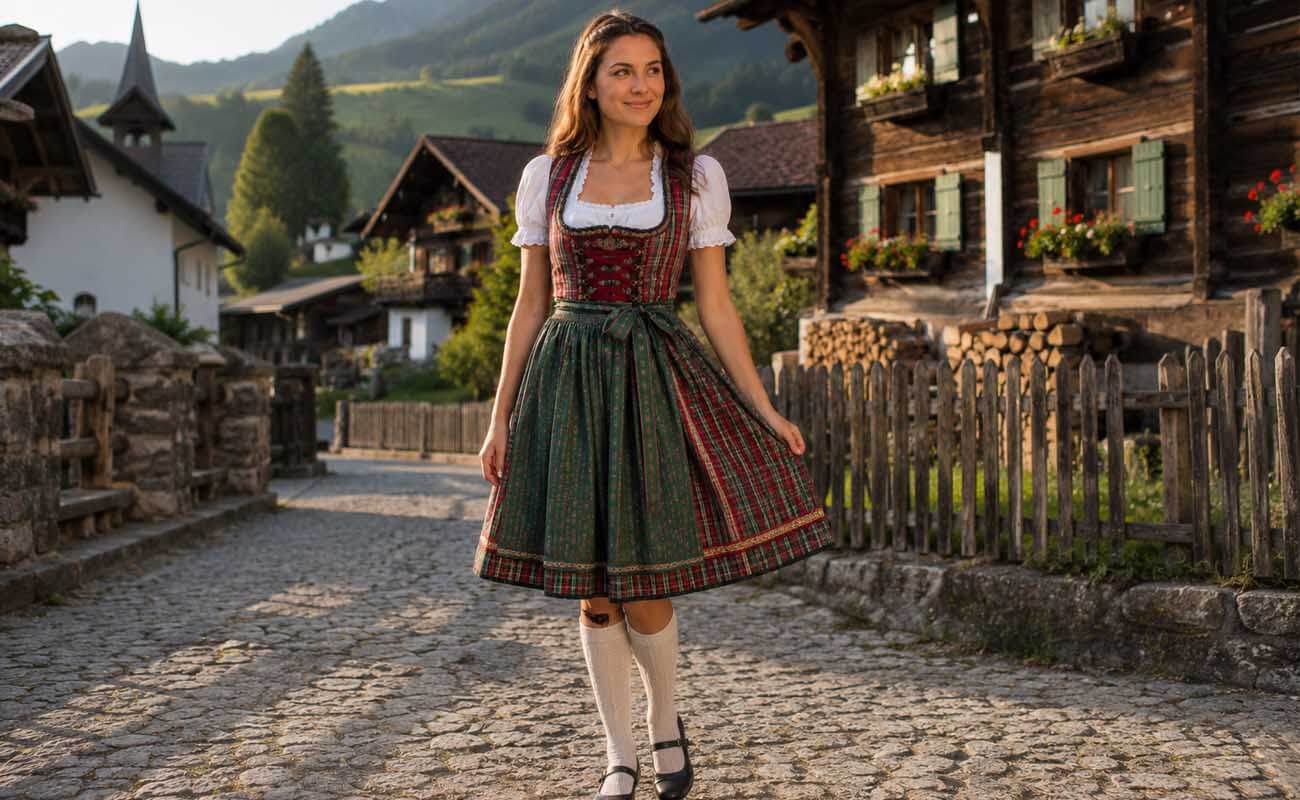
Plaid, or Karo, is still the most iconic and instantly recognizable dirndl pattern. Its roots trace back to rural Bavarian communities, where checkered fabric was practical, durable, and easy to produce at scale. Long before it became a fashion statement, plaid was simply functional — a fabric suited to everyday farm work and village life.
- Small checks remain the go-to choice for weddings and formal ceremonies. Their delicate, refined appearance suits solemn occasions and pairs beautifully with fine embroidery or lace-trimmed aprons.
- Larger checks dominate festival wear, especially at Oktoberfest, where bold, rustic patterns match the celebratory, high-energy mood of the event.
- Seasonal color choices persist year after year: burnt orange, deep burgundy, and forest green dominate autumn collections, while sky blue, pastel yellow, and soft pink take over in spring and summer.
Regions like Chiemgau and Allgäu continue to have their own signature plaid styles, often passed down through generations and tied closely to family or village identity. Wearing a specific plaid combination can be a quiet but meaningful way of signaling where you’re from.
Floral Prints
Floral patterns remain a heartfelt tribute to the Alpine landscape and Bavaria’s deep-rooted relationship with nature. Edelweiss, Alpine roses, and gentians are still the most symbolically rich motifs used in dirndl design, each representing values like strength, purity, romance, and resilience against harsh mountain conditions.
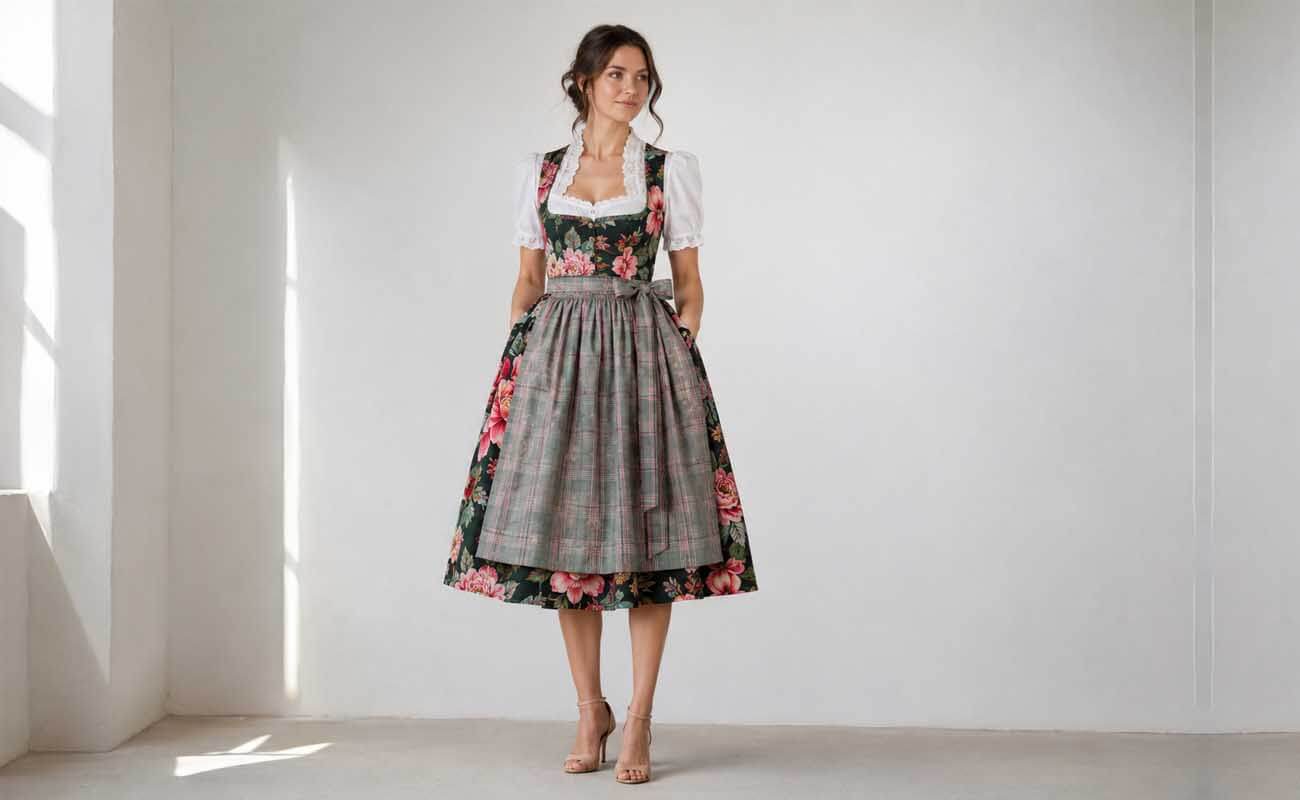
What’s changed in recent seasons is scale and boldness. Younger designers are experimenting with oversized floral motifs and botanical illustration-style prints, moving away from small, repeated patterns toward statement florals that cover larger sections of the bodice and apron. This bolder approach gives the dirndl a more contemporary, editorial feel while still honoring its floral heritage.
These floral motifs are often mirrored on the dirndl blouse worn underneath, tying the whole look together. Color choices for florals also shift with the seasons. Pastel pinks, lavenders, and baby blues are common in spring dirndls, symbolizing renewal, while deep reds, purples, and emerald greens dominate autumn and winter designs, echoing the richness of the harvest season and holiday festivities.
Stripes
Vertical stripes remain the traditional choice for their flattering, lengthening effect on the wearer’s silhouette. This orientation elongates the body and has long been favored for its subtle elegance, particularly among shorter wearers looking for a more streamlined appearance.
Horizontal stripes and asymmetric striping, while historically rare in authentic dirndl design, are becoming more common in fashion-forward pieces aimed at a younger audience — particularly in urban boutiques and among designers catering to international buyers outside of Bavaria and Austria. Stripe width also plays a role: thinner stripes suit formal settings, while wider, bolder stripes are better suited to festive, high-energy occasions.
Polka Dots
Polka dots continue their decades-long popularity as the playful, informal option in dirndl fashion. Though not part of the original Bavarian textile tradition — they only gained popularity in the mid-20th century — polka dots have become a beloved staple for casual Oktoberfest looks. Their cheerful, carefree character makes them a favorite among younger wearers and those looking to bring a lighthearted energy to their outfit, though they’re generally avoided for religious or ceremonial dirndls where more subdued patterns are expected.
Solid Colors with Embroidery
Solid-color women’s dirndls with hand or machine embroidery remain the top choice for formal and religious occasions. Rather than relying on busy repeating patterns, this style shifts the focus to craftsmanship — the intricate stitching itself becomes the centerpiece of the design.
Alpine floral motifs, scrollwork, and regional symbols are still hand-stitched by skilled artisans, with some hand-embroidered pieces taking weeks to complete. These dirndls are often treasured as family heirlooms, passed down across generations. Silk threads and gold detailing are sometimes used for special-occasion pieces, adding a subtle sense of luxury without straying from tradition.
Emerging Trends Shaping Dirndl Patterns Today
Sustainable and Natural-Dye Fabrics
Sustainability has moved from a niche interest to a mainstream expectation in the fashion world, and dirndl production is no exception. More makers are turning to organic cotton, linen, and hemp blends, along with natural plant-based dyes that produce slightly muted, earthier tones compared to their synthetic counterparts. This shift has subtly influenced popular color palettes, nudging them toward warmer, more organic hues rather than the sharp, saturated colors common in mass-produced dirndls.
Consumers increasingly ask about fabric sourcing and dye processes before purchasing, and brands that can speak to ethical, low-impact production are gaining favor, particularly among buyers who see the dirndl as an investment piece rather than a one-time costume.
Digital and Custom Print Technology
Advances in digital textile printing now allow smaller ateliers, and even direct-to-consumer brands, to offer custom or limited-run floral and plaid patterns — something that was largely cost-prohibitive in the past. Buyers increasingly have the option to select pattern scale, color combinations, and embroidery placement before purchase, effectively allowing a level of personalization that traditional manufacturing methods couldn’t support.
This shift hasn’t diluted authenticity so much as expanded it — many buyers are using customization to create pieces that reflect a specific regional pattern or family tradition more precisely than off-the-rack options ever could.
Fusion and Global-Inspired Motifs
As dirndls gain popularity with international audiences — including buyers in the US, UK, and parts of Asia — designers continue blending traditional Bavarian motifs with global influences. Japanese-inspired floral linework, for instance, or geometric patterns drawn from other folk textile traditions, are increasingly finding their way into dirndl collections marketed to a broader, more diverse customer base. These fusion pieces tend to retain the dirndl’s essential silhouette while reinterpreting its surface pattern.
Muted, Tonal Plaid
Where bold, high-contrast plaid once dominated Oktoberfest racks, there’s a rising demand for tonal or low-contrast plaid — checks rendered in close shades of the same color family rather than sharply contrasting hues. This creates a more subtle, elevated look that still reads as unmistakably traditional, appealing to buyers who want authenticity without the visual intensity of classic bold checks.
If you’re curious how these seasonal shifts play out year to year, our Oktoberfest journal regularly covers the latest dirndl and lederhosen trends alongside festival guides from across Bavaria and beyond.
Regional Variations Still Matter
Despite these evolving trends, regional identity remains deeply woven into dirndl pattern choices:
- Allgäu: Known for bold plaid in earthy reds and greens, closely tied to the region’s agricultural heritage and rural way of life.
- Tyrol: Favors vibrant floral prints featuring Edelweiss, Gentian, and Alpine Rose, reflecting the region’s lush natural surroundings.
- Chiemgau: Leans toward pastel striped patterns paired with fine embroidery, producing a soft, refined look often chosen for religious ceremonies.
These regional identities remain a meaningful way for wearers to signal heritage, even as global demand for dirndls continues to grow and reshape the market.
Choosing a Pattern Today: A Quick Guide
| Occasion | Recommended Pattern |
|---|---|
| Wedding / Church ceremony | Solid color with embroidery, small plaid |
| Oktoberfest / Festival | Large plaid, polka dots, bold florals |
| Everyday / Casual wear | Tonal plaid, small floral prints |
| Modern fashion-forward look | Oversized florals, asymmetric stripes, custom prints |
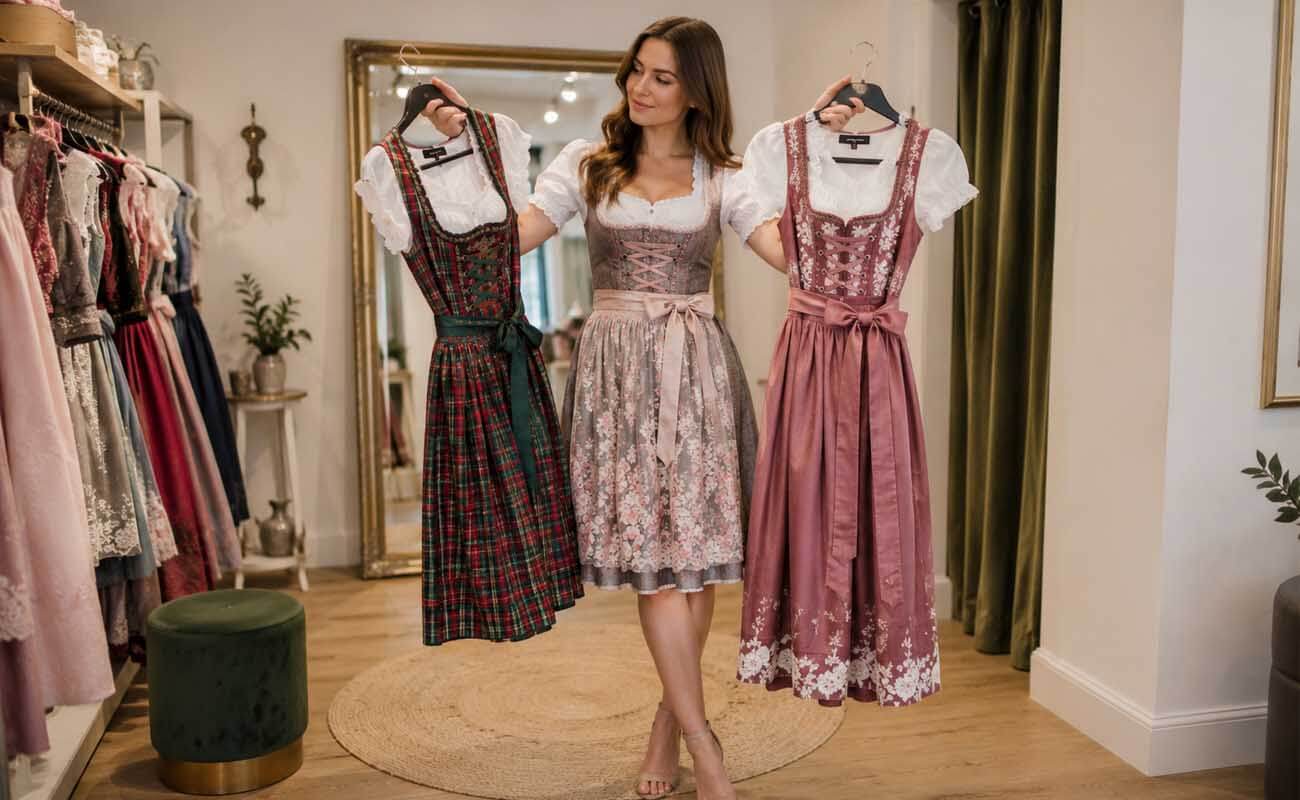
Browsing our full collection of Women’s dirndls can help you compare pattern, color, and embroidery options side by side before deciding. When selecting a pattern, it helps to think beyond aesthetics alone. Consider the occasion, the season, and even the story you want your dirndl to tell about your personal style or regional connection. A pastel floral dirndl might be perfect for a spring wedding, while a deep burgundy plaid feels right at home at a lively autumn Oktoberfest celebration.
Caring for a Patterned Dirndl
Whichever pattern you choose, proper care goes a long way in preserving both the fabric and the color vibrancy that make these designs so striking. Hand-embroidered and naturally dyed dirndls, in particular, benefit from gentle hand washing or dry cleaning rather than machine washing, since harsh detergents and high heat can cause colors to fade or embroidery threads to loosen over time. Storing a dirndl on a padded hanger, away from direct sunlight, also helps prevent plaid and floral patterns from fading unevenly.
For heirloom pieces passed down through generations, occasional professional cleaning and careful storage in a breathable garment bag can help preserve intricate embroidery for decades. Many families treat these dirndls as more than clothing — they’re keepsakes that carry memories of past celebrations, weddings, and festivals, making their upkeep just as important as the pattern itself.
Frequently Asked Questions
Plaid (Karo), floral prints, stripes, polka dots, and solid colors with embroidery remain the core categories, each carrying its own regional and occasion-based meaning rooted in Bavarian tradition.
Yes, though tonal and muted plaid variations are gaining ground alongside the classic bold-contrast checks that have long defined the style.
The growing use of sustainable, naturally dyed fabrics and digital customization options, which give buyers far more control over pattern scale, color, and embroidery placement than traditional manufacturing once allowed.
Large plaid, polka dots, and bold florals remain the top choices for a festive, celebratory look that matches the high-energy spirit of the event.
Solid colors paired with hand-stitched embroidery or delicate, small-scale florals are still considered the most elegant and appropriate choice for weddings and religious ceremonies.
Looking for more style inspiration ahead of your next festival? Explore our Oktoberfest journal for the latest guides on dirndl and lederhosen trends, regional traditions, and festival essentials.


