

Blog
Oktoberfest Milwaukee, Wisconsin 2026


Milwaukee, Wisconsin, known as the “City of Festivals,” continues to be home to some of the most exciting Oktoberfest celebrations in the United States. With deep German roots and a strong brewing culture, Oktoberfest Milwaukee 2026 promises an authentic Bavarian experience for locals and visitors alike. This year brings something new: alongside the long-running Bavarian Bierhaus tradition in Glendale, Milwaukee is also hosting its first-ever Milwaukee Oktoberfest at Henry Maier Festival Park, the iconic Summerfest grounds on the lakefront, running October 2–4, 2026. Add in neighboring celebrations in Waukesha and Greendale, and the Milwaukee area now offers one of the busiest Oktoberfest calendars in the Midwest.
Whether you’re looking to enjoy steins of German beer, feast on traditional bratwurst, or dance to polka music, Oktoberfest Milwaukee has something for everyone. The festival celebrates Bavarian culture in a way that reflects the city’s unique heritage, blending time-honored traditions with fresh, modern festival energy.
The History of Milwaukee’s German Heritage
Milwaukee has long been a hub of German-American culture. In the 19th century, waves of German immigrants settled in the city, bringing with them their customs, traditions, and, most importantly, their beer-brewing expertise. Today, Milwaukee’s breweries are famous worldwide, and the city continues to embrace its German roots through cultural events like Oktoberfest. The tradition traces back to Munich’s original Oktoberfest, which began in 1810 to celebrate a royal Bavarian wedding and has since grown into the world’s largest beer festival, still held annually around the same September-to-October window.
Oktoberfest in Milwaukee has grown significantly over the decades, evolving from a single beer-hall tradition into a citywide event spread across multiple parks and venues. In 2026, that growth reaches a new milestone with a brand-new lakefront edition joining the city’s decades-old Glendale celebration.
What makes Milwaukee’s version of Oktoberfest special is how naturally it fits the city’s identity. This isn’t a festival imported for novelty — it’s a continuation of a heritage that shaped Milwaukee’s neighborhoods, its beer industry, and its social calendar for well over a century. Locals grow up attending these festivals with family, and many of the bands, recipes, and customs featured at Milwaukee’s Oktoberfest events have been passed down through generations of German-American families in the region. That sense of continuity is part of why the addition of a brand-new lakefront festival in 2026 feels less like a departure from tradition and more like the next chapter of it.
Event Overview: What’s Happening in 2026
Milwaukee’s Oktoberfest season now spans several weeks and several venues, each with its own personality. Here’s a quick snapshot of where to celebrate:
- The Bavarian Bierhaus (Glendale, WI) – Milwaukee’s original Oktoberfest, held in Old Heidelberg Park across multiple fall weekends, now in its seventh decade of tradition.
- Milwaukee Oktoberfest at Henry Maier Festival Park – A brand-new three-day festival on the Summerfest grounds, running October 2–4, 2026, produced by Swarmm Events.
- Waukesha Oktoberfest (Frame Park) – A riverside celebration on September 19–20, 2026, featuring a big tent along the Fox River.
- Greendale Lions’ Family Oktoberfest (Gazebo Park) – A community-focused celebration on September 19, 2026.
Each location brings its own flair to the season, from a historic outdoor beer garden with nearly 100 years of German-club roots to a brand-new lakeside party built for a new generation of festival-goers.
1. The Bavarian Bierhaus – Milwaukee’s Original Oktoberfest
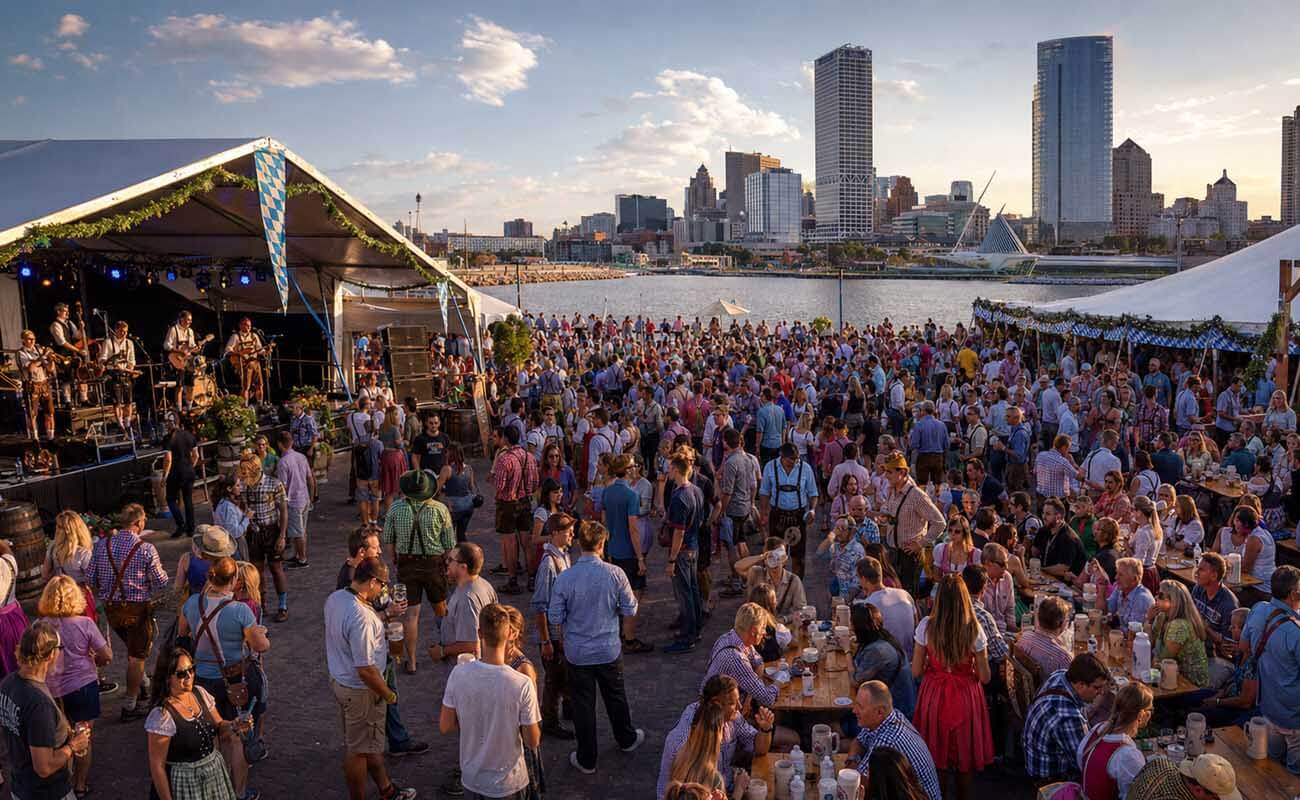
The Bavarian Bierhaus in Glendale remains the heart of Milwaukee’s Oktoberfest tradition. Rooted in the German Clubs of Milwaukee that formed in the 1930s, the venue has hosted “Milwaukee’s Original Oktoberfest” for close to seven decades and is widely considered the most authentic Bavarian experience in the region. The festival runs across multiple fall weekends, held rain or shine under mural-decorated pavilions modeled after the fest in Munich.
- Biergarten atmosphere: Long wooden tables, string lights, and traditional steins set the scene in Old Heidelberg Park.
- Live entertainment: Traditional German brass bands, Schuhplattler folk dancing, singing, and yodeling keep the energy going all weekend.
- Authentic food: Expect bratwurst, schnitzel, Döner kebabs, soft pretzels, sauerkraut, warm potato salad, and fresh apple strudel for dessert.
- Haus-brewed beer: The Bierhaus serves its own house beers alongside classic Oktoberfest-style selections.
- Family-friendly fun: Children’s carnival games line the midway, and tables can be reserved in advance for groups.
2. Milwaukee Oktoberfest at Henry Maier Festival Park – New for 2026
For the first time, Milwaukee is bringing Oktoberfest to its most iconic festival grounds — the lakefront home of Summerfest. Running October 2–4, 2026, this new event is designed to bring the sights, sounds, and flavors of Munich directly to Milwaukee’s waterfront, with a scale and production value the city hasn’t seen from an Oktoberfest event before.
Highlights of this new lakefront celebration include:
- Authentic imported German beers, including Hofbräu and Hacker-Pschorr, served alongside local craft selections.
- Traditional German dishes served throughout the festival grounds.
- Live music from both local and international bands, with polka and folk dancing performances.
- VIP experiences and reserved table packages for those who want a more elevated evening.
- A marketplace with crafts, goods, and specialty vendors.
- Family-friendly activities during the day, with a livelier atmosphere as the evening goes on.
Because this is a new addition to the city’s festival calendar, organizers expect strong turnout — booking accommodations and any VIP packages early is a smart move if you’re planning to attend.
3. Waukesha and Greendale: Nearby Celebrations Worth the Drive
If you’re exploring beyond Milwaukee proper, the surrounding suburbs add even more Oktoberfest energy to the season:
- Waukesha Oktoberfest takes over Frame Park on September 19–20, with a big tent along the Fox River, live German-style music, and old-world contests like Masskrugstemmen (stein-holding) and Hammerschlagen (hammer-and-nail driving). Admission is free, though a wristband is required to purchase beer on site.
- Greendale Lions’ Family Oktoberfest brings a smaller, community-oriented celebration to Gazebo Park on September 19, ideal for families looking for a lower-key festival day.
- Both events feature a “Best Dressed” contest, so a well-fitted Lederhosen or Dirndl can be more than just an outfit — it’s your shot at bragging rights.
What to Wear: Traditional German Attire for Oktoberfest
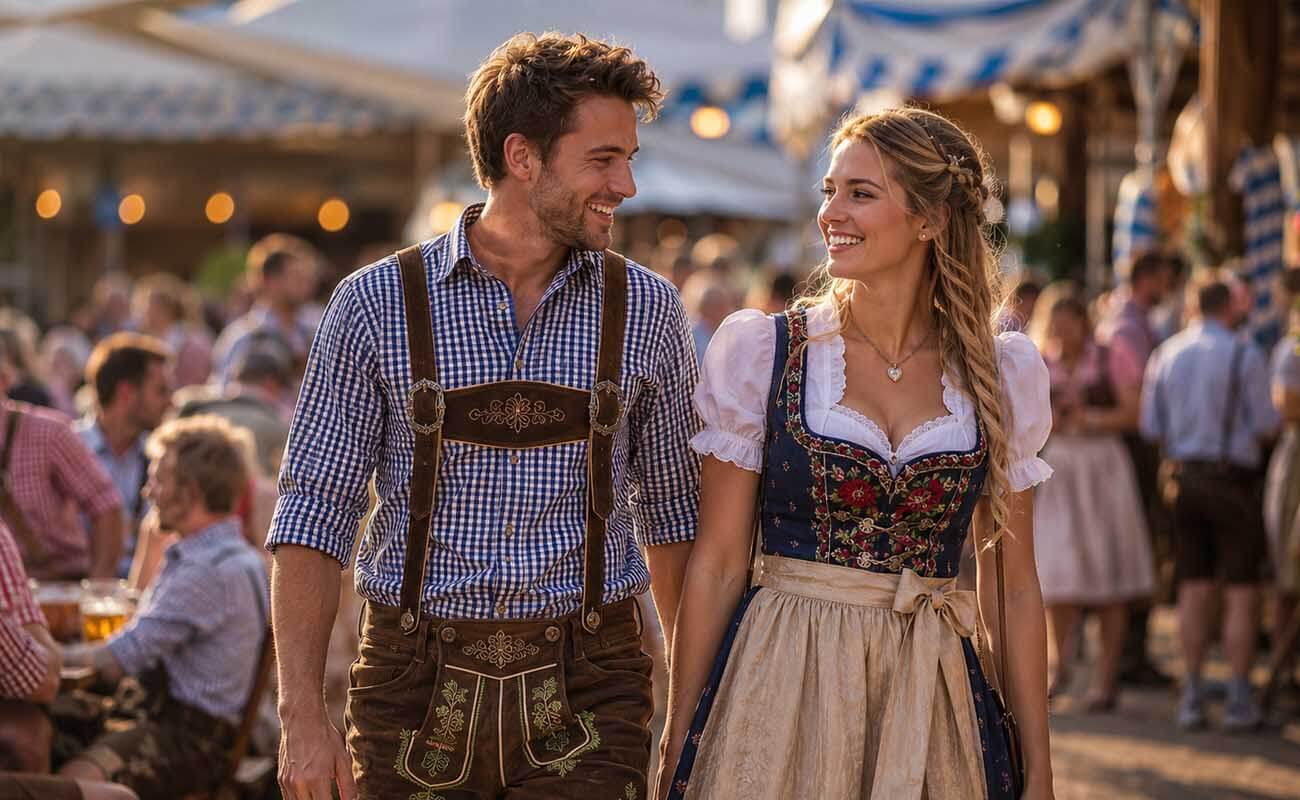
No Oktoberfest celebration is complete without donning traditional Bavarian attire. Wearing Lederhosen or a Dirndl not only adds to the festive spirit but also allows you to immerse yourself fully in the experience — and with several “Best Dressed” contests happening across the Milwaukee area this year, it pays to look the part. If you want to go deeper on the history of Lederhosen or see the latest Dirndl and Lederhosen trends, our blog has you covered.
- Lederhosen for Men: The classic men’s Oktoberfest outfit, consisting of leather shorts or knee-length trousers, typically worn with suspenders and paired with a white or checkered shirt. Knee-high socks and sturdy shoes complete the traditional look.
- Dirndl for Women: A traditional Bavarian dress made up of a blouse, bodice, skirt, and apron. Styles range from simple to elaborate. Fun fact: the placement of the apron’s bow carries meaning — tied on the left signals the wearer is single, while tied on the right signals she’s taken.
If you’re looking to buy high-quality Lederhosen or Dirndls ahead of the Milwaukee Oktoberfest season, Alpen Lederhosen offers premium craftsmanship and authentic Bavarian designs built for exactly this kind of celebration. Whether you need a classic men’s Lederhosen or a stylish Dirndl for the ladies, their collection has you covered for every venue on this year’s calendar.
Food and Drink: A Feast for the Senses
The food and drink lineup remains one of the biggest draws of Milwaukee’s Oktoberfest season, with both longstanding favorites and new lakefront offerings for 2026.
German cuisine staples to look for:
- Bratwurst – grilled sausages served with mustard and sauerkraut, a non-negotiable Oktoberfest classic.
- Schnitzel – a breaded, fried cutlet usually served with potato salad or spätzle.
- Pretzels – giant, soft, salty pretzels that pair perfectly with a cold stein.
- Sauerkraut and red cabbage – tangy fermented sides that round out any bratwurst or schnitzel plate.
- Apple strudel – the go-to dessert, a flaky pastry filled with spiced apples, often topped with whipped cream.
Beer and beverages: Milwaukee’s brewing legacy remains front and center. Local names like Lakefront Brewery, Milwaukee Brewing Company, and Good City Brewing continue to pour their seasonal Oktoberfest-style Märzen beers, while imported German brands such as Paulaner, Hofbräu, Hacker-Pschorr, Warsteiner, and Augustiner show up across the various festival venues, typically served in traditional 1-liter steins — several of which rank among Germany’s best-selling beers. For non-beer drinkers, expect wine, cider, and German-style non-alcoholic options like Apfelschorle (sparkling apple juice) and German sodas.
Plan Your Visit: Accommodations and Travel Tips
With a new major festival now added to the calendar at Henry Maier Festival Park alongside the long-running Bavarian Bierhaus celebration, hotel demand in the Milwaukee area is expected to be higher than in past years — so booking accommodations early is more important than ever for October 2026.
A few tips for a smoother visit:
- Book early, especially if you plan to attend during the October 2–4 weekend, when both the lakefront festival and the tail end of the Bierhaus season may overlap with other city events.
- Parking is limited at Henry Maier Festival Park; on-site lots run roughly $25–$40 per day and fill quickly on Friday and Saturday nights. Ride-sharing services or public transit are worth considering.
- Check individual venue schedules, since the Bierhaus runs across multiple weekends while the lakefront festival and suburban events are single-weekend celebrations.
- Dress for the weather — most venues are outdoors and run rain or shine, so pack accordingly even while wearing your Lederhosen or Dirndl.
- Pace yourself across venues — with festivities spread from mid-September through early October, it’s entirely possible to hit the Waukesha or Greendale events, the Bavarian Bierhaus, and the new lakefront festival all in the same season if you plan your weekends around them.
- Bring cash or a card for wristbands — several of the smaller community festivals use a free-admission, paid-wristband model for alcohol purchases, so it helps to know the entry rules before you arrive.
Conclusion
Milwaukee’s Oktoberfest scene has never been bigger than it is in 2026. Between the nearly 70-year-old tradition at the Bavarian Bierhaus, the brand-new lakefront celebration at Henry Maier Festival Park, and nearby suburban festivals in Waukesha and Greendale, there’s an authentic Bavarian experience for every kind of festival-goer this fall. Whether you’re hoisting a stein in a historic beer garden or dancing along the lakefront at Milwaukee’s newest fall tradition, don’t forget to dress the part. Shop authentic Lederhosen and Dirndls from Alpen Lederhosen and celebrate Oktoberfest 2026 in true Bavarian style. Prost! And if you’re planning to celebrate further afield this year, don’t miss our guide to Oktoberfest Paris 2026 for another unforgettable Bavarian-inspired experience.


